

Google’s parent company Alphabet has reported negative free cash flow for the first time in at least a decade, as the search giant lifted its expected artificial intelligence spending for this year to as much as $205 billion — a figure that underscores how completely the AI arms race has rewritten Silicon Valley’s economics.
Record revenue, vanishing cash
The company’s quarterly results were, on the surface, exceptional: revenue of $119.8 billion, up 23 per cent year on year, powered by a booming cloud division selling AI computing capacity to enterprises. Yet free cash flow swung to negative $5.9 billion (£4.3 billion), and the stock fell around four per cent in after-hours trading as investors digested the sheer scale of the outlay. Full financial details are available via Alphabet’s investor relations.
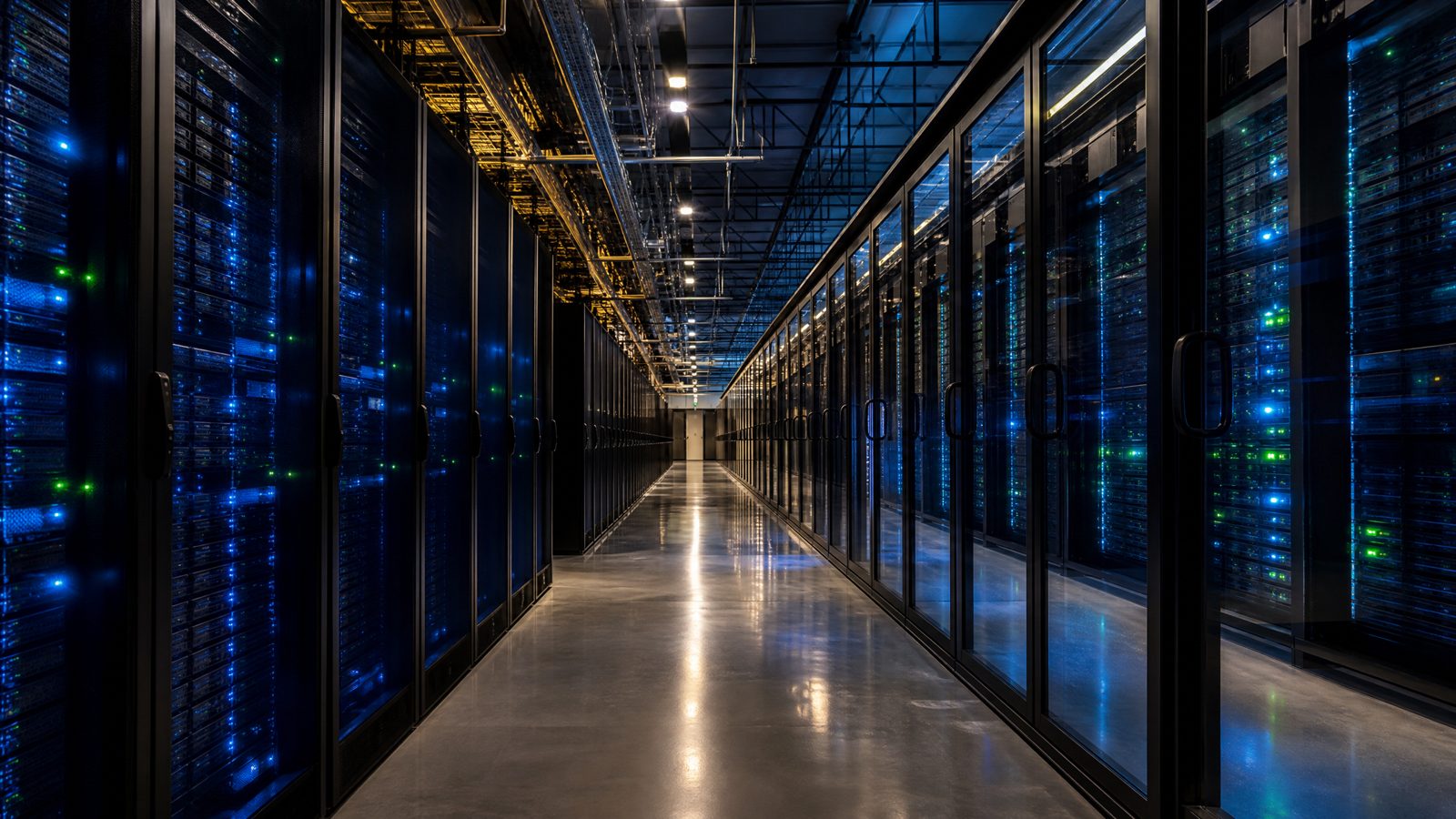
The company’s chief financial officer disclosed $45 billion of capital expenditure in the quarter alone — roughly 60 per cent on servers and 40 per cent on data centres — up from $36 billion the previous quarter, and raised full-year AI spending guidance from $190 billion to as much as $205 billion. Her justification was blunt: customer demand for AI computing “still outpaces that investment”. Chief executive Sundar Pichai described the industry as being in the “early innings” while insisting the company remains “disciplined” about returns.
Not alone in burning cash
Alphabet is not the only technology giant watching cash evaporate into silicon and concrete. Tesla reported negative free cash flow of $1.1 billion in the same quarter — its first in two years — with spending expected to reach $25 billion this year, more than double 2025 levels, as it builds out AI and robotics capability. Its shares also fell four per cent.
The pattern raises a question that will define the next phase of the AI era: when does infrastructure investment convert into durable profit? Bulls point to cloud revenue growth as proof the spending pays for itself; sceptics note that when every hyperscaler expands capacity simultaneously, pricing power tends to suffer.
The London angle
For London, the hyperscalers’ capital spending boom is not an abstraction. The UK is one of the largest data centre markets in Europe, with clusters across west London and the M25 corridor competing for grid connections, and American AI capital flows directly into British construction, engineering and energy contracts. The capital’s own AI economy is accelerating in parallel, from the Mayor’s £30 million package to prepare 600,000 Londoners for AI exposure to a record run of AI startup formation.
The lesson from Alphabet’s quarter is double-edged. The AI buildout is real, demand is genuine and revenue is following — but even the world’s most profitable companies cannot spend $200 billion a year without consequences for shareholders. For the thousands of London businesses now budgeting their own AI investments, the message is more modest and more useful: capacity is coming, prices for AI computing should keep falling, and the advantage will go to those who apply the technology sharply rather than those who simply spend the most.







