
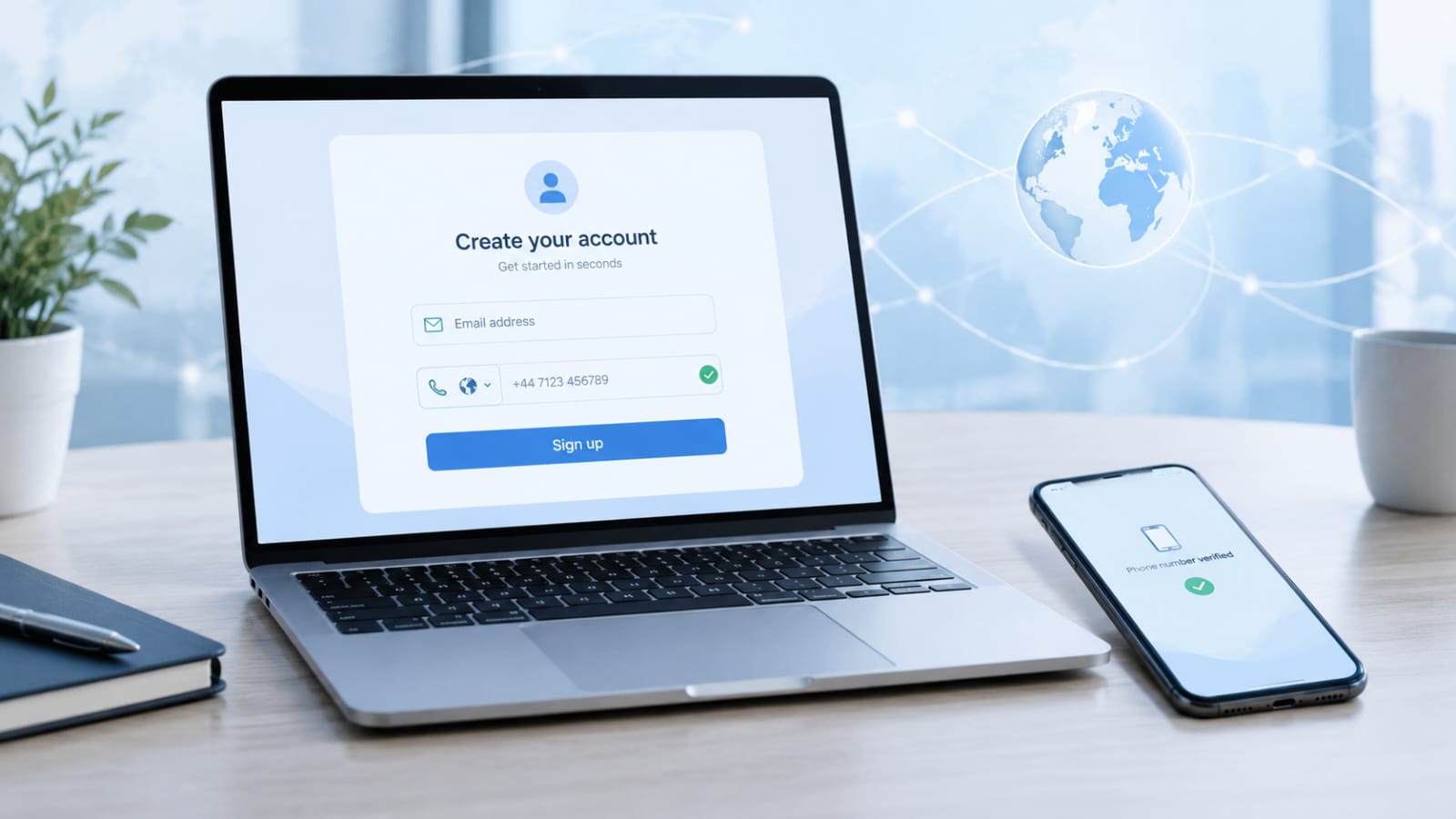

Somewhere in your database right now, there is a phone number that reads 99999 99999, one with a country code that does not exist, and one that was a real number until its owner changed carriers in 2023. Bad numbers are not just untidy data. They are failed deliveries, undialable leads, wasted SMS spend and angry customers who never got the confirmation they were promised. A phone number validation API is the cheapest fix available: one HTTP call at the point of entry that tells you whether a number is even plausible before you store it. This guide covers how these APIs work, what they can honestly tell you, where their limits are, and how to integrate one properly in 2026.
What Is a Phone Number Validation API?
A phone number validation API checks a phone number against the international numbering rules that govern how real numbers are constructed, and returns a structured verdict. Every country allocates numbers according to a national numbering plan, and globally these plans follow the ITU’s E.164 standard, which defines the format: a plus sign, a country code of up to three digits, and a subscriber number, fifteen digits maximum in total. In the UK, for example, Ofcom manages the national numbering plan, which is why a UK mobile number written in international format begins with +44 7.
Send a number to the API, and you get back a JSON answer covering:
- whether the number is valid under the relevant numbering plan,
- which country and country code it belongs to,
- the properly formatted local and international versions,
- and, where supported, metadata such as the carrier and line type.
The value is that nobody on your team has to maintain numbering rules for 200-plus countries and territories, rules that genuinely change as regulators open new ranges and renumber old ones. The API provider maintains them; you make a GET request.
How a Phone Validation API Works
Mechanically, a phone validation API is a simple REST call. You pass the number, your API key and optionally a country code for interpreting local formats:
GET https://apilayer.net/api/validate?access_key=YOUR_KEY&number=14158586273
For a number entered in local format, add the country. A UK number typed as 07…, for instance, would be sent with country_code=GB; a US number looks like this:
GET https://apilayer.net/api/validate?access_key=YOUR_KEY&number=4158586273&country_code=US
The service parses the number, checks the structure against the country’s numbering plan, identifies the number range, and responds in JSON. The key decision in your application is what to do with each verdict:
- Valid numbers proceed: store them in E.164 international format so every downstream system agrees on one representation.
- Invalid numbers get rejected with a helpful message at the form, not three days later when a campaign bounces.
- Incomplete or ambiguous input, such as a local number with no country, should prompt the user for the missing piece rather than guessing. Many false invalids are really just missing country codes.
What Can a Phone Validator API Check?
A good phone validator API returns more than a boolean. A typical response:
{
“valid”: true,
“number”: “14158586273”,
“local_format”: “4158586273”,
“international_format”: “+14158586273”,
“country_prefix”: “+1”,
“country_code”: “US”,
“country_name”: “United States of America”,
“location”: “Novato”,
“carrier”: “AT&T Mobility LLC”,
“line_type”: “mobile”
}
What each layer gives you:
Format and country code. The core check: the number fits a real numbering range in a real country, and here are its canonical formats. This alone kills most typos and junk input.
Location-related metadata. For many countries, number ranges map to regions or cities, so the API can return a general location where available. Treat this as range-level information, not the person’s address, and expect it to be more meaningful for landlines than mobiles.
Carrier and line type. Where supported, the API reports the originally assigned carrier and whether the number is mobile, landline or VoIP. Line type is operationally important: SMS to a landline fails, and VoIP numbers are a common fraud signal worth routing to extra review.
The honest limitations. Validation checks structure and assignment ranges. It cannot tell you that the phone is switched on, that the subscription is active, or who owns it. Carrier data reflects original assignment and can lag number portability, so a ported number may show its old carrier. Build your logic around what the check actually proves.
How a Number Validation API Supports Application Workflows
The reason a number validation API earns its keep is that phone numbers enter systems at predictable gates, and one API call at each gate keeps the whole database clean:
User registration and account creation. Validate at signup, store E.164, and block the throwaway junk that pollutes auth systems. Pair with line type to flag VoIP signups where that matters for abuse.
Customer onboarding and CRM cleanup. Run existing contact lists through bulk validation to find the dead weight. Sales teams stop wasting dials, and your contact data stops rotting silently.
E-commerce checkout. A mistyped delivery contact number means a courier who cannot call the customer. Checkout validation catches the typo while the buyer is still looking at the form.
Lead management. Score leads partly on contact quality. A lead with an invalid phone number is a different asset from one with a validated mobile, and your routing should know the difference.
Phone Number Validation vs. Phone Number Verification
These two words get used interchangeably and should not be.
Validation is what this article covers: checking that a number is correctly structured and belongs to an assigned range in a numbering plan. It is instant, costs very little per check, and requires nothing from the user.
Verification proves possession. You send a one-time password by SMS or voice call, the user types it back, and now you know the person in your signup flow controls that number right now. It is slower, costs real money per message, and adds friction.
A valid format does not mean the number is active, reachable or owned by the person typing it. The two checks answer different questions, and mature systems layer them: validate first, cheaply, to reject impossible numbers and normalise formats, then spend the OTP only on numbers worth verifying. Running validation before OTP also cuts verification spend directly, because you stop sending messages to numbers that could never receive them.
How to Integrate a Phone Number Validation API
Authentication is an API key as a query parameter. Here is a complete Python example using NumVerify, one phone number validation API service, with the response handling you actually need in production:
import os
import requests
API_KEY = os.environ[“NUMVERIFY_KEY”]
URL = “https://apilayer.net/api/validate”
def validate_number(number: str, country_code: str = “”) -> dict:
params = {
“access_key”: API_KEY,
“number”: number,
“country_code”: country_code,
}
try:
resp = requests.get(URL, params=params, timeout=5)
resp.raise_for_status()
except requests.RequestException as err:
# Network or HTTP failure: do not block the user, queue a recheck
return {“status”: “unavailable”, “error”: str(err)}
data = resp.json()
if data.get(“success”) is False:
# API-level error: bad key, quota, malformed request
return {“status”: “error”, “error”: data.get(“error”, {})}
if not data.get(“valid”):
return {“status”: “invalid”}
return {
“status”: “valid”,
“e164”: data.get(“international_format”),
“country”: data.get(“country_code”),
“line_type”: data.get(“line_type”),
“carrier”: data.get(“carrier”),
}
result = validate_number(“4158586273”, “US”)
print(result)
# {‘status’: ‘valid’, ‘e164’: ‘+14158586273’, ‘country’: ‘US’,
# ‘line_type’: ‘mobile’, ‘carrier’: ‘AT&T Mobility LLC’}
Three choices in this code are deliberate. The API key comes from an environment variable, because keys in source code end up in git history. An API outage returns “unavailable” instead of “invalid”, so a provider incident never locks real users out of your signup flow. And the function returns a small normalised dict rather than the raw response, which keeps the rest of your codebase independent of the provider’s field names.
Best Practices for Phone Number Validation in 2026
Normalise to E.164 everywhere. One canonical format in the database ends the +44 versus 0044 versus 07 local-format confusion across your services.
Validate on the server. Client-side checks improve UX but are trivially bypassed. The authoritative check runs server-side, where the API key also stays secret.
Plan for limits and failures. Cache results briefly for repeated checks of the same number, respect your plan’s quota, and queue rechecks when the API is unreachable instead of failing signups.
Minimise retention. Phone numbers are personal data under UK GDPR and the Data Protection Act 2018, the EU GDPR and similar laws elsewhere. Store what you need, for as long as you need it, and delete the rest. Validation metadata like carrier rarely needs long-term storage.
Fail with clarity. When a number cannot be validated, tell the user what to fix: “Include your country code” beats “Invalid input”.
FAQ
What is a phone number validation API?
A web service that checks whether a phone number is correctly structured and assigned under international numbering rules, returning its country, formats and, where supported, carrier and line type as JSON.
How does a phone validator API work?
You send the number and an API key over HTTPS. The service parses the number, checks it against the relevant national numbering plan, and returns a JSON verdict with formatting and metadata.
Can a validation API confirm that a phone number is active?
No. Validation confirms the number is structurally real and in an assigned range. Confirming that a line is active and owned by a specific person requires verification, such as an OTP.
What is the difference between phone validation and OTP verification?
Validation is an instant, silent structural check. OTP verification sends a code to the number and proves the user controls it. Validate everything cheaply; verify when possession matters.
Validation is one of the rare fixes that is both cheap and immediate: a quick call that stops bad data at the door. If you want the primary source behind all of it, the ITU’s E.164 recommendation defines the international numbering plan every validator implements. Wire the check into your forms this sprint, and your future database will thank you.







