
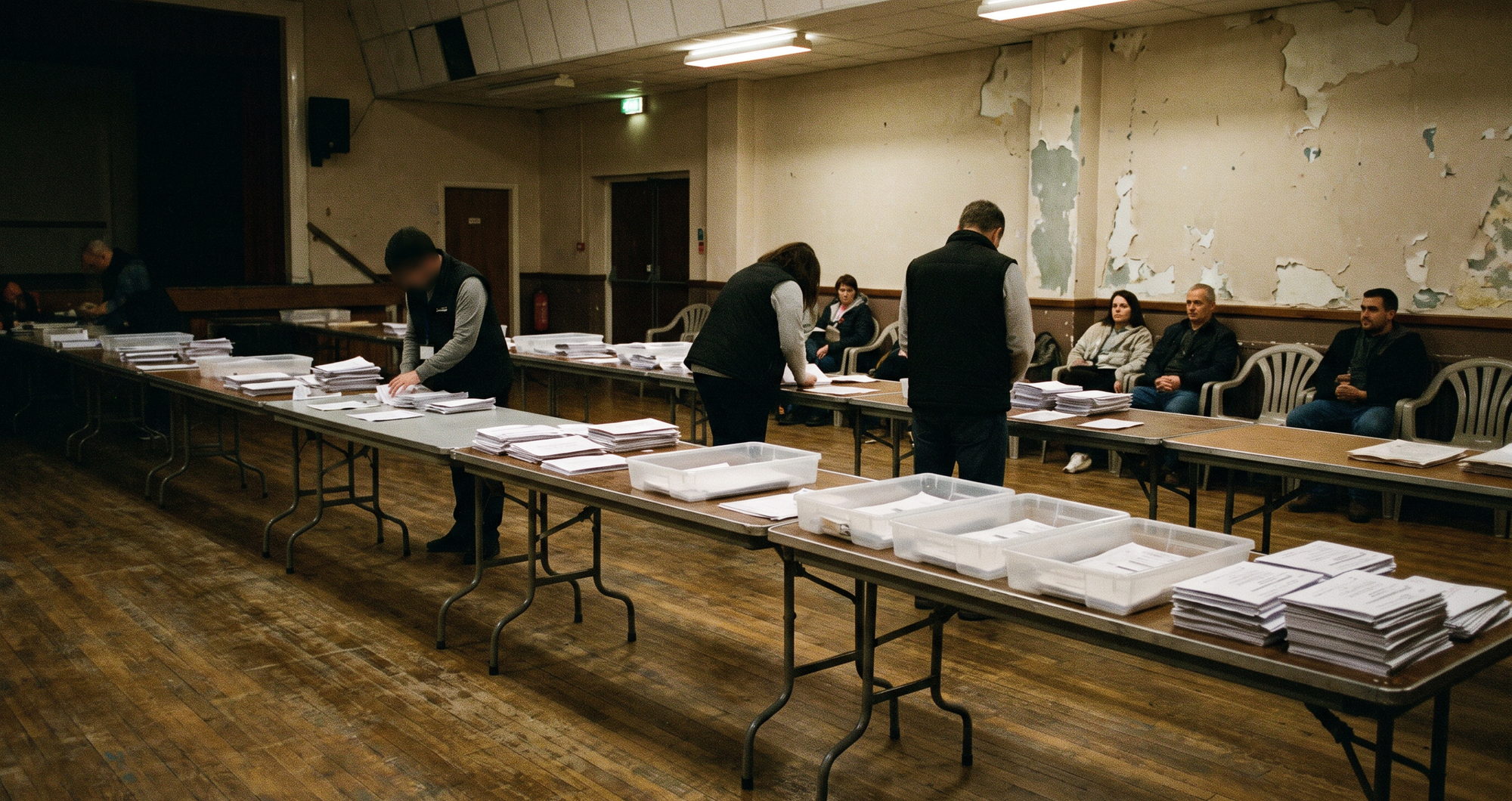

South Africa’s governing African National Congress was heading for its weakest national showing in a local government election, with the election commission’s partial count placing the party on about 32 per cent of the vote with 90 per cent of ballots counted on 6 November.
At the same stage, the Democratic Alliance stood near 24 per cent, and the MK party of former president Jacob Zuma was on 9.3 per cent nationally. With more than 80 per cent of ballots counted, the commission had the ANC on 31.8 per cent, almost 14 percentage points below its result at the 2021 local elections. Both stages point the same way: the governing party’s share held close to a third as completion moved from about 80 per cent to 90 per cent.
The CSIR, which produces projections from the count, estimated a final share of 31 per cent for the ANC and 24.5 per cent for the Democratic Alliance. Turnout was estimated at 54.5 per cent of registered voters, against 46 per cent at the previous local elections five years earlier, a rise of more than eight points.
At 5pm on 6 November the commission put national result completion at 91 per cent. None of these figures is final. Shares will move as outstanding ballots are added, and the commission has not declared a national result. It has not set out how far the shares may still shift before the tally closes.
Gauteng and KwaZulu-Natal
The ANC was projected to lose its status as the largest party in Gauteng and in KwaZulu-Natal, where the MK party was expected to finish first. The party has governed nationally since 1994. A share below a third of the local government vote would be its weakest result in that period.
Support is also spread more widely than in 2021, with the Democratic Alliance near a quarter of the vote and the MK party close to a tenth, leaving roughly a third divided among smaller parties. The national share is an aggregate of ward results, so each additional batch of ballots moves it only slightly; between the two published stages it moved by less than one percentage point.
Coalition talks
With no party close to a majority in the big cities, coalition talks began between parties while counting continued. Gauteng and KwaZulu-Natal carry the most weight in those discussions, because the count there leaves no single party near the share needed to govern alone.
In the large metropolitan councils, the effect of the count is that control will rest on agreements rather than on one party’s tally. The ANC’s projected loss of first place in both provinces removes its claim to enter those negotiations as the largest party.
What happens next
Final results were expected to be announced on Sunday 8 November. Until then the completed count is the only authoritative account of the vote, and the seat allocations that follow from it are not settled. Talks between parties have begun, and no agreement has been announced.
For residents of the large cities, the question that follows the count is who will hold executive power in their councils, and on what terms. The current figures will depend on agreements between parties that each finished well short of half the vote. The ANC’s own support, close to a third nationally, would leave it dependent on partners wherever it seeks to govern.
Beyond Sunday, the commission has given no further timetable for the declaration.







