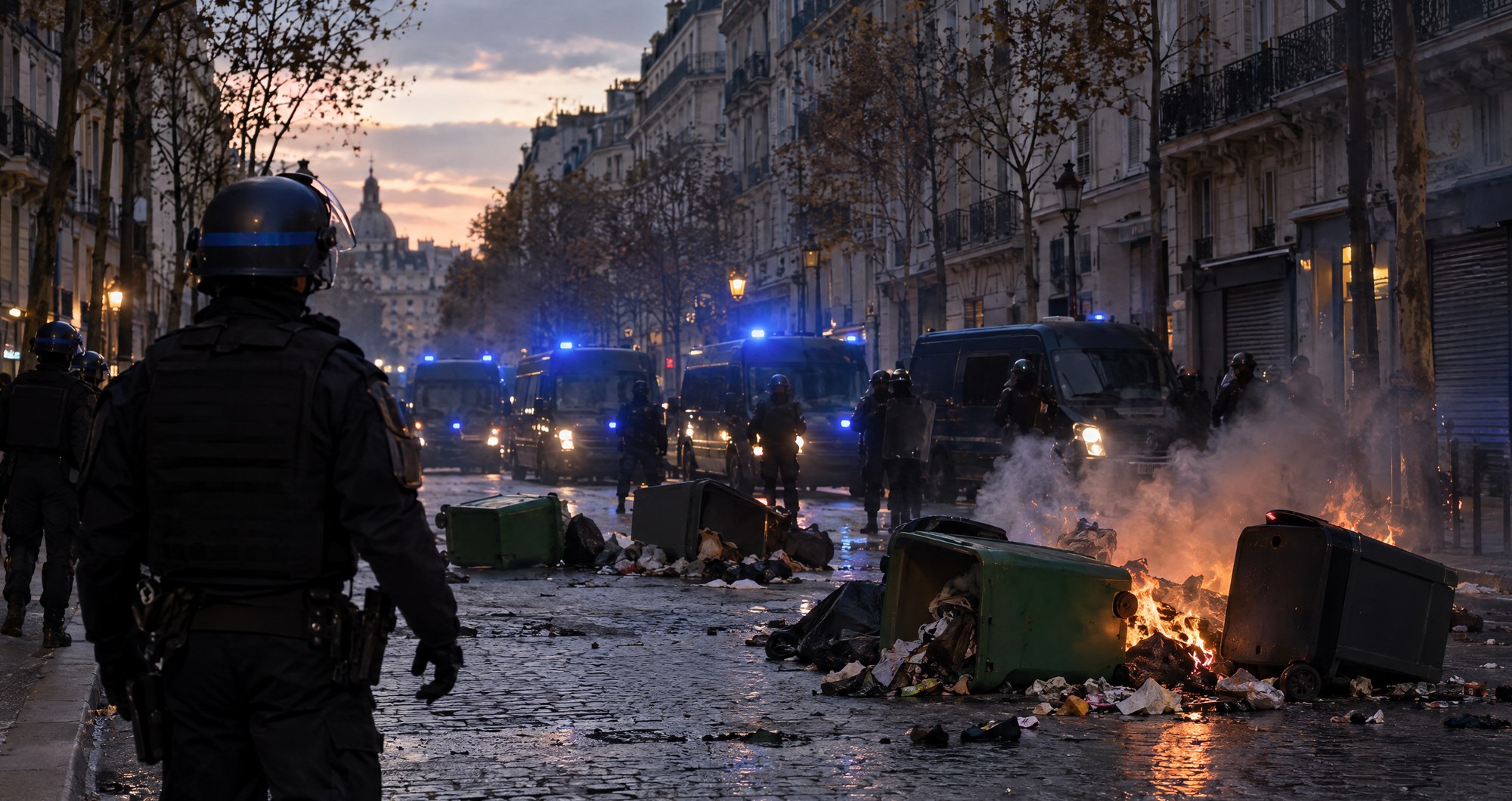

President Emmanuel Macron promised to hold those responsible for protest violence accountable in a rare televised address on Sunday, after France experienced a fourth consecutive weekend of demonstrations over living costs and public services. His intervention followed clashes in Paris, Marseille, Lyon and other cities on 7 November, with at least 360 people arrested nationwide, according to the interior ministry.
Speaking to the nation on 8 November, Macron condemned what he called unbridled violence. He said those who looted would pay for the damage and those who sought to bring down the Republic would be held accountable. The address came before talks between Prime Minister Sébastien Lecornu, unions and employers scheduled for Monday.
The unrest has grown from protests by high-school students over school conditions into a broader movement focused on the cost of living and public services. It is challenging Macron’s authority as his government seeks to push through a budget without a parliamentary majority, with the 2027 presidential election approaching.
Clashes follow marches across France
The interior ministry counted 146,000 demonstrators across France on Saturday, including 46,000 in Paris. The youth union alliance gave substantially higher figures, putting national participation at 250,000 and the Paris turnout at 75,000. The two sets of estimates leave a significant difference over the size of the demonstrations.
Both national estimates were below the 575,000 recorded at union-led marches on 5 November. Saturday’s demonstrations nevertheless extended the protests into a fourth consecutive weekend, with violence reported in several cities. The lower turnout did not bring an end to the clashes that have accompanied the unrest.
In Paris, police fired tear gas at the end of the march near Place de la Nation. Two Yellow Vest leaders were also detained after trying to hold a banned gathering at La Concorde. Those detentions were separate from the events at the end of the march.
The interior ministry’s nationwide tally recorded at least 360 arrests on the day, well below the number from the previous weekend. That figure covers arrests across France, rather than Paris alone. The turnout and arrest totals measure different aspects of Saturday’s events and do not establish how many demonstrators took part in violence.
Macron focuses on responsibility for violence
Macron’s Sunday address placed responsibility for looting and attacks on the Republic at the centre of his response. His promise that those who looted would pay for the damage set out a demand for accountability, while his comments about those seeking to bring down the Republic addressed what he presented as a challenge to the state.
The remarks followed another weekend in which demonstrations over social and economic concerns were accompanied by clashes. The protesters’ demands over living costs and public services remain distinct from the acts of violence condemned by the president. The available turnout figures do not provide a basis for treating everyone who attended as responsible for those acts.
The unrest began in late September, when high-school students protested against overcrowded and dilapidated schools. That starting point remains part of the movement’s background, even as the demonstrations have widened to include concerns about purchasing power and the condition of public services.
Budget dispute adds to political pressure
The protests are unfolding alongside a difficult budget process for a government without a parliamentary majority. Deputies rejected the revenue section of the 2027 budget on 4 November, three days before the latest Saturday demonstrations. Debate in the Senate is due to begin on 20 November.
That timetable places the government’s financial plans alongside the immediate demands being raised on the streets. The rejection of the revenue section was a parliamentary setback, while the continuing demonstrations present a separate challenge over living standards and services. Neither process had reached a resolution by the time of Macron’s address.
The political response also extends to the far right before next year’s presidential election. Marine Le Pen blamed immigration in her own televised response. Her comments represent her political interpretation of the unrest, not an established explanation for protests that began over school conditions and developed around living costs and public services.
Wages and purchasing power on Monday’s agenda
Lecornu is due to meet unions and employers on Monday 9 November to discuss wages and purchasing power. Those subjects directly address the economic concerns behind the nationwide demonstrations. The talks are the next scheduled step in the government’s response after Macron’s televised intervention.
No outcome from that meeting is yet known. The immediate focus now shifts from Sunday’s presidential warning to discussions with representatives of workers and employers, while the budget remains unresolved. After four consecutive weekends of demonstrations, the government faces both the demand for action on living standards and the task of responding to further protest violence.