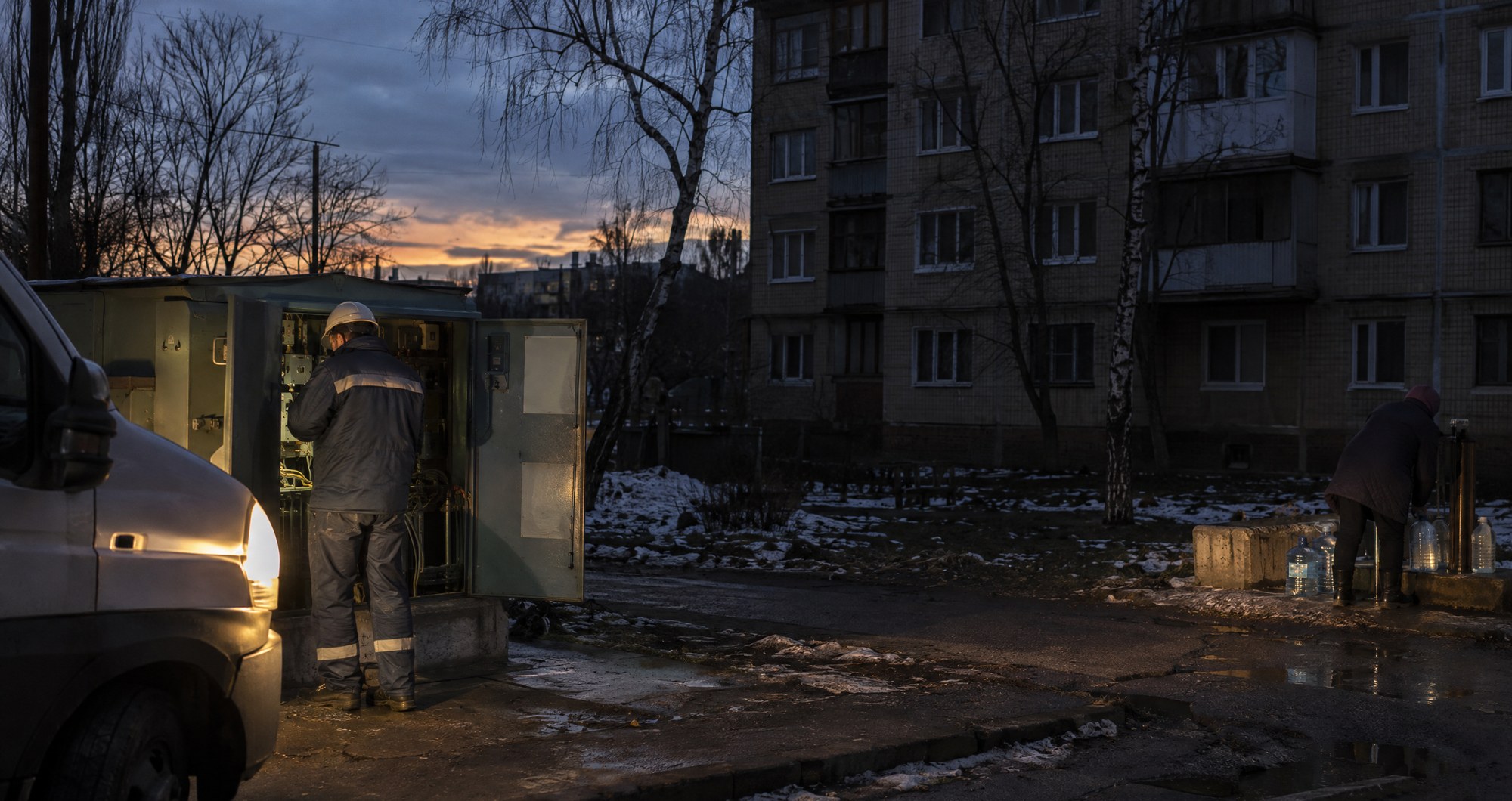

Russian attacks on Ukraine’s power system left more than 600,000 electricity customers without supply in the Dnipropetrovsk region on 8 November, two days before talks involving Ukrainian, Russian and United States officials in Abu Dhabi. Hospitals switched to diesel generators and electric public transport stopped in Dnipro, according to the regional military administration.
Governor Oleksandr Hanzha said five districts had been affected. Repair crews were working under continued shelling, adding to the difficulties of restoring electricity after the attacks. Energy company DTEK also confirmed damage to its equipment in the region.
Ukrainian authorities reported that one civilian was killed and another injured in Dnipro. Four people were reported hurt in the Poltava region. The attacks came after President Volodymyr Zelensky accused Moscow of trying to blackmail Kyiv by plunging the country into darkness ahead of negotiations.
Hospitals turn to generators as transport stops
The regional administration’s figure of more than 600,000 refers to electricity customers without supply, rather than a confirmed count of individual people affected. The disruption extended across five districts, with consequences for hospital power supplies and electrically powered transport in the regional capital.
Hanzha said hospitals had switched to diesel generators after losing electricity. In Dnipro, electric public transport had stopped. Those were among the immediate effects reported by the governor as crews worked to repair the damage while shelling continued.
DTEK’s confirmation established that its equipment in Dnipropetrovsk had been damaged. The information provided did not include a timetable for restoring supply to all customers, a detailed breakdown of the equipment affected or an estimate of the cost of repairs.
The extent of the outage demonstrated the disruption caused by attacks on electricity infrastructure. It did not, however, establish how many spare transformers were available or how many additional repair workers were needed. The scale of any shortages of replacement equipment or crews remains unconfirmed.
Ukraine reports missiles and 164 strike drones
Ukraine’s air force said the overnight attack involved three Kh-59/69 guided missiles, fired from over the Sea of Azov, and 164 strike drones. It reported that 137 of the drones had been intercepted.
That left 27 drones outside the reported interception total, but the figures alone do not establish where each of those drones went or what damage they caused. The supplied account also did not give an interception outcome for the three guided missiles.
The civilian casualties reported in Dnipro and the Poltava region were attributed to the attacks by Ukrainian authorities. The available information did not identify those killed or injured, or provide further details about their injuries and the circumstances in which they were struck.
Russia’s defence ministry said it had hit an electricity substation serving Ukrainian defence plants. It also claimed to have struck a container ship in the Black Sea that was carrying weapons. Neither the claimed military role of the substation nor the account of the ship’s cargo has been independently verified.
Separately, the governor of Russia’s Kursk region said a man had been killed there by a drone. The report did not establish a connection between that death and the overnight attacks reported by Ukraine’s air force.
Abu Dhabi negotiations follow power attacks
The strikes preceded trilateral talks scheduled for 10 and 11 November in Abu Dhabi, involving officials from Ukraine, Russia and the United States. European diplomats are also due to join the discussions.
Zelensky’s accusation placed the attacks on Ukraine’s electricity system directly in the context of those negotiations. He said Moscow was trying to blackmail Kyiv by plunging the country into darkness. That is his assessment of Russia’s purpose, rather than an independently established explanation for the latest strikes.
Russia’s defence ministry presented its account in terms of targets it said supported Ukraine’s military. Ukrainian regional officials, meanwhile, reported a widespread loss of civilian electricity supply, hospitals relying on generators and the suspension of electric public transport.
The immediate task in Dnipropetrovsk remains restoring power to affected customers while repair crews face continued shelling. No confirmed date for full restoration was provided. The next scheduled diplomatic development is the Abu Dhabi meeting, taking place two days after the reported outage.
The supplied information did not identify new commitments for European air defence funding or emergency electricity imports following the attacks. Any such response, and any agreement emerging from the talks, remains uncertain.