
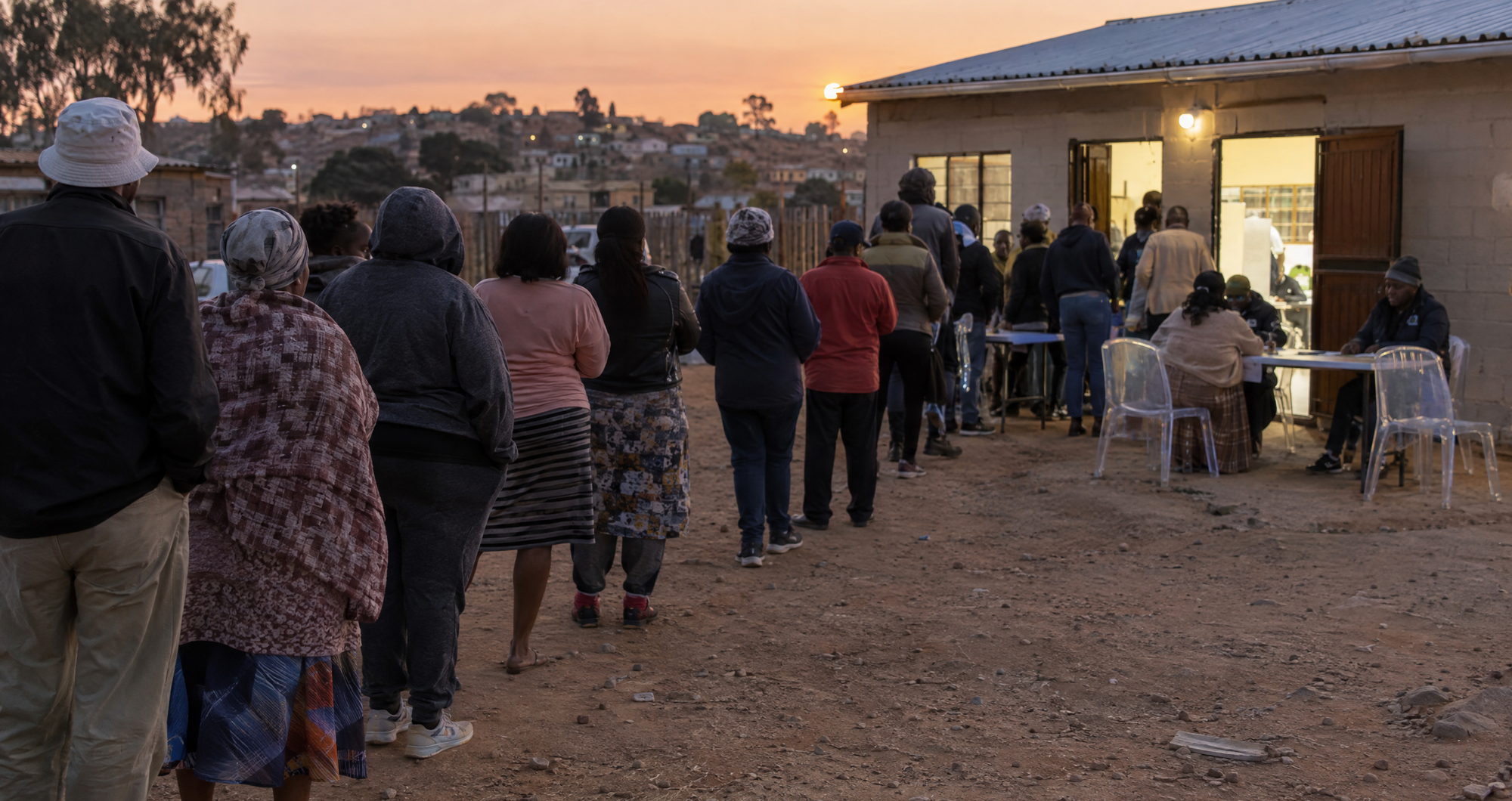

South Africa’s African National Congress has recorded its weakest election result since the end of apartheid, winning 30.76% of the vote in local government elections that produced 127 hung councils. The result sets up coalition negotiations across much of the country, with parties facing a 14-day deadline before city councils are constituted.
The Electoral Commission declared the 2026 elections free and fair on Sunday night. National turnout reached 52%, up 6.1 percentage points, with about 14.9 million ballots cast by an electorate of 29.2 million registered voters.
The ANC secured 3,246 council seats, but its vote share fell sharply from 45.59% in 2021. Secretary-General Fikile Mbalula called the outcome “catastrophic”, while President Cyril Ramaphosa urged parties to approach coalition negotiations with humility.
For the party that became synonymous with government following the end of apartheid, the result marks a further retreat from electoral dominance. It also makes the choices of potential coalition partners central to determining who will govern many municipalities.
A fragmented council map
The Democratic Alliance won 24.64% of the vote and 1,695 council seats. Former president Jacob Zuma’s uMkhonto weSizwe Party took 9.76% and 785 seats, while the Economic Freedom Fighters secured 6.22% and ActionSA won 5.67%.
Those national totals show the distribution of support across the election, but municipal government will be decided council by council. A party’s overall vote share does not establish which alliances it can form locally, or whether negotiations will produce durable governing arrangements.
Of South Africa’s 213 municipalities, 127 are hung councils, meaning no party crossed the 50% threshold. That is roughly double the figure in 2021 and puts negotiations, rather than outright party victories, at the centre of the next stage.
The ANC won outright control of 53 municipalities. Across the country, 72 municipalities produced an outright majority. The contrast between those results and the much larger number of hung councils illustrates the extent to which municipal politics now depends on agreements between rivals.
Negotiations, not settled deals
The DA has said it will seek partners committed to clean government rather than automatically working with the ANC. That position does not settle where agreements will be reached, but it makes clear that an ANC-DA partnership cannot be assumed wherever neither has a majority.
Ramaphosa’s appeal for humility places the emphasis on negotiation following a bruising result for his party. Mbalula’s description of the outcome acknowledges the scale of the setback, but neither statement determines how individual councils will be governed.
For readers outside South Africa, the distinction between this contest and a national election is important. These ballots determine municipal representation, not the composition of the national government. Yet the results carry wider political weight because they measure party support and shape government in the country’s biggest cities.
Municipal councils have responsibilities for services that affect daily life, including water, sanitation and local roads. Coalition agreements therefore matter beyond party arithmetic. The practical question is whether parties can agree governing arrangements capable of carrying out those responsibilities. The election result alone cannot answer it.
Turnout and public confidence
The contest covered 10,526 council seats, with 521 parties taking part. The rise in turnout brought more voters into the process than in the previous local election, even as the outcome produced a more fragmented political map.
A Human Sciences Research Council survey found that 90% rated the procedures free and 91% rated them fair. Trust in the Electoral Commission stood at 81%. Those findings sit alongside the commission’s declaration that the elections were free and fair.
The wider significance reaches beyond municipal boundaries. In Africa’s most industrialised economy, the ANC’s declining share of the vote and the spread of hung councils make coalition politics increasingly important. The performance of those arrangements will also form part of the political context for the 2029 national vote.
The immediate task is to conclude talks within 14 days before city councils are constituted. Which parties will govern together, and on what terms, remains unresolved. For residents, the practical test will be how the resulting administrations manage the services entrusted to them.







