
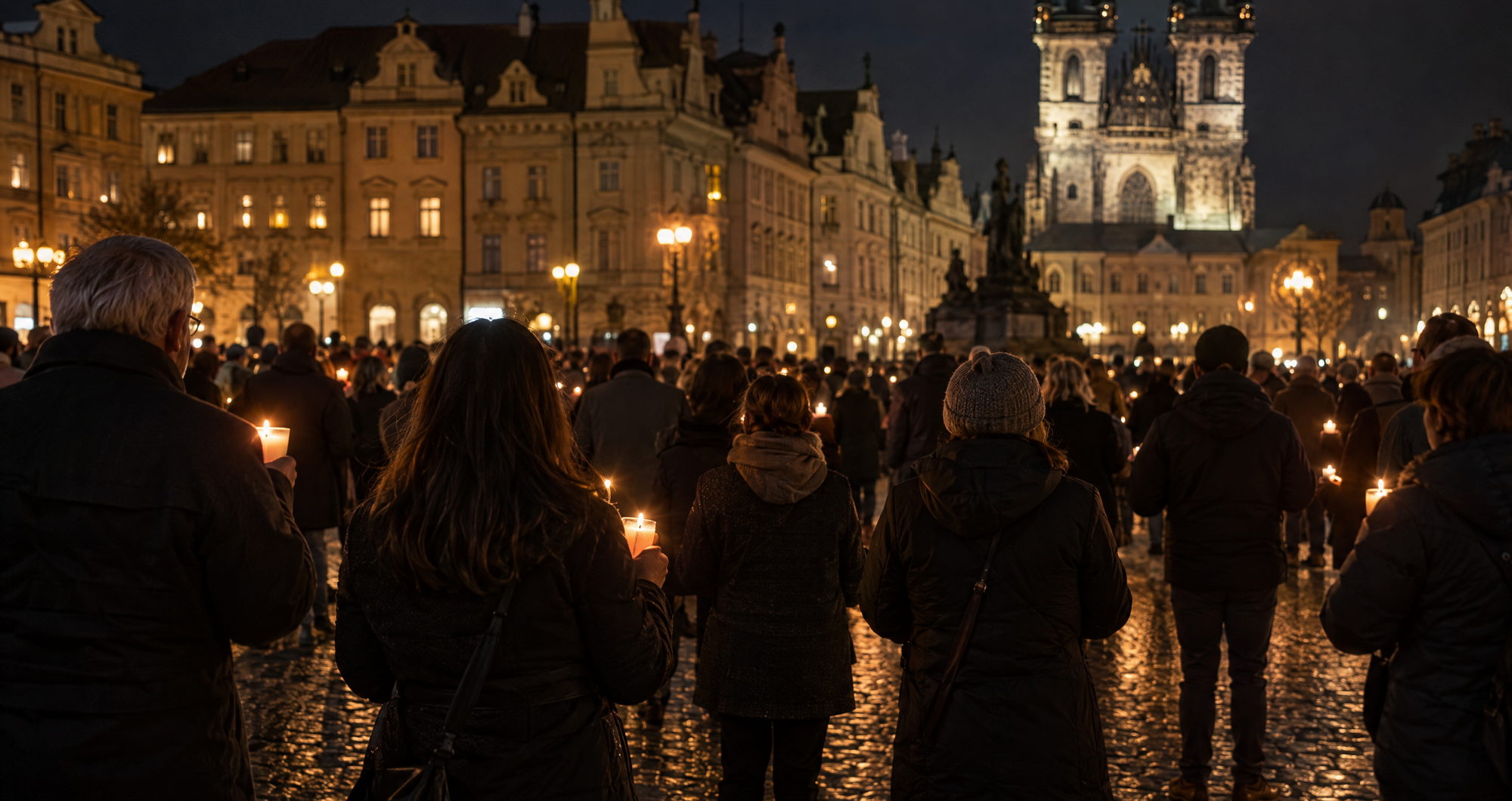

Thousands of people walked in silence through Krakow on the evening of 9 November, joining President Karol Nawrocki and Prime Minister Donald Tusk to remember six people killed in a mass shooting on the city’s Main Market Square two days earlier.
The march brought Poland’s national leaders together with mourners in a city observing an extended period of mourning. The attack on 7 November was the first of its kind in Poland, challenging the country’s sense of itself as a place where violence on this scale is rare.
On the same day as the march, the suspected gunman died in hospital. Prosecutors identified him as 24-year-old Michal Oksinski, from Ostrowiec Swietokrzyski. Police had shot and arrested him within minutes of the attack.
His death came while questions about the killings remained unresolved. The national prosecutor’s office said a motive had not been established, despite initial suggestions by officials of a possible far-right connection. Those suggestions have become the subject of a political dispute.
A city in mourning
National mourning was observed on 8 and 9 November, while Krakow’s period of mourning continues until 11 November. The silent procession gave thousands of people an opportunity to pay their respects together, with both the president and prime minister taking part.
The Main Market Square is a central public space in Krakow’s historic centre, familiar to residents and visitors alike. The location helps explain the wider significance of an attack that turned a shared civic setting into the scene of a mass killing.
For readers in London, the immediate context is a major European city confronting an exceptional act of violence in one of its best-known public places. The significance does not depend on a British connection: the killings have prompted national mourning in Poland and questions about the circumstances of the attack.
The presence of Nawrocki and Tusk placed the march at the centre of Poland’s public response. Alongside that shared act of remembrance, however, the political debate over the suspected gunman’s motives remains unsettled.
Questions for investigators
Prosecutors said four firearms and several hundred rounds of ammunition were recovered. They also said the bodies of the suspect’s father, mother and sister were found at the family home. Both the suspect and his father held gun permits.
Those findings form part of the circumstances investigators are examining, but they do not establish why the attack happened. The discovery of the relatives’ bodies is a further element of the inquiry, separate from the six deaths on the Main Market Square.
The suspect’s death in hospital means he cannot answer investigators’ questions. His arrest and subsequent death do not, in themselves, settle the outstanding questions about motive or explain the relationship between the events at the family home and the shooting in Krakow.
The existence of gun permits is also distinct from an explanation of the attack. The available details establish that both men held permits and that weapons and ammunition were recovered, but do not provide a complete account of how the shooting was prepared.
Motive remains unresolved
Officials initially suggested a possible far-right motive, then urged caution. The national prosecutor’s office has said the motive is not yet established. The nationalist opposition rejected any far-right link, placing the issue within an existing divide between the government and its political opponents.
That disagreement should not be confused with an investigative conclusion. A suggested ideological connection remains a possibility raised by officials, not an established finding. Equally, the opposition’s rejection of such a link does not resolve the question prosecutors are examining.
Cybercrime police also detained five Polish citizens and one Ukrainian, aged 15 to 36, over threatening posts following the attack. Those detentions concern the posts; they do not establish involvement in the square shooting.
As Krakow’s mourning continues until 11 November, the central unanswered question remains what drove the attack. Establishing that motive, rather than treating competing political claims as conclusions, will be essential to understanding the killings.







