
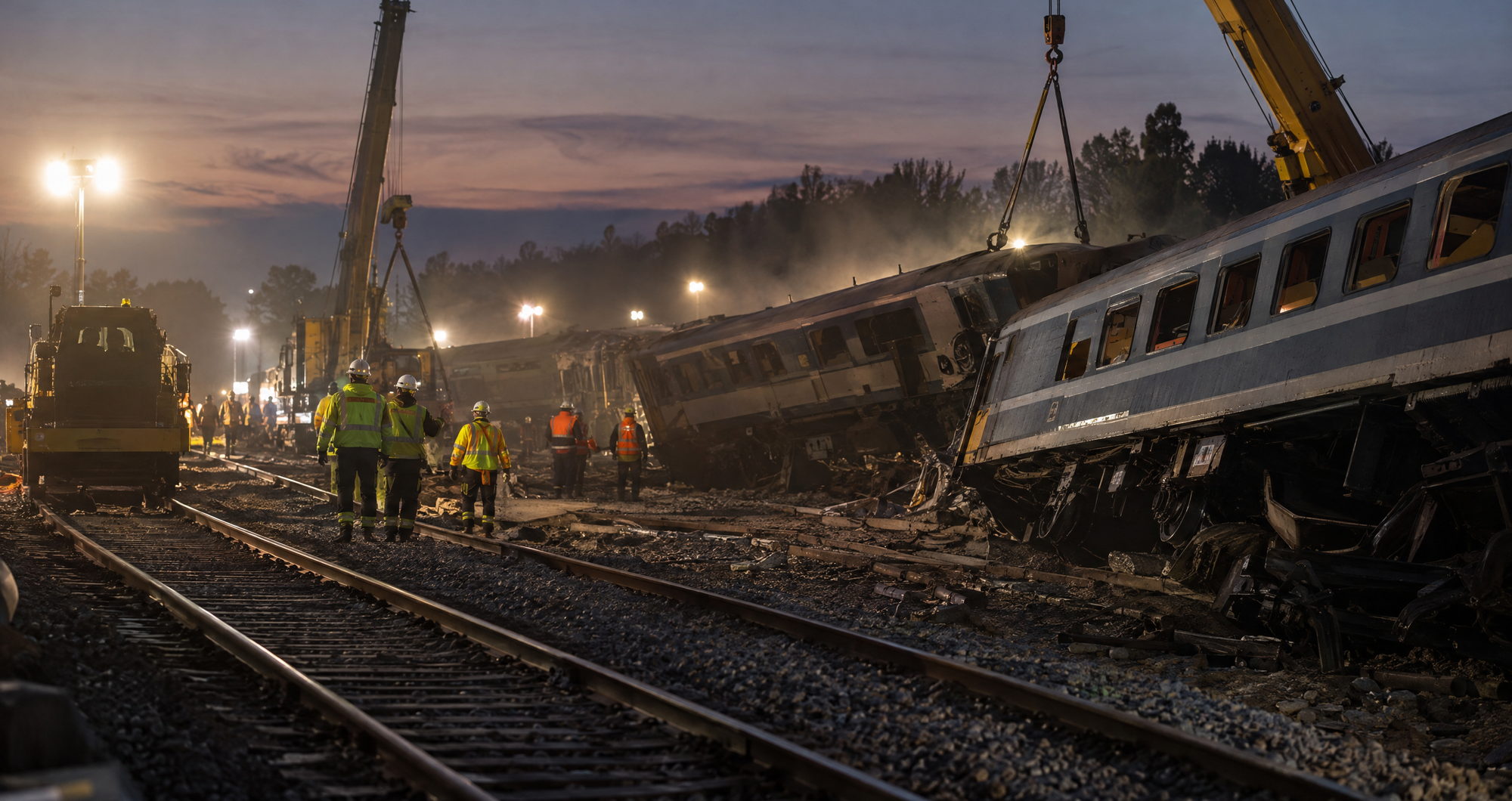

Seven people have died and more than 100 have been injured in a collision between passenger trains south of Cairo, Egypt’s health ministry said. A service travelling from Giza to Fayoum struck the rear of a Cairo-to-Aswan train between Kafr Ammar and Al-Raqqa stations in Giza governorate on 8 November 2026.
One of the train drivers was among those killed. Carriages derailed and several overturned in the collision, prompting the deployment of more than 50 ambulances and heavy lifting equipment. Hospitals in the area were placed on heightened alert as injured passengers were taken for treatment.
Prosecutors said the Cairo-to-Aswan train was stationary when it was hit. The cause of the collision has not been established. President Abdel Fattah el-Sisi has ordered an investigation and said anyone found negligent would be held accountable.
Hospital treatment
The health ministry confirmed the death toll at seven, while injury totals ranged from 112 to 125 as hospitals updated their counts. Those figures give a changing picture of the number treated, rather than a single settled total. About 45 of the injured were discharged following treatment.
The discharge figure does not establish the condition of everyone still in hospital. The information available does not give a breakdown of the severity of injuries, nor does it identify all those who died. For families of passengers on the services, the confirmed toll makes this a fatal accident with consequences extending beyond the disruption to rail travel.
The emergency response involved both medical assistance and equipment to deal with the derailed and overturned carriages. The deployment of ambulances and the heightened alert at nearby hospitals reflected the scale of the response required along this section of railway south of the capital.
As hospital counts were updated, the central confirmed figures remained seven deaths and more than 100 injuries. The range in the injury total should not be read as evidence of a change in the death toll, which the health ministry put at seven.
Investigation ordered
The account of the collision establishes the direction of the impact: the Giza-to-Fayoum service struck the rear of the Cairo-to-Aswan train. Prosecutors’ statement that the latter was stationary is an important part of the circumstances being examined, but it does not by itself explain why the collision occurred.
El-Sisi’s instruction places an investigation at the centre of the official response. His pledge of accountability applies to anyone found negligent. It is not a finding that negligence caused the crash, and responsibility cannot be established from the collision sequence alone.
The distinction matters because a rear-end impact describes what happened, not the operational circumstances that allowed it to happen. The investigation will need to establish the cause before conclusions can be drawn about responsibility. No cause has yet been confirmed.
The death of a train driver is included in the ministry’s total. The available information does not establish which of the services that driver was operating, and it provides no basis for attributing responsibility to that individual.
Railway under scrutiny
Egypt’s railway network is the oldest in Africa and the Middle East and has a long record of deadly accidents. This collision renews scrutiny of safety on the ageing state railway, while putting pressure on a government that has promised substantial investment in transport.
For readers outside Egypt, the wider significance lies in the relationship between that investment promise and the safe operation of passenger services. The history of fatal accidents provides context for the scrutiny, but does not establish the cause of this collision or prove that any particular failing was involved.
The immediate questions concern the circumstances of the impact and the condition of those injured. The ordered investigation is the next step towards establishing what happened and whether anyone was negligent. Until its findings are available, the cause and responsibility remain unresolved.







