
After more than 30 years studying human communication, Penny Newton-Hurley has channelled her experience into a new book, The Human Language, offering practical ways to argue less, listen better and build stronger relationships.
We have never had more ways to communicate.

Penny Newton-Hurley (Image supplied)
We WhatsApp our families from the next room, send voice notes to friends, fire off emails to colleagues and spend hours scrolling through the thoughts of complete strangers on social media.
Yet somehow, despite all this talking, many of us seem to be getting worse at actually understanding one another.
A hastily written WhatsApp message can cause a family row. An email from a boss can leave us stewing for the rest of the day. Couples can have the same argument repeatedly without either person feeling heard.
And don’t even get me started on the misunderstandings caused by that most dangerous piece of modern punctuation: the full stop at the end of a text message.
Communication expert Penny Newton-Hurley believes there is another way.
After more than three decades working in interpersonal communication, conflict resolution and emotional intelligence, Penny has distilled much of what she has learnt into her new book, The Human Language, published by Serapis Bey Publishing.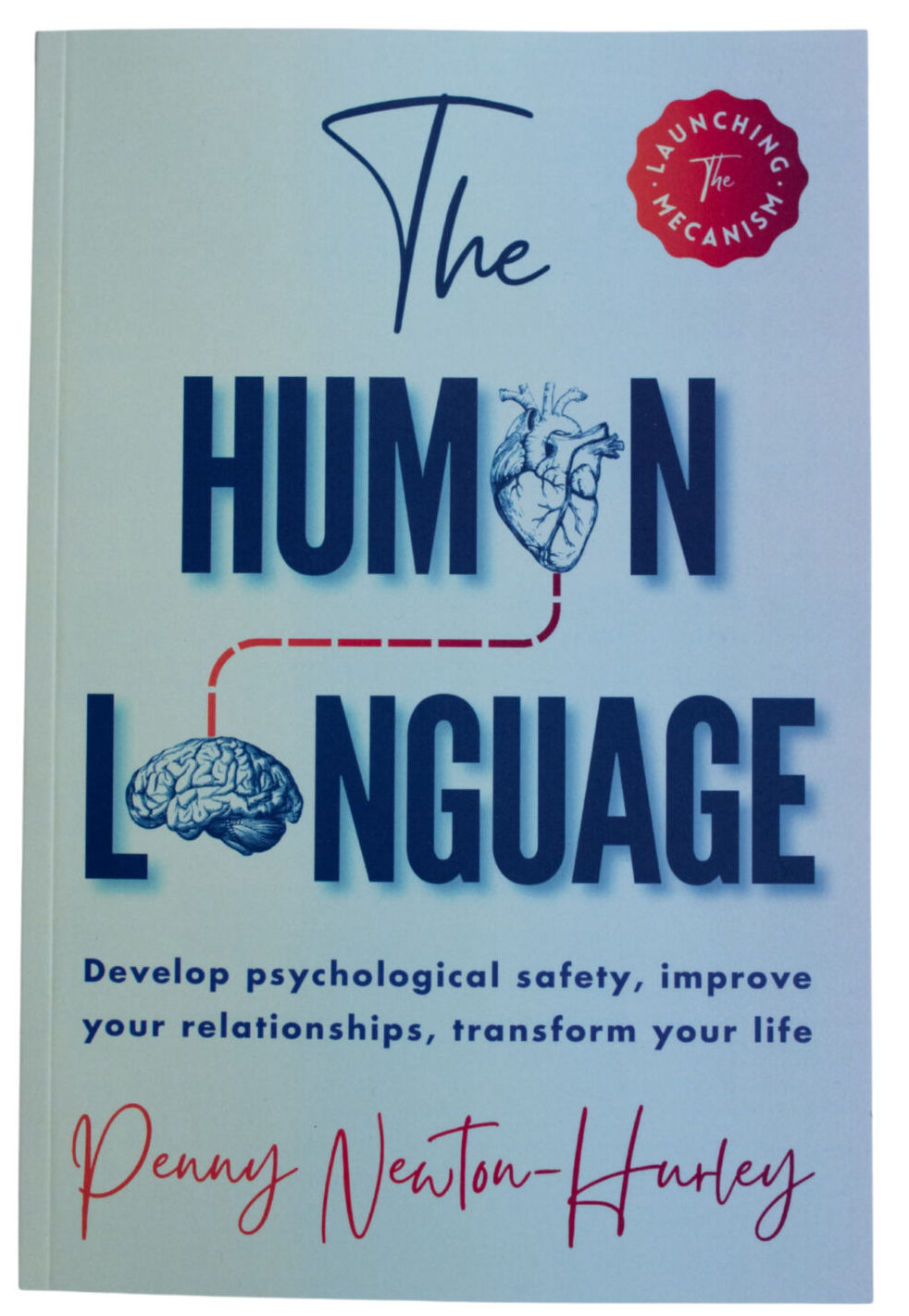
Its premise sounds deceptively simple: changing the way we speak and listen could change our relationships and, ultimately, our lives.
But Penny’s fascination with communication began long before WhatsApp, emojis and social media entered our lives.
In fact, one of her earliest experiences of communicating involved Morse code.
As a child, Penny would communicate with her father using it, sparking an interest in language and human connection that would eventually become her career.
After working in international marketing, she moved into the then-emerging world of internal communications. Over the following decades, her work took her into private organisations as well as government, healthcare, education and the military.
Today, she is the founder of CommPassion and works as a trainer, workplace mediator and psychological safety facilitator. She is also a listening volunteer with Samaritans.
But it was discovering Nonviolent Communication in 2005 that helped crystallise the idea at the centre of her work: much of the way we communicate isn’t necessarily serving us very well.
Why do conversations go so wrong?
One of the central ideas behind The Human Language is that when we feel threatened, criticised or misunderstood, our instinctive responses can take over.
We defend ourselves. We blame. We shut down. We say something in anger and regret it five minutes later.
Penny argues that understanding what is happening inside us before responding can dramatically change what happens next.
Her book introduces what she calls The MECAnism, a practical framework designed to help people calm instinctive reactions, understand their feelings and needs, listen with empathy and communicate more consciously.
It’s not about becoming endlessly agreeable.
In fact, Penny is particularly interesting on the difference between being kind and being a people-pleaser.
She argues that constantly saying yes when we mean no, avoiding difficult conversations and swallowing our own frustrations isn’t necessarily kindness at all. Eventually resentment builds, and relationships suffer.
Real compassion can sometimes mean saying what you actually need, clearly and respectfully.
It’s a lesson that feels particularly relevant to women who have grown up being encouraged to keep everyone happy, avoid confrontation and smooth things over.
The idea applies just as easily to a marriage as it does to an office.
The WhatsApp problem
Then there is the way technology has transformed our conversations.
A generation ago, an argument might have happened face-to-face or over the telephone. Today it can unfold at frightening speed in a family WhatsApp group, workplace Slack channel or string of increasingly terse text messages.
The words may be perfectly innocent, but we supply the tone ourselves.
Penny has previously highlighted how quickly digital conflict can escalate because messages travel faster than reflection, tone has to be inferred and people often respond while emotionally triggered.
Most of us will recognise the experience.
You receive a message that annoys you. You immediately type a reply. The other person responds defensively. Within ten minutes you’re having an argument neither of you intended to have.
One of the most useful ideas underpinning Penny’s approach is simply creating a little space between feeling something and reacting to it.
It sounds obvious.
It’s considerably harder at 7.45 am when you’re trying to get a child dressed for school, you’ve lost one shoe and somebody has just told you they don’t like the breakfast they specifically requested five minutes earlier.
But this is precisely why The Human Language isn’t positioned simply as a workplace communication manual.
Its ideas stretch into parenting, friendships, romantic relationships and the conversations we have with ourselves.
Listening without preparing your comeback
Perhaps one of our biggest communication problems is that we’re not always listening at all.
We’re waiting. While another person is talking, we’re constructing our defence, preparing our counterargument or deciding why they’re wrong.
Penny’s approach puts greater emphasis on listening to understand rather than listening to respond, alongside recognising our assumptions before they turn into judgements.
That doesn’t mean agreeing with everyone.
Nor does empathy require you to abandon your own boundaries.
Instead, the aim is to understand what is actually happening beneath a disagreement so that two people have a better chance of resolving it.
It’s an approach Penny has spent decades taking into workplaces and organisations. Her client experience spans multinational businesses, local councils, NHS trusts, government departments, universities, schools and the British military.
In 2025, CommPassion also won an award for its online course teaching The Human Language and its MECAnism approach.
Now Penny wants to take those ideas far beyond the boardroom.
Can changing your words really change your life?
There is something rather appealing about the premise of The Human Language.
We spend fortunes trying to improve ourselves.
We join gyms, download mindfulness apps, buy journals, listen to podcasts and promise ourselves that this will finally be the year we become calmer, happier and more organised.
Yet one of the things affecting almost every part of our lives is completely free: how we talk to the people around us.
A different conversation won’t magically fix a bad relationship or solve every workplace disagreement.
But being able to recognise why you’re angry before launching into an argument, explain what you actually need and listen properly to what another person is trying to tell you isn’t a bad place to start.
Penny’s ambition is considerable. She talks about wanting to change the way the world speaks.
That might sound like a rather enormous task for one woman and a book.
But perhaps changing the way the world speaks doesn’t begin with the world.
Perhaps it begins with the next conversation.
The Human Language by Penny Newton-Hurley is published by Serapis Bey Publishing and is out on 6th September 2026.