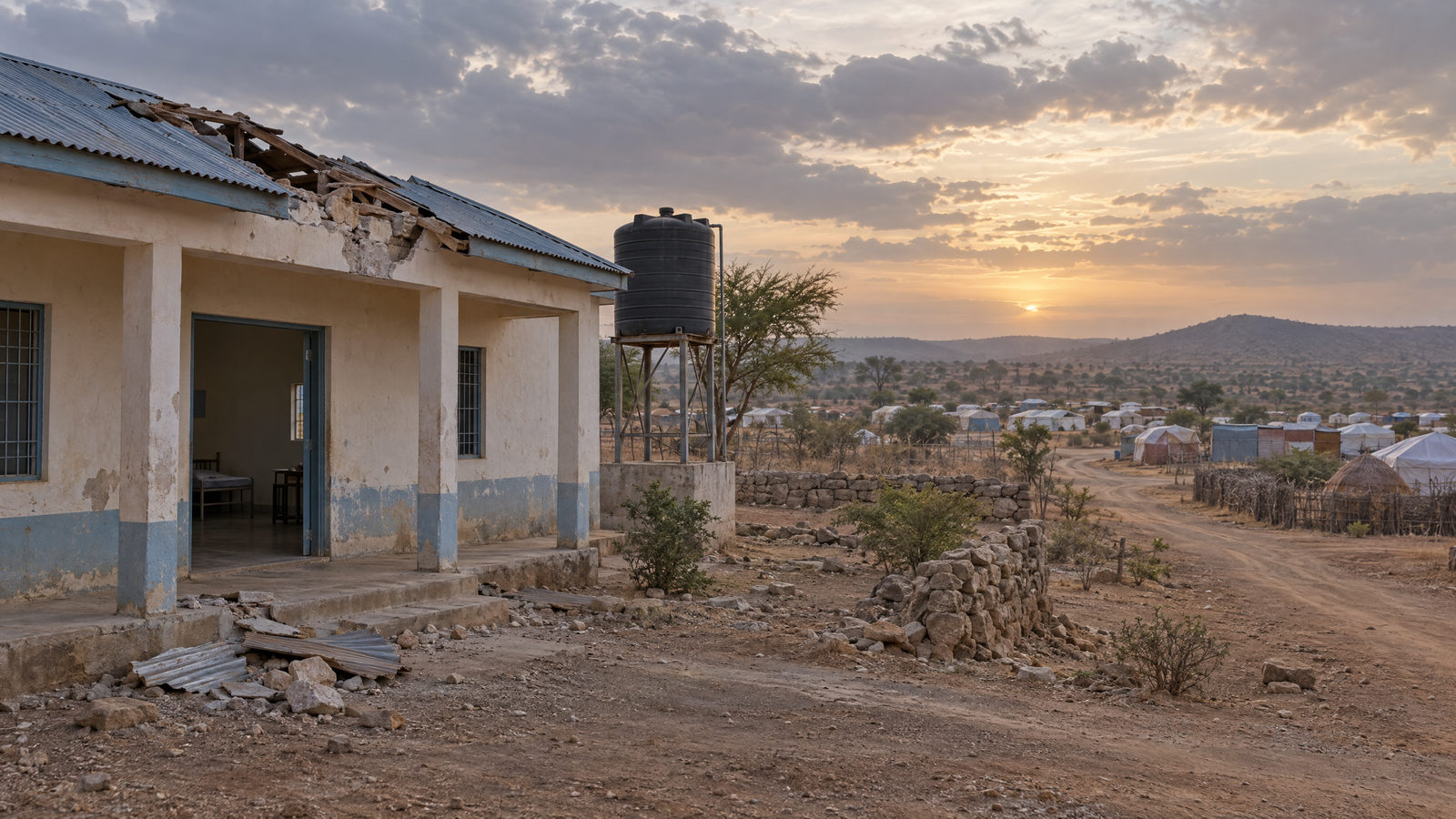

Renewed fighting in Baidoa has injured children, damaged health facilities and made it harder for civilians to reach treatment. The clashes erupted on Monday, 28 September, in the South West State city, where displaced families are already facing severe food insecurity and rising child malnutrition.
Children were reported among those killed and injured. The casualty information available by Wednesday did not give a separate total for child deaths. Medical teams recorded three deaths overall. One was reported to be a community health worker who died after a mortar struck his home.
At least 17 children were reported injured and receiving treatment in hospitals around the city. At Bay Regional Hospital, teams working with the health ministry received 69 patients affected by the violence, including five children. These figures cover different groups: the 69 patients were received at one hospital, while the injured children were treated across several facilities.
Damage inside a hospital
An explosion near Baidoa District Hospital reportedly caused serious injuries to patients, health workers and carers. Damage was reported to the maternity ward, outpatient department, waiting and consultation areas, water facilities, a security gate and an ambulance. Part of the roof reportedly collapsed, trapping people inside. Three health facilities were reported damaged during the clashes, and an ambulance was reported seized.
Medical staff continued treating people despite the damage. Long queues of injured patients formed, and those needing critical care were referred elsewhere. Roads leading to hospitals were blocked after fighting began, leaving only a small number of wounded people able to reach Bay Regional Hospital. More patients were expected to arrive if routes reopened.
The disruption affects more than people hurt in the clashes. Baidoa’s health facilities also provide maternity, paediatric and nutrition care. Children with severe malnutrition depend on continuing treatment, while damaged water systems and blocked transport can add further pressure to already vulnerable households. Patients with urgent conditions unrelated to the fighting also risk delays.
Displacement and projected hunger
Baidoa is home to an estimated 800,000 displaced people, close to half the city’s population. Nearly 26,000 displaced people there are projected to face Catastrophe, or IPC Phase 5, between October and December. This is the most severe acute food-insecurity classification. Famine has not been declared; it is a risk under a plausible worst-case scenario if flooding and displacement are more severe than expected and assistance remains insufficient.
The projection comes after prolonged drought and ahead of a forecast period of heavier rains and possible El Niño-related flooding. Across Somalia, 5.4 million people are expected to face crisis-level hunger or worse in the same three-month period. For Baidoa’s displaced families, hunger, malnutrition and insecurity are compounding pressures rather than separate emergencies.
The latest clashes were the third major outbreak in Baidoa since 17 August. Earlier rounds also brought large numbers of wounded people to hospitals, placing services under repeated strain. The renewed violence therefore comes as health teams are already treating malnourished children and preparing for worsening food needs and potential floods.
Keeping routes to hospitals open is an immediate need so injured people and other patients can reach care. Medical sites, health workers and civilians need protection, while humanitarian teams require safe access to deliver food, water and nutrition support. The coming weeks will test whether aid can reach displaced families before heavier rains add to the pressure on Baidoa’s already stretched services.