
Have you ever considered how the texture of the snacks you offer your baby affects their ability to feed themselves? Babies develop their motor skills, oral coordination, and sensory abilities as they transition from smooth purées to finger foods. Texture variety in baby foods is more than just a matter of taste; it plays a crucial role in helping babies learn to self-feed, chew, and explore new foods safely.
Choosing baby snacks with varying textures helps introduce babies to a broader range of sensory experiences, promoting their cognitive and physical development. Offering a variety of textures, from soft and crunchy to smooth and grainy, not only makes feeding time exciting but also encourages babies to develop critical skills such as gripping, chewing, and swallowing safely. Let’s explore how texture variety in baby foods promotes safe self-feeding and excitingly supports your baby’s growth.
Why Texture Matters in Baby Foods
The texture of baby snacks plays a crucial role in their enjoyment and developmental benefits. Babies learn through exploration, and when it comes to food, texture is a significant part of that learning process. Introducing different textures in snacks encourages babies to use their hands, mouth, and sensory systems in unique ways, helping them understand the sphere of food.
Essential Textures That Support Baby’s Development
When choosing snacks for babies, it’s essential to consider a range of textures that can stimulate their development. Some of the critical textures that promote safe self-feeding include:
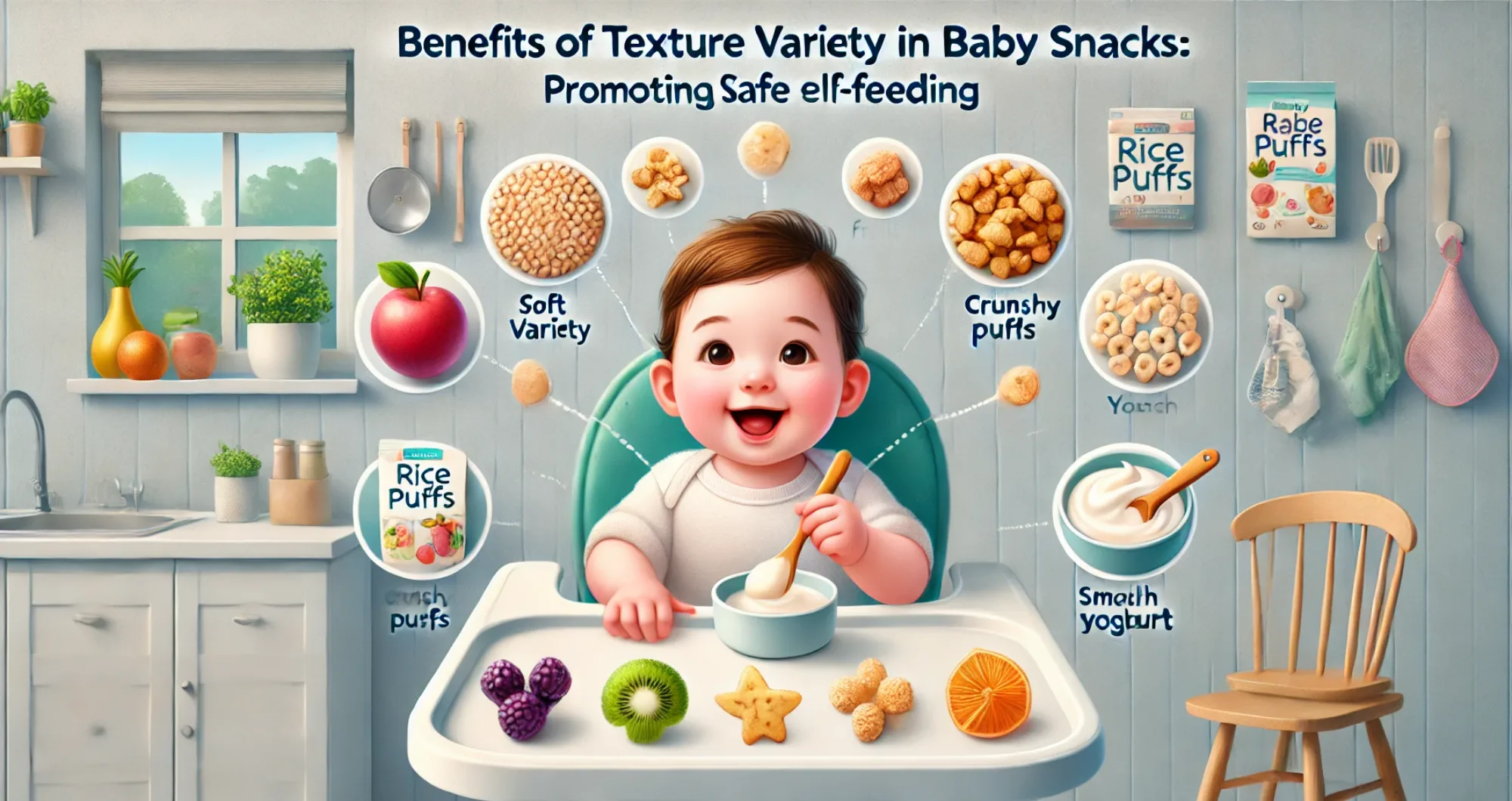
- Soft foods: These are ideal for babies just starting to self-feed. Foods like ripe fruits, steamed vegetables, or soft bread help babies practise chewing without being overwhelmed by hard-to-handle pieces.
- Crunchy snacks: Offering lightly crunchy snacks like rice puffs or teething crackers introduces babies to a new sensory experience while allowing them to practise biting and chewing more solid foods.
- Smooth and grainy: Healthy foods like yoghourt or mashed fruits and vegetables contrast solid foods, helping babies get used to different textures on their tongues and lips.
Offering a range of these textures encourages babies to develop different feeding skills and promotes a more adventurous approach to trying new foods.
Promoting Safe Self-Feeding through Texture Exploration
Encouraging babies to explore different textures in their snacks can foster safe self-feeding habits. When a baby is introduced to various textures, it gradually learns how to manage food in its mouth, reducing the risk of choking. With the right textures, babies can build confidence in their ability to feed themselves, boosting their independence and autonomy.
There are a few key points to consider when encouraging safe self-feeding through texture variety:
- Start slow: Begin by offering soft, easily chewable foods before introducing crunchier snacks. This helps babies adjust to handling different textures without overwhelming them.
- Size matters: Ensure snacks are cut into pieces to prevent choking. Soft foods should be easy to mash, while more complex snacks should be large enough for babies to grip but not so small that they might accidentally swallow them whole.
- Supervised feeding: Always supervise your baby during snack time. This allows you to guide them through their self-feeding journey, especially when introducing new textures that require more chewing or manipulation.
These steps ensure safety and support a gradual progression as babies become more skilled at handling varied textures in their snacks.
Advantages of Texture Variety in baby foods
Incorporating texture variety into baby foods has several developmental benefits. A variety of textures helps babies grow into confident eaters and prepares them for a wide range of foods as they age. Some key advantages include:
- Oral motor development: Different textures help babies strengthen the muscles for chewing, swallowing, and speaking.
- Improved fine motor skills: Gripping and manipulating different soft or crunchy snacks improves hand-eye coordination and dexterity.
- Sensory exploration: Babies use all their senses to explore the world, and texture plays a significant role in their understanding of food. Exposing them to different textures encourages curiosity and sensory development.
The benefits of texture variety in baby foods go far beyond taste. Offering a range of textures promotes safe self-feeding, helps develop essential motor skills, and supports a baby’s sensory exploration. Introducing various textures gradually allows your baby to learn how to manage food safely while boosting their confidence in feeding themselves. The texture is a fundamental part of your baby’s development, and as they grow, it helps them become more adventurous and skilled in their eating habits. So, let’s encourage the little ones to explore the exciting sphere of food by offering them snacks with various textures to support their growth and enjoyment of mealtime.