
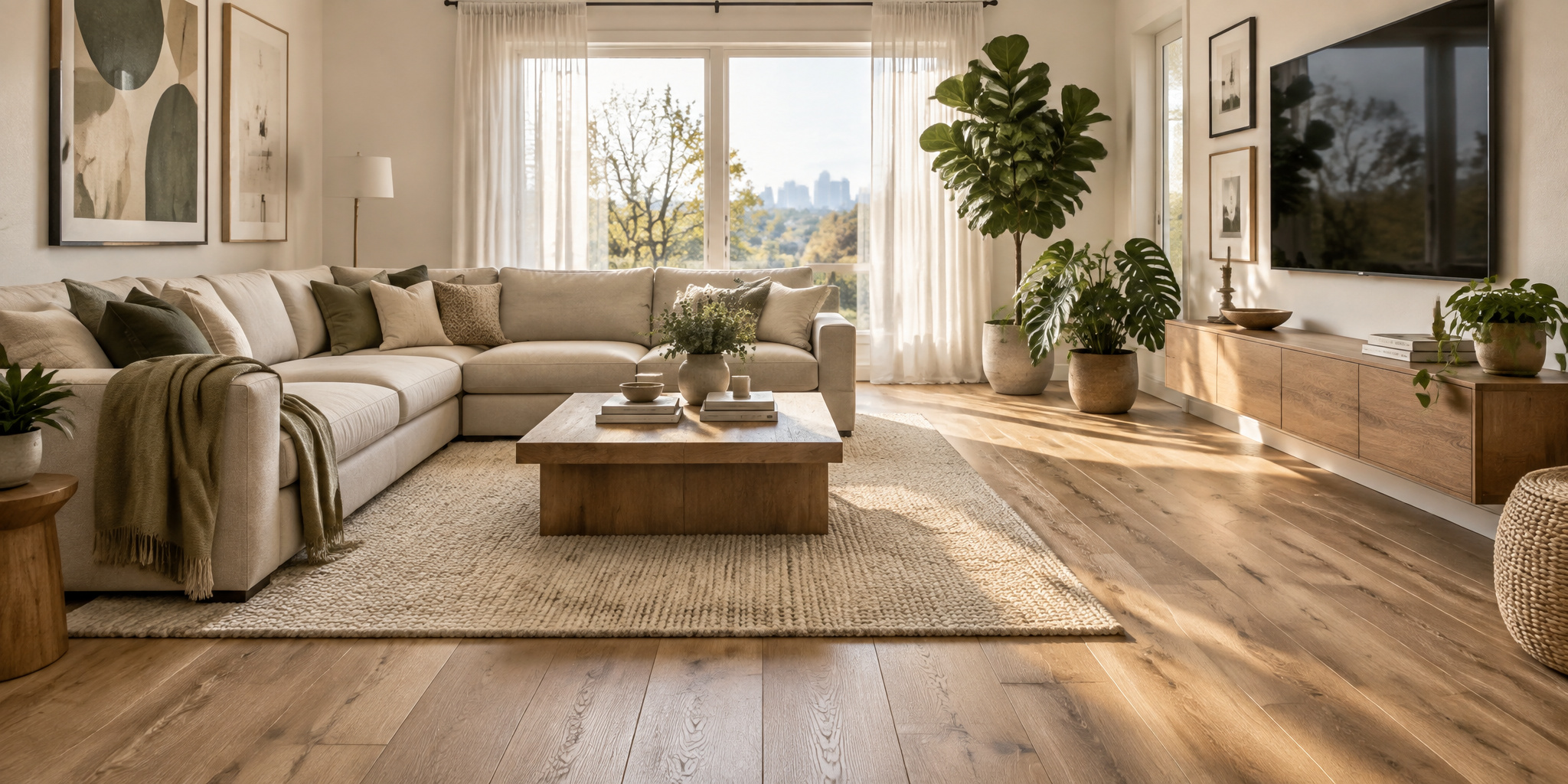

Underfloor heating changes how a floor looks and feels. It also places demands on the material above it. Some floors conduct heat beautifully and stay stable. Others insulate the system and waste energy. The best-looking options tend to be the ones that perform well too. Here is how the leading choices compare.
Tile And Stone: The Gold Standard
Tile and stone are the best-performing floors for underfloor heating, says Andy Evans of Radiator Outlet. They conduct heat quickly and retain it well, which means the system warms up efficiently and holds its temperature. Stone surfaces can be heated to around 29°C, higher than most other materials allow.
Visually, this opens up a wide range. Large-format porcelain creates a calm, seamless look with minimal grout lines, which suits open-plan spaces and modern kitchens. Natural stone such as marble or limestone brings depth and variation that porcelain cannot replicate. The trade-off is that tile and stone feel cold when the heating is off, and they are hard underfoot. For rooms where warmth and softness matter more than efficiency, other options may be better.
Engineered Wood: The Natural Compromise
Engineered wood is the only wood flooring reliably recommended for underfloor heating. Its multi-layered construction resists the movement that solid wood experiences when heated. It performs well with both wet and electric systems.
This is the best-looking option for anyone who wants real timber. Engineered oak is virtually indistinguishable from solid wood once fitted, and it can be sanded and refinished several times over its life. Wide planks and herringbone patterns are both popular in London homes, and both age well. The key practical point is thickness. Boards should ideally be no more than 18mm thick, and the surface temperature must stay below 27°C to prevent warping or gapping.
Luxury Vinyl Tile: The Realistic Alternative
LVT has become a serious design choice rather than a budget substitute. Modern products replicate wood and stone convincingly, with textured surfaces and realistic grain patterns. Premium ranges offer herringbone and parquet formats that look genuinely convincing.
LVT heats up and cools down quickly because it is thin, which makes it responsive and controllable. It is also warm underfoot compared with tile, and fully waterproof, so it works in kitchens and utility spaces. The limitation is temperature. Most LVT products cap at 27°C, which restricts heat output in high-loss areas. In a well-insulated living room, this is rarely a problem.
Cork: The Quiet Contender
Cork is an unusual choice but one with a strong logic behind it. It is naturally warm underfoot, absorbs sound, and feels soft compared with hard floors. Crucially, it also allows heat to transfer through it rather than blocking it. Cork has been used successfully in London apartments with underfloor heating, particularly in buildings with concrete subfloors.
The look is distinctive. Natural cork tiles have a subtle, organic texture that suits modern and minimalist interiors. It is not a material for every design scheme, but where it fits, it performs and looks the part. Thinner cork tiles work best with underfloor heating, as thicker versions can insulate the system.
Laminate: The Responsive Option
Laminate is thinner and denser than most wood floors, so it transfers heat efficiently and responds quickly to thermostat changes. Modern laminate offers convincing wood and stone designs, and most products are compatible with underfloor heating.
The weakness is feel. Laminate is hard and can sound hollow underfoot. It also lacks the depth of real wood or premium LVT. As a visual choice, it works best in rooms where budget and practicality matter more than material quality. Dense, thin laminate performs better with underfloor heating than softer, thicker versions.
What To Avoid
Carpet is the hardest material to pair with underfloor heating. It insulates by nature, and the combined tog value of carpet and underlay must stay below a strict limit for the system to work at all. Thick, plush carpets are the worst offenders. If carpet is essential, choose a thin, dense option with underlay designed for underfloor heating. In most cases, hard flooring will look better and perform better.
The Bottom Line
Tile and stone offer the best performance and the most dramatic visual impact. Engineered wood offers the best natural look with reliable compatibility. LVT offers realistic design with quick response and easy maintenance. Cork offers warmth and texture for those who want something different. The right choice depends on the room, the design scheme, and how much heat output you need. But in every case, the best-looking floor is the one that works with the system rather than against it.







