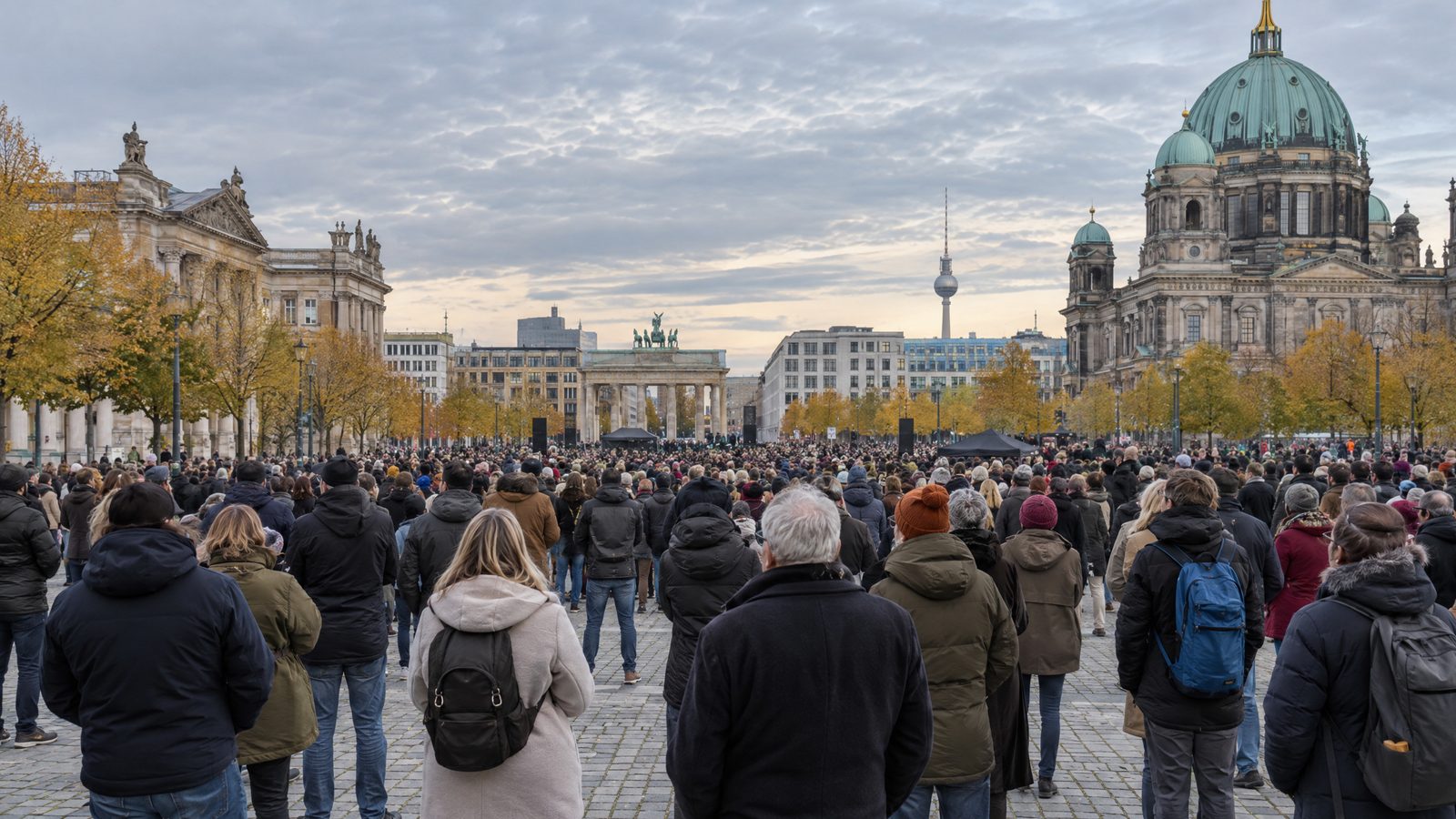

Tens of thousands of young people demonstrated across Germany on 31 October over education funding, the cost of living and related political concerns. The main daytime protests were largely peaceful, while police reported disorder later in the day in some cities, including injuries and arrests.
The demonstrations took place in more than 30 cities, with Berlin, Frankfurt, Hamburg and Cologne among the locations. The mobilisation brought education funding and living costs into focus across a series of separately located protests, rather than at a single gathering.
A precise national attendance total remains uncertain. Organisers’ turnout claims differed, making tens of thousands the clearest description of the overall scale. That distinction matters when describing the mobilisation: a broad measure of participation is supported, but one definitive national figure is not.
The central distinction in the events is between the largely peaceful daytime demonstrations and the incidents police described later. The accounts of evening disorder do not establish that the demonstrations as a whole were violent, nor do they establish responsibility for the later violence.
Police reported projectiles during the later incidents, alongside deployments of water cannon or pepper spray. They also reported injuries and arrests in some cities. Those details describe the police account of the later disturbances and should not be treated as an independently established explanation of how each incident unfolded.
The information available does not establish who was responsible for the violence. It would therefore be inaccurate to attribute the reported disorder collectively to the young people who attended, or to present the arrests as proof of responsibility for particular acts.
Education funding was one of the stated concerns behind the demonstrations. The cost of living was another, alongside related political concerns. These issues formed the focus of the youth mobilisation, although the available details do not set out a single, specific demand shared by every gathering.
The geographical spread is clearer than the exact turnout. More than 30 German cities hosted demonstrations, with several major urban centres among them. Berlin, Frankfurt, Hamburg and Cologne were included, but the available information does not provide a comparable attendance count for each of those locations.
Likewise, the police accounts of later incidents should not be read as a city-by-city record covering every protest venue. Disorder was reported in some cities. The available details do not support assigning every type of incident, deployment, injury or arrest to each of the named locations.
The timing also remains important to an accurate account. The main demonstrations during the day were largely peaceful; the reported disturbances came later. Combining both phases into one undifferentiated description would obscure the contrast between the broad daytime mobilisation and the subsequent incidents.
For turnout, the same caution applies to the relationship between local gatherings and the national picture. The demonstrations collectively drew tens of thousands, but differing organiser estimates prevent a more exact overall count. No single national figure can be stated with the same confidence as the broader description.
The events therefore present two distinct elements: a widespread youth protest over education, living costs and political concerns, and later disorder described by police in several cities. The scale of participation and the largely peaceful character of the main daytime protests are clear; the precise national turnout and responsibility for the later violence remain unresolved.