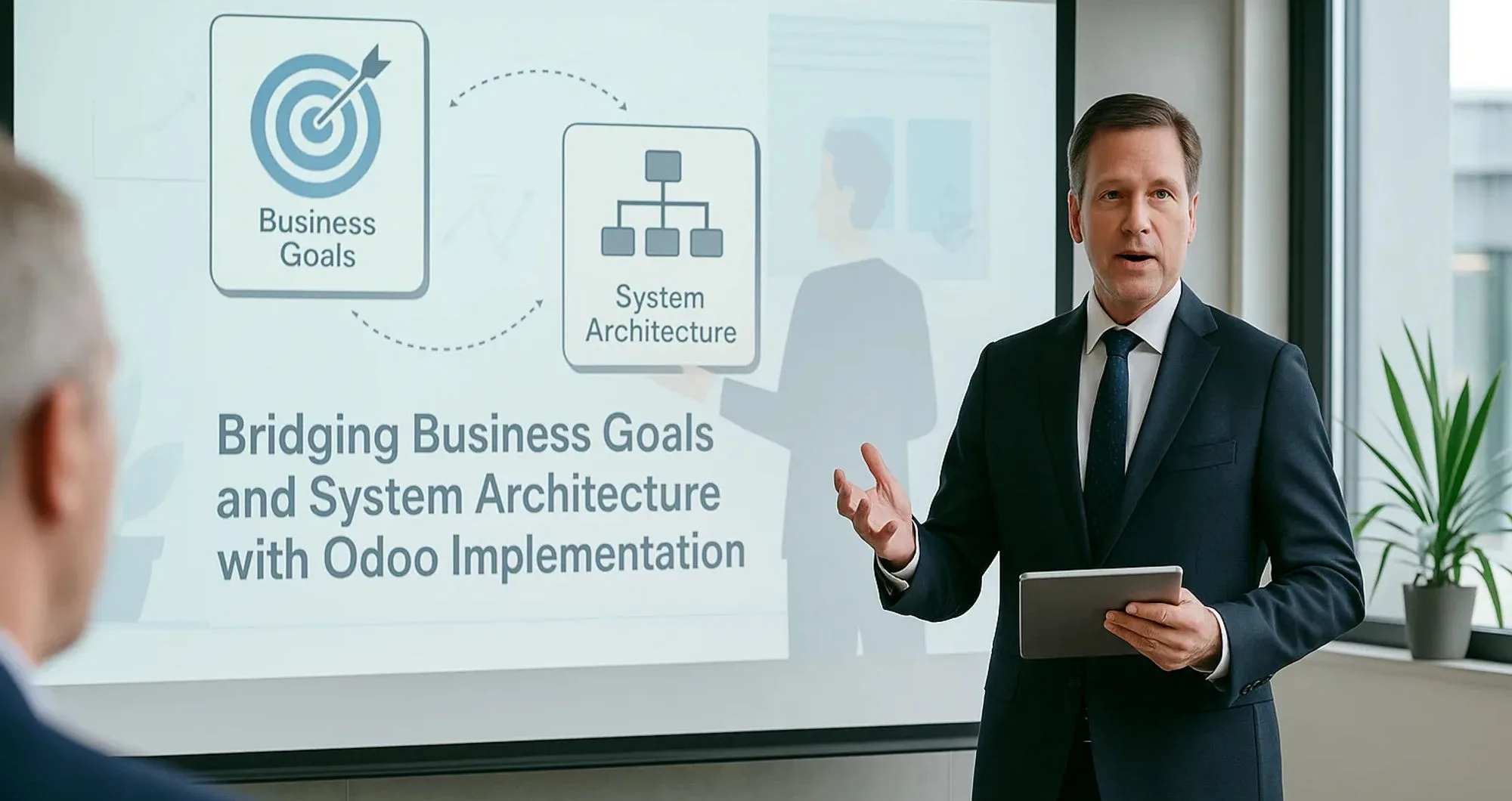

Many businesses set ambitious goals, yet struggle to reflect those goals in their systems. That disconnect often leads to delays, inefficiencies, and lost opportunities. The problem isn’t a lack of planning—it’s a lack of system alignment. This is where Odoo ERP implementation service plays a strategic role. When done right, it becomes more than software—it becomes the foundation of scalable decision-making.
Why traditional ERP systems fall short
Most legacy ERPs are either too rigid or too fragmented. They lock companies into static processes that fail to evolve with changing goals. Customisation is expensive, updates are complex, and adding new functionalities often breaks the system.
The issue isn’t just technical—it’s architectural. The system isn’t built to reflect how your business actually operates or plans to grow. You end up forcing business goals to fit into the system instead of designing the system around your goals.
How Odoo ERP implementation service changes the approach
Odoo ERP implementation solves this by offering flexibility from the start. Its modular architecture supports core functions—CRM, inventory, sales, HR, and finance—through a single, centralised platform. Each module connects through a unified database, allowing you to expand capabilities without rebuilding your stack.
It supports customisation through Python-based development and offers visual tools like Odoo Studio for non-developers to tweak fields, layouts, and workflows. It runs on PostgreSQL with a solid ORM layer, enabling advanced filtering, reporting, and automation without breaking system design.
This flexibility makes Odoo suitable for businesses that don’t want their system architecture to limit their growth or operational shifts.
Connecting architecture to business goals
Every Odoo ERP implementation service should start with a clear mapping of business goals to system features. This step is often skipped, but it’s critical for long-term success.
For example, if your goal is to reduce lead-to-cash time by 40%, your system must track each touchpoint—from lead generation to invoicing. Odoo lets you design that process using its CRM, Sales, and Invoicing modules with automated workflows between them.
Here’s how a basic architecture alignment looks:
- Goal: Improve customer retention
- System Requirement: Integrate helpdesk, marketing automation, and subscription modules
- Technical Alignment: Shared customer ID across modules, tracked lifecycle activity, automated renewal alerts
- Outcome: Data-driven customer management aligned to retention goals
One critical factor that affects system architecture planning is how long Odoo implementation typically takes. Timelines vary based on module complexity, third-party integrations, and the quality of data migration.
For example, a single-company deployment using core modules like CRM and Accounting may take 4–6 weeks, while multi-company setups with custom workflows and external APIs can extend the timeline significantly. Early estimation helps align rollout phases with operational priorities and reduces business disruption.
With Odoo, this kind of end-to-end alignment is not just possible—it’s practical. Its open-source nature and API support (REST/SOAP) allow integration with third-party systems, ensuring flexibility beyond the Odoo ecosystem.
Case snapshot: Manufacturing client in Germany
A mid-sized manufacturing firm faced a common issue—separate systems for inventory, sales, and customer service. This led to slow communication and errors in delivery timelines. Their goal was simple: achieve a 30% improvement in on-time order delivery.
The Odoo ERP implementation service involved:
- Inventory and Sales modules to track stock in real-time
- Manufacturing module for accurate production planning
- Custom dashboards for sales and warehouse coordination
- REST API integration with their logistics partner for shipping updates
Results after six months:
- 33% increase in on-time deliveries
- 25% reduction in customer complaints
- 40% improvement in cross-department communication
The key was building the architecture around the business goal—not just deploying modules and hoping for the best.
Common mistakes to avoid during the Odoo ERP implementation service
- No cross-team planning
Business and technical teams must align early. Skipping this leads to disjointed architecture and unmet expectations. - Over-customisation
While Odoo is flexible, unnecessary custom code adds maintenance overhead. Use built-in tools unless there’s a compelling reason. - Ignoring scalability
Always plan for 3-5 years ahead. A good Odoo ERP implementation considers server load, multi-location setups, and growing user roles from day one. - Poor data migration planning
Incomplete data structures or wrong field mapping can break workflows. Always validate migration in a sandbox before going live.
Many ERP rollouts fail due to rigid deployment models and poor alignment with business workflows. To reduce this risk, companies are now adopting agile Odoo implementation frameworks that focus on iterative rollout, stakeholder feedback, and modular deployment. This method not only reduces time-to-value but also keeps the system architecture closely aligned with evolving business strategies.
What to ask before you start
- What business goals are we trying to support over the next 12–24 months?
- How many user roles and workflows will we need?
- Do we require multi-language or multi-currency support?
- What data sources need integration?
- Who will manage the system after implementation?
These questions help shape not just the configuration, but the underlying architecture your ERP will run on.
Benefits of strategic Odoo ERP implementation service
When architecture supports business goals from the beginning, you see long-term value across every department. Here’s what a strategic Odoo implementation unlocks:
- Agility: Add or remove modules without system downtime
- Data integrity: Unified database ensures consistency
- Cost efficiency: No need for multiple vendors or licenses
- Future readiness: Integrates with AI tools, compliance updates, and new data pipelines
Most importantly, it turns your ERP from a maintenance expense into a driver of growth and control.
Conclusion: Build with purpose, scale with clarity
The success of any ERP system depends on how well it connects strategy with infrastructure. Odoo ERP implementation gives businesses the tools to align their vision with their operations—without forcing compromises.
Whether you’re trying to scale fast, fix broken workflows, or simply build a foundation for growth, the architecture must reflect what you’re trying to achieve.
Don’t build your system and hope it works. Start with your goals—and let Odoo follow.