

London has always been a city where service businesses live or die by reputation. That is why business headshots are now part of that reputation. A client choosing an accountant, solicitor, estate agent, consultant, clinic, design studio, coach, or private tutor is not only buying a service. They are deciding whether a person looks credible enough to trust with money, time, a problem, or a sensitive decision.
That first judgment used to happen in person. A shopfront, a reception desk, a handshake, or a recommendation from someone nearby did most of the work. Now it often happens on a phone screen before anyone speaks. A potential client searches a name, opens a company website, checks LinkedIn, scans reviews, and only then decides whether to send an enquiry.
This is why business headshots have become more important for London service firms. They are not the whole brand, and they cannot fix weak service. But they are part of the small trust layer that helps people feel they are dealing with a real, current, professional person.
Trust now starts before the first call
For many service businesses, the first real contact is no longer a call or meeting. It is a profile view. Someone sees a face next to a job title, a service page, a booking form, an email signature, or a LinkedIn post. If the photo feels outdated, badly cropped, overly casual, or inconsistent with the service being offered, it creates hesitation.
That hesitation is not always conscious. A person may not say, “I disliked the headshot, so I will not contact this firm.” They are more likely to keep scrolling, compare another provider, or delay the decision. In a competitive city, that is enough to matter.
London service businesses face this problem more sharply because buyers have so much choice. A client looking for a property adviser, tax specialist, therapist, recruiter, personal trainer, or legal consultant can compare several providers in minutes. Everyone claims experience. Everyone says they are reliable. The small signals start doing more work.
A clear, current headshot helps because it reduces distance. It gives the business a human face before the client commits to a conversation.
Service businesses sell people first
Product companies can often lead with specifications, price, features, and delivery speed. Service businesses have to sell confidence in the person doing the work. The client is asking a simple question: Do I want to deal with this person?
That is why the team page matters. The founder profile matters. The photo beside a proposal matters. The LinkedIn profile photo matters. Even a small email avatar can affect whether a cold introduction feels legitimate or forgettable.
A good business headshot does not need to look theatrical. In most cases, it should do the opposite. It should make the person look approachable, capable, and aligned with the work they do. For a London-based consultant, that may mean a clean studio look. For a private clinic, it may mean a warmer expression and calmer styling. For a real estate or hospitality business, it may mean something polished but less formal.
For small firms that need to update their profiles without booking a full studio day, this business headshot tool is built for work platforms such as LinkedIn, company websites, business cards, email signatures, proposals, and conference materials. It gives service businesses a practical way to create consistent images without making the process feel like a major production.
The team page is often the second sales page
Many businesses spend time polishing their homepage, service pages, and case studies, then leave the team page as an afterthought. That is a mistake. For service-led businesses, the team page is often where a serious buyer checks whether the company feels real.
The page does not need to be elaborate. It needs to answer basic trust questions. Who works here? What do they do? Do they look current? Does the team feel coherent? Are these people likely to understand the kind of problem I have?
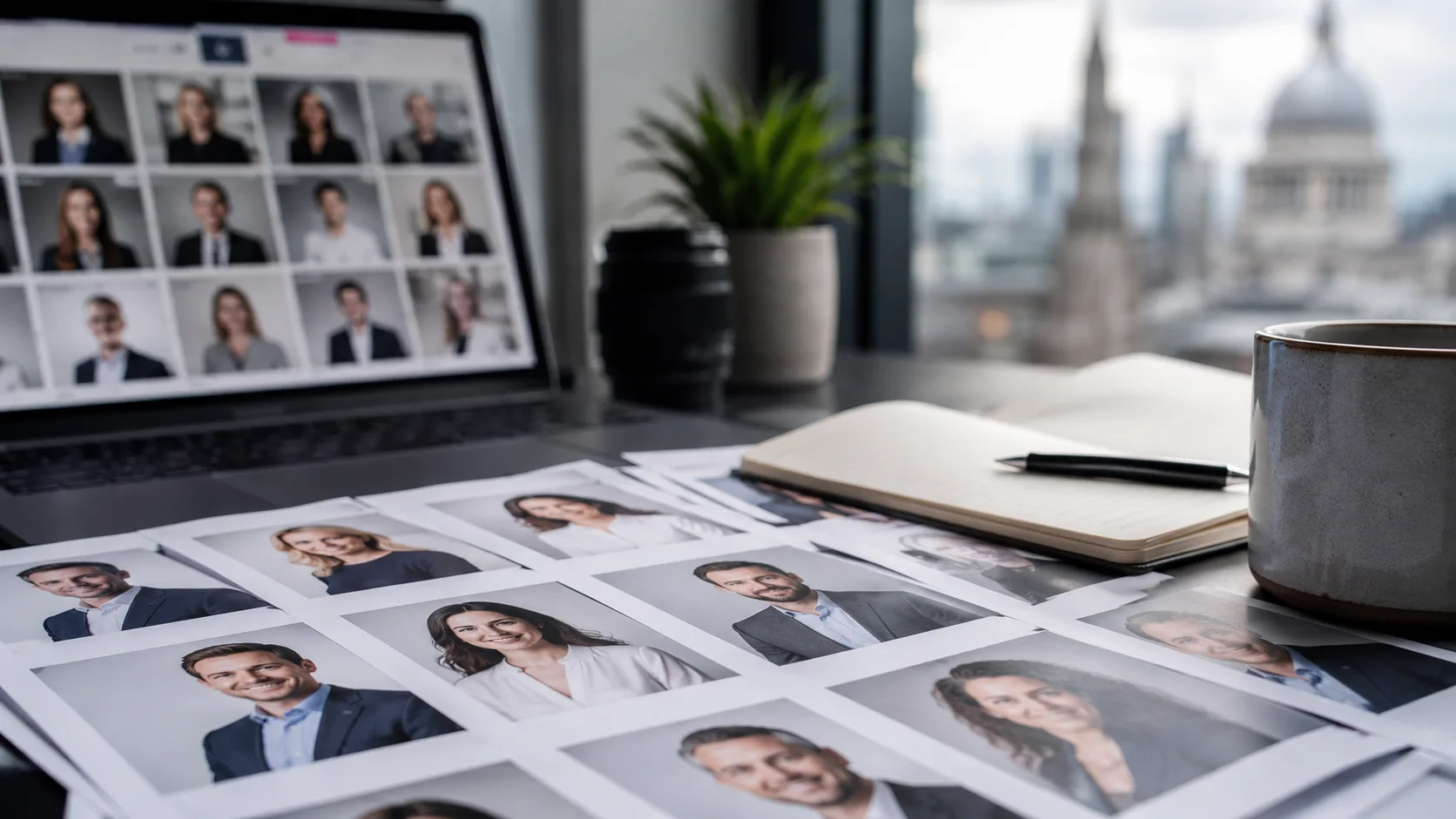
Inconsistent business headshots can make a team look more fragmented than it is. One person has a studio portrait, another has a cropped wedding photo, another uses a low-light selfie, and another has no image at all. The business may be strong, but the presentation feels uneven.
That matters for agencies, advisory firms, professional practices, clinics, and consultancies. Their clients often choose between providers who appear similar on paper. If one firm feels more organised and more human, it has an advantage before the first conversation.
London clients are used to checking people online
The habit of checking people online is now normal. A client may find a business through search, but they will often confirm it somewhere else. They might open LinkedIn, search the founder, look for a speaker profile, check a Companies House listing, read a local feature, or compare staff photos with reviews.
This behaviour makes professional consistency more important. A headshot used on LinkedIn should not feel completely disconnected from the photo on the company website. A founder photo in a press mention should not look five years older than the one on the pitch deck. A consultant’s profile image should not change so much across platforms that a client wonders whether it is the same person.
Consistency builds recognition. If a prospect has seen the same professional face in a few places, the person feels less unknown by the time a call is booked.
That does not mean every image must be identical. A business can use a formal headshot for the website, a more relaxed photo for LinkedIn, and a speaker image for events. The point is that the images should belong to the same professional identity.
Remote and hybrid work raised the stakes
Remote work changed business presentations in a quiet way. People now meet through Zoom, Teams, LinkedIn messages, digital proposals, and shared documents before they ever sit in the same room. Business headshots have to carry more of the first impression.
For London businesses serving national or international clients, this matters even more. A client in Manchester, Dubai, New York, or Singapore may never visit an office. The website, profile photo, and first video call become the business front door.
That is why a dated headshot can create a mismatch. If the online image looks casual or old, but the service price is premium, the client notices the gap. If a business sells careful advice but its staff profiles look thrown together, that also sends a message.
The fix is not to make everyone look identical or overly corporate. The fix is to create a visual standard that matches the level of service being sold.
AI made headshot refreshes easier to justify
Traditional photography still has a place, especially for larger firms that need a brand shoot, office photography, and strict creative direction. But many small service businesses do not need a full-day production every time someone joins the team or updates their role. For routine business headshots, the economics are different.
According to ProfessionalHeadshot.io, users upload 5 to 20 selfies, choose professional styles, and receive 40 to 100 polished headshots. The service lists 30+ outfit styles, 14 backgrounds, commercial usage rights, and one-time pricing starting from $29.
For a small business, the main benefit is not only lower cost. It is speed and flexibility. A founder can test a formal look and a warmer client-facing look. A team can refresh inconsistent profile photos before a website update. A consultant can create headshots for LinkedIn, proposals, and speaker pages without waiting weeks.
That makes headshots easier to treat as normal business maintenance rather than a rare branding event.
What makes a service business headshot work
A strong service business headshot usually has four qualities.
First, it is current. A client should not be surprised when the person appears on a video call or walks into a meeting. Second, it is clear. The face should be easy to see, with clean lighting and a background that does not compete for attention.
Third, it fits the service. A wealth adviser, designer, personal trainer, dentist, recruiter, and family lawyer should not all use the same visual tone. Some businesses need formality. Others need warmth. Some need calm. Others need energy. The best headshot supports the expectation the client already has.
Fourth, it is consistent with the rest of the business. If a company sells premium service, the image quality should not feel cheap. If a firm claims to be friendly and accessible, the photo should not feel distant or severe.
None of this requires perfection. It requires alignment. The image should make the next step easier, not create questions.
When London firms should update their headshots
There are obvious moments to update business headshots: a website redesign, a new hire, a rebrand, a promotion, a major event, a media feature, a funding announcement, or a move into a new client segment.
There are also smaller moments. If a business is winning more clients through LinkedIn, headshots should be current. If the team is pitching larger accounts, the images should match that ambition. If the firm has moved from local referrals to online discovery, the website needs to carry more trust on its own.
Service businesses should also update when their existing photos feel inconsistent. A scattered set of profile images may have been fine when the company was small. As the business grows, that inconsistency starts to look less like personality and more like neglect.
The best time to fix it is before the business needs the trust. By the time a client is comparing providers, the first impression has already happened.
A small signal with real commercial weight
London service businesses are taking headshots more seriously because the buying process has changed. Clients research before they enquire. They compare before they call. They look for proof that the person behind the service is credible, current, and worth trusting.
A headshot will never close the deal by itself. It will not replace reputation, reviews, pricing, expertise, or response time. But it can support all of them. It can make a service business feel more present, more organised, and more human in the places where clients first discover it.
That is a small advantage. In a crowded London market, small advantages are often the ones worth fixing this business headshot tool.