
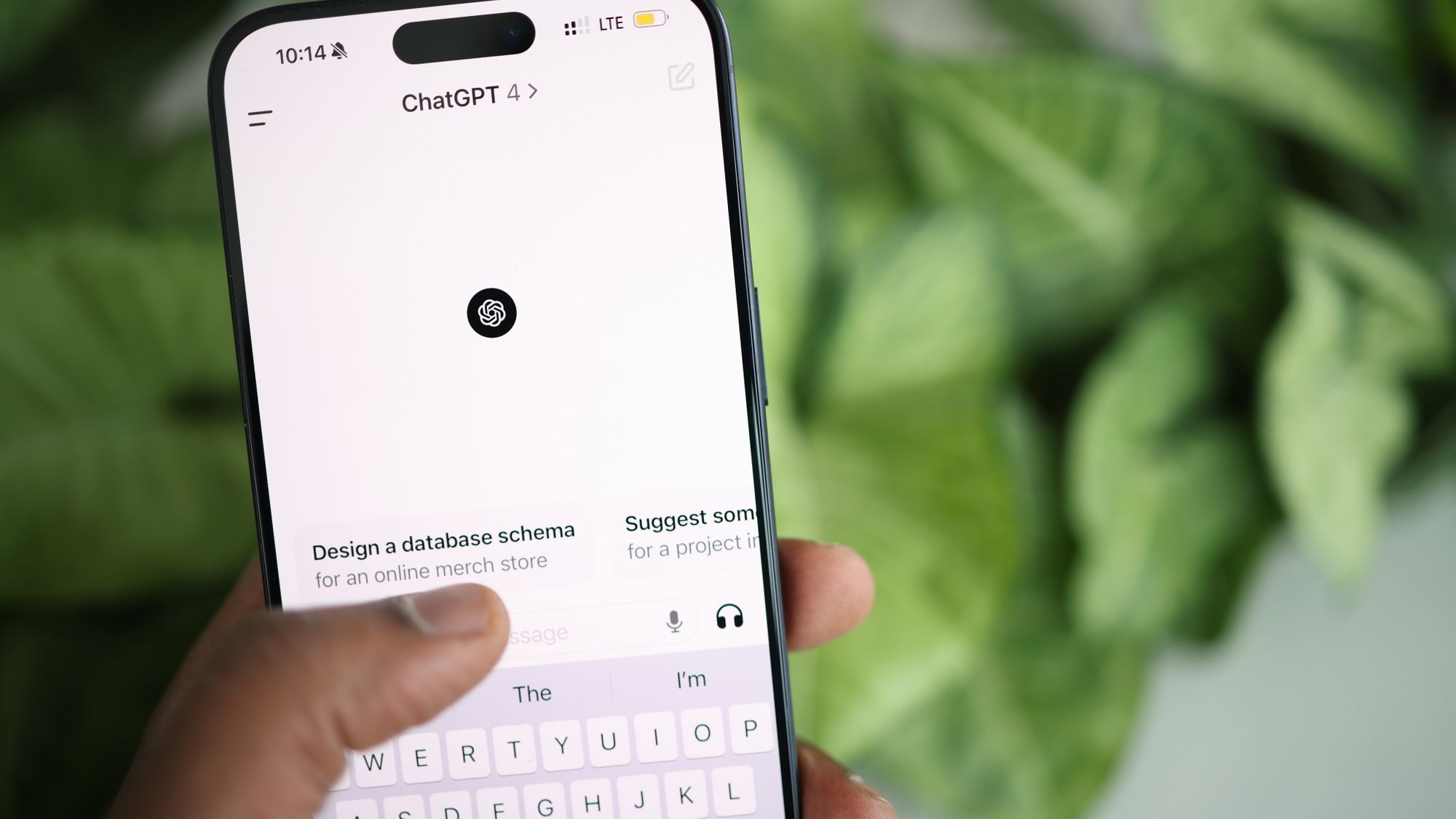

It is the accusation an increasing number of parents may find themselves dealing with: your child hands in their homework, only to be told that a piece of software believes ChatGPT wrote it.
Perhaps the essay was more polished than usual. Maybe the vocabulary suddenly seemed unusually sophisticated. Or an AI detector has returned a worrying-looking score.
But does that actually prove a child cheated?
Not necessarily, according to AI expert Ross Garrod, founder of AI-powered school management technology company Involve Education.
As artificial intelligence becomes a normal part of children’s digital lives, schools are facing the difficult task of distinguishing between pupils who have genuinely produced their own work, those who have used AI appropriately for support and those who have simply asked a chatbot to do the assignment for them.
And Garrod warns that the technology used to catch them is far from infallible.
“A detector can’t recreate the child’s writing process, so its score shouldn’t be treated like a digital confession.”
“Teachers can often notice that something has changed, particularly when a student’s tone or standard shifts overnight,” he says.
“The problem is that proving what caused that change is a mathematical minefield.”
What an AI detector can – and can’t – actually tell a teacher
Despite how authoritative an AI detection score might look, the software usually hasn’t discovered a secret marker proving that an essay was produced by ChatGPT.
Instead, detectors analyse the finished writing and calculate how closely it resembles patterns associated with AI-generated text.
That can include how predictable the word choices are and how regular the sentence structure appears.
In other words, the detector is looking at how the writing sounds. It did not witness how the child actually created it.
“A detector is making a statistical judgement based on the text in front of it,” explains Garrod.
“It doesn’t know whether a child typed every word, accepted a few writing suggestions or copied an entire answer from a chatbot.
“Those are very different situations, but the finished text may look similar to the software.”
That means perfectly genuine work can potentially attract suspicion.
A pupil who naturally writes formally, a child learning English as an additional language or some neurodivergent children may produce consistent writing patterns that software interprets as unusual.
“The number one giveaway isn’t technology. It’s change.”
The biggest clue teachers are actually looking for
In many cases, a teacher who knows the pupil may be better equipped to spot questionable work than an algorithm.
The most obvious warning sign is a dramatic difference between the homework and everything the child has produced before.
Perhaps their vocabulary suddenly jumps several levels. Their sentence structure becomes considerably more sophisticated, or an essay contains an unexpectedly mature analysis they have never demonstrated in class.
“If a pupil’s writing suddenly sounds like a completely different person, the teacher will naturally want to know what happened,” says Garrod.
“That doesn’t prove AI was involved, but it gives them a reason to examine the process more closely.”
There are other clues too.
AI-generated homework can sometimes sound polished without saying very much. Garrod describes one pattern as “safe but shallow” writing, where an essay acknowledges every side of an issue but avoids committing to a meaningful argument.
It may also be unnecessarily long, repeating the same point in several different ways.
And there is one thing ChatGPT cannot know unless the pupil tells it: what happened in the classroom.
If a teacher specifically asked pupils to use an example discussed during the lesson, follow a particular method or respond to something said verbally, an extremely polished but generic essay that ignores those instructions could raise questions.
None of these signs proves cheating, however.
A pupil may simply have studied harder, received tutoring or suddenly understood a topic that had previously been difficult.

AI expert Ross Garrod, founder of AI-powered school management technology company Involve Education
Could your child’s genuine homework be wrongly flagged?
This is where AI detection becomes particularly uncomfortable for parents.
Even a relatively small rate of incorrect results can translate into a substantial number of pupils being questioned when software is used across an entire school.
Garrod gives the example of a detector with a false-positive rate of between two and six per cent.
Applied to 1,000 assignments, that could theoretically mean 20 to 60 genuine pieces of work being flagged.
“For the individual child who is wrongly accused, that isn’t a small technical error. It can affect their mark, their confidence and the trust between the family and the school.”
There is another complication many parents may not have considered.
Your child might not have asked ChatGPT to write their homework at all.
Programs such as Grammarly now offer tools that go considerably beyond correcting a misplaced comma or spelling mistake. Automated rewriting, paraphrasing and tone suggestions can make a pupil’s original writing smoother and more uniform.
The child may have researched the topic themselves, developed the argument and written the first draft independently, yet the finished version could still contain characteristics associated with machine-generated writing.
It is one reason Garrod believes schools need to clearly distinguish between different types of AI assistance rather than treating them all as equivalent.
So when does using ChatGPT actually become cheating?
Even children themselves appear unsure where the boundary lies.
Research involving almost 4,000 UK teenagers found that 44 per cent considered using AI to complete all of their homework to be cheating.
Yet almost one in five believed that even asking AI for homework tips was dishonest.
Garrod argues that the rules of the individual assignment should come first.
If a teacher has explicitly said pupils cannot use AI because the exercise is testing independent analysis, sentence construction or creative thinking, asking a chatbot to perform that task undermines the purpose of the homework.
But when AI is allowed, he believes there is a significant difference between using it to think and using it to avoid thinking.
A pupil could, for example, ask a chatbot to give them the strongest argument against their position.
They might ask it to explain a complicated concept in simpler language, point out weaknesses in their reasoning or suggest questions they should research further.
The pupil can then assess those answers, fact-check them and decide what is actually useful.
“AI should be a debating partner, not an answer machine.”
“I care much more about the critical thinking behind a piece of work than whether a tool helped to polish part of it,” says Garrod.
“The useful approach is a constant back-and-forth in which the pupil selects ideas, rejects weak suggestions, checks the claims and advances the argument themselves.”
The clearest line is crossed when a child hands the thinking over to AI, submits generated material as their own against the rules or cannot explain the work they have turned in.
What to do if your child is accused of using ChatGPT
If an email arrives from school accusing your child of using artificial intelligence, resist the temptation to immediately go on the offensive.
But equally, parents should not assume that an impressive-looking detector score amounts to definitive proof.
Garrod recommends beginning with the child.
Ask exactly what they did.
Did they use ChatGPT to understand the subject? Did they ask it for ideas? Did they use it to proofread something they had already written? Did they copy any generated text into the assignment?
A calm private conversation is more likely to establish what actually happened than immediately treating either the child or the teacher as being in the wrong.
Then look for evidence of how the work was produced.
Check the Google Docs or Word history
One of the strongest things a pupil can have in their favour is a digital paper trail.
Google Docs and Microsoft Word can retain version histories showing how a document developed.
If the file shows a rough outline becoming a few paragraphs, then being rewritten, expanded and edited over several hours or days, that can provide far more context than looking at the finished essay alone.
Research notes, handwritten plans and earlier saved drafts can also help.
“A digital paper trail is one of the most useful things a family can have.”
“If the version history shows the essay growing naturally over several hours, that gives the school something concrete to consider instead of relying only on a detector’s interpretation of the final prose,” Garrod explains.
The child should also be given the opportunity to explain what they wrote.
Can they summarise their argument? Can they explain unusual vocabulary? Do they know where their evidence came from? Can they explain why they reached their conclusion?
This should not turn into an attempt to catch them out over a forgotten sentence. The point is to establish whether they understand and can defend the work they submitted.
Don’t panic over a ’90 per cent AI’ score
A particularly alarming situation for parents can be seeing a report suggesting a piece of homework is “90 per cent AI”.
That wording can easily be interpreted as meaning the software has established that 90 per cent of the essay was copied directly from ChatGPT.
Garrod says parents should not automatically make that assumption.
Different detection products calculate and present their scores in different ways.
“A parent shouldn’t see a figure such as ’90 per cent AI’ and assume it automatically means 90 per cent of the essay was copied from ChatGPT,” he says.
“The school should be able to explain what the figure means, how it considered the child’s previous work and what other evidence supports the allegation.”
Parents can reasonably ask which detection tool and version were used, request the complete report and ask exactly which school rule their child is alleged to have broken.
They should also ask to see the school’s AI policy.
A detector result can form part of the picture. It should not necessarily be the entire case.
The three questions children should ask before using AI for homework
Perhaps the simplest way to avoid problems is to make sure children understand that there is no universal rule covering ChatGPT and schoolwork.
What is allowed can vary by school, teacher, subject and even individual assignment.
Before opening an AI tool, Garrod recommends pupils establish three things:
- Is AI allowed for this particular piece of work?
- What type of AI assistance is permitted?
- And do I need to declare that I used it?
Children also need to understand why a teacher may deliberately want them to struggle with an assignment.
Finding the right sentence, wrestling with a difficult argument or trying to organise their thoughts can be frustrating.
But sometimes that struggle is the lesson.
Using AI to remove it may produce a better-looking piece of homework while preventing the child from developing the skill the teacher was trying to assess.
Teaching children to use AI may matter more than banning it
Where AI is permitted, Garrod believes children should learn to question it rather than simply trust it.
He compares the technology to the Pensieve from Harry Potter – a place to put thoughts outside your own head so you can examine them differently.
“A child can put their thoughts into the conversation, look at them from another angle and debate them, but the judgement still has to remain theirs,” he says.
For parents, that may ultimately be a more useful lesson than trying to divide every interaction with ChatGPT into simply “good” or “bad”.
Children are likely to encounter AI throughout their education and eventually their working lives.
The important habits are simpler: follow the rules, be honest about how the technology was used, retain evidence showing how work was created and never hand in something you do not actually understand.
Because when it comes to determining whether a child really did their homework, the process may tell teachers far more than any percentage on a screen.







