
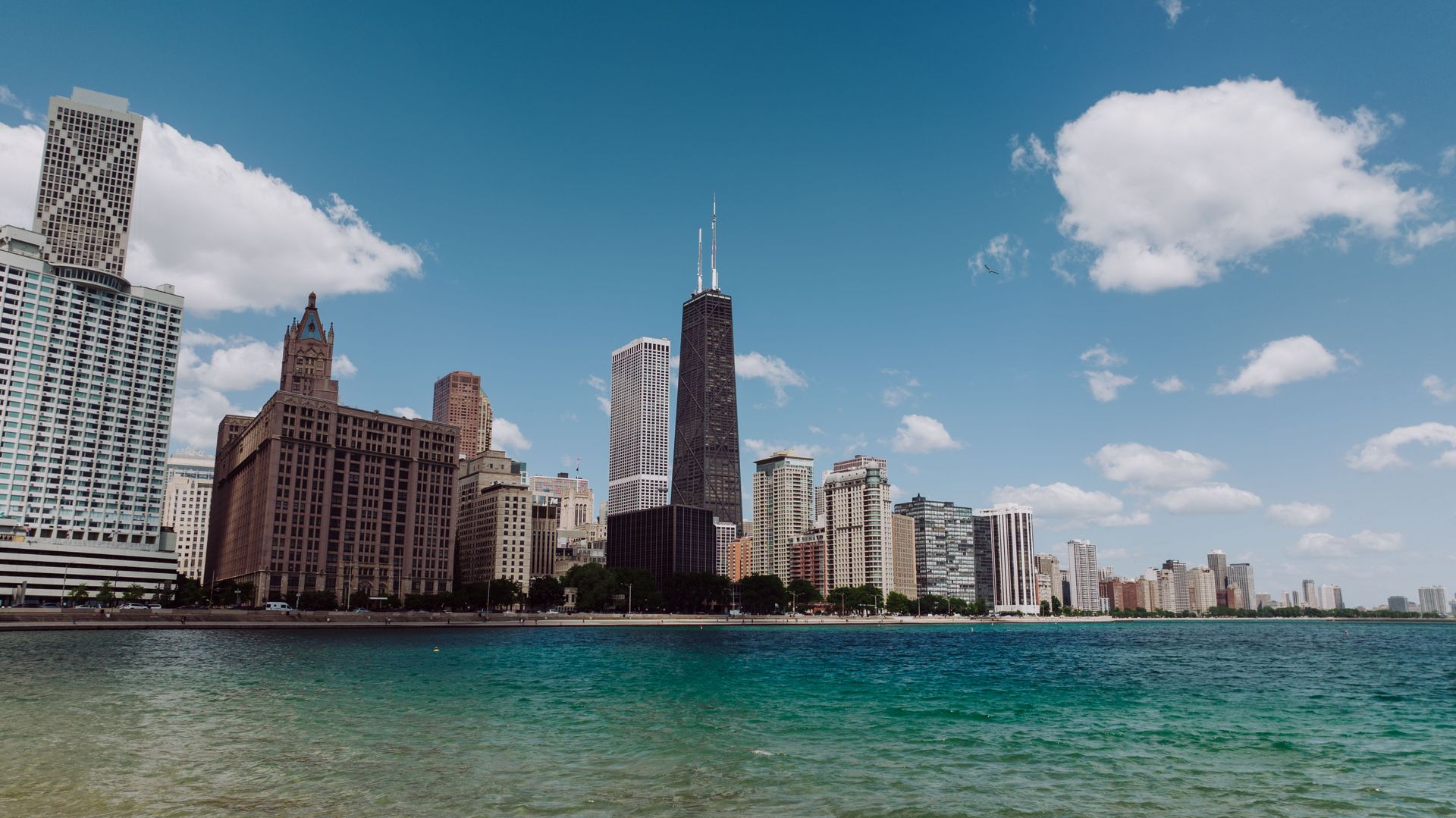

London to Chicago is roughly 4,500 miles as the crow flies, but the cultural leap feels even greater. Where London wears its history on cobblestones and crooked lanes, Chicago wears it on skyscrapers. This is a city that rebuilt itself from ash in the 1870s and decided, somewhat defiantly, to build upward and outward with more ambition than almost anywhere else in America. For Londoners craving a transatlantic trip that trades double-deckers for deep-dish pizza and the Thames for Lake Michigan, Chicago delivers a genuinely different kind of urban energy.
This guide covers everything a London traveller needs to plan a Chicago trip properly: flight times, the airlines worth booking, and the must-see attractions that make this city one of America’s most architecturally significant destinations.
How Long Is the Flight From London to Chicago?
A direct flight from London to Chicago takes approximately 9 hours and 30 minutes westbound, and around 8 hours on the return journey thanks to tailwinds across the Atlantic. That’s a manageable stretch – shorter than flying to Sydney or Tokyo, and comparable to a flight to South Africa.
Chicago sits six hours behind London (five hours during British Summer Time overlap periods), so jet lag tends to be mild. Most travellers find that arriving in the afternoon or evening local time and pushing through to a normal Chicago bedtime helps the body adjust within a day or two.
Which Airlines Fly Direct From London to Chicago?
Several major carriers operate direct routes between London and Chicago O’Hare International Airport (ORD), giving British travellers a solid range of options depending on budget and preference.
- British Airways flies direct from London Heathrow to Chicago O’Hare, with multiple daily departures. As a Oneworld alliance member, BA offers strong connectivity for those collecting Avios points.
- American Airlines also operates direct Heathrow-to-O’Hare flights and, as a Oneworld partner with British Airways, often appears on joint-venture fares with shared perks.
- United Airlines flies direct from Heathrow to Chicago O’Hare as well, with O’Hare serving as one of United’s major domestic hubs – useful if a Chicago trip includes onward travel elsewhere in the US.
- Virgin Atlantic offers direct service from Heathrow to Chicago, a reliable choice for travellers who prioritise in-flight comfort and entertainment.
For the smoothest experience, direct flights are worth the modest premium over layover options. A journey broken up by a connection in Dublin, Reykjavik, or a US East Coast hub can easily add three or four hours to total travel time.
Chicago’s Must-See Attractions: A City Built on Architecture
Chicago isn’t just a stopover city with good food and a lively downtown. It’s widely regarded as the birthplace of the modern skyscraper, and its skyline reads like a timeline of American architectural innovation. For visitors with any interest in design, Chicago rewards attention in a way few other American cities do.
Why Is Chicago Famous for Its Architecture?
The Great Chicago Fire of 1871 destroyed much of the city’s downtown core, and the rebuilding effort that followed attracted some of the era’s most ambitious architects and engineers. Louis Sullivan, Daniel Burnham, and later Ludwig Mies van der Rohe and Frank Lloyd Wright all left their mark here, and the result is a city where structural steel, glass curtain walls, and daring height were pioneered decades before they became standard practice elsewhere.
A Chicago Architecture Center river cruise is, without exaggeration, one of the best ways to understand this legacy. Gliding along the Chicago River while a guide narrates the history behind buildings like the Wrigley Building, the Tribune Tower, and Marina City offers context that’s hard to absorb just by walking the streets.
The Willis Tower and Its Famous Ledge
Formerly the Sears Tower, the Willis Tower remains one of the tallest buildings in the Western Hemisphere. The Skydeck on the 103rd floor includes glass balconies – The Ledge – that extend out from the building, putting visitors directly above the Loop with nothing but glass underfoot. It’s not for the faint of heart, but the views stretch across four states on a clear day.
Millennium Park and The Bean
No Chicago itinerary is complete without a stop at Millennium Park, home to Anish Kapoor’s reflective sculpture Cloud Gate, affectionately known to locals as “The Bean.” It’s become one of the most photographed public artworks in the country, and the surrounding park also features the Jay Pritzker Pavilion, designed by Frank Gehry.
400 North Lake Shore Drive: Chicago’s Newest Landmark
Among the city’s more recent additions is 400 North Lake Shore Drive, a striking new residential tower that has quickly become a talking point for architecture enthusiasts visiting the city. Positioned directly on the lakefront near the mouth of the Chicago River, the development occupies one of the most prominent sites in the entire downtown skyline.
The tower’s design reflects Chicago’s continued commitment to architectural ambition, pairing sweeping lake views with a silhouette that adds a contemporary counterpoint to the city’s historic skyscraper row. For visitors who’ve already toured the classics – Willis Tower, the Tribune Tower, the Wrigley Building- a walk along the lakefront past 400 North Lake Shore Drive offers a glimpse of where Chicago’s skyline is heading next. It’s a strong reminder that this city’s architectural story is still being written.
The Art Institute of Chicago
Beyond the skyline, the Art Institute of Chicago houses one of the most significant art collections in the United States, including Georges Seurat’s A Sunday on La Grande Jatte and Grant Wood’s American Gothic. It’s an easy, walkable stop from Millennium Park and worth setting aside at least half a day.
Navy Pier and the Lakefront
For a slower pace, Navy Pier stretches out into Lake Michigan and offers everything from a Ferris wheel to boat tours and seasonal fireworks. Pairing a Navy Pier visit with a stroll along the Lakefront Trail gives a different perspective on Chicago – one centered on water rather than steel.
Planning the Trip: What Londoners Should Know
Chicago’s downtown core, known locally as the Loop, is compact and extremely walkable, which will feel familiar to Londoners used to navigating a dense city center on foot. The “L” train system, Chicago’s elevated and subway rail network, makes getting between neighbourhoods simple and affordable – no car required for most visitors.
Weather is worth planning around carefully. Chicago earns its nickname “The Windy City” honestly, and winters can be brutally cold with temperatures regularly dropping well below freezing. Late spring through early autumn – May through September – tends to offer the most comfortable conditions for sightseeing, river cruises, and lakefront walks.
Start Planning Your Chicago Trip
Chicago offers Londoners a compelling alternative to the more well-trodden routes through New York or Los Angeles. With direct flights under ten hours, a skyline shaped by architectural pioneers, and new landmarks like 400 North Lake Shore Drive adding fresh chapters to the city’s story, there’s a strong case for making Chicago the next transatlantic destination. Book that direct flight, pack comfortable walking shoes, and prepare to see American architecture at its most ambitious.







