
The London Assembly transport committee was told on Tuesday that the majority of the capital’s Thames crossings are in a poor state, with only six of 30 bridges that provided data described as in good or fair condition and 16 rated poor or very poor, the committee heard.
Satbir Gill, chair of the London Technical Advisors Group, told the committee that the dataset comprised 30 bridges supplying information, while a further eight did not provide data. The figures are based on self-reported returns from bridge owners, the committee was told, meaning the picture is incomplete.
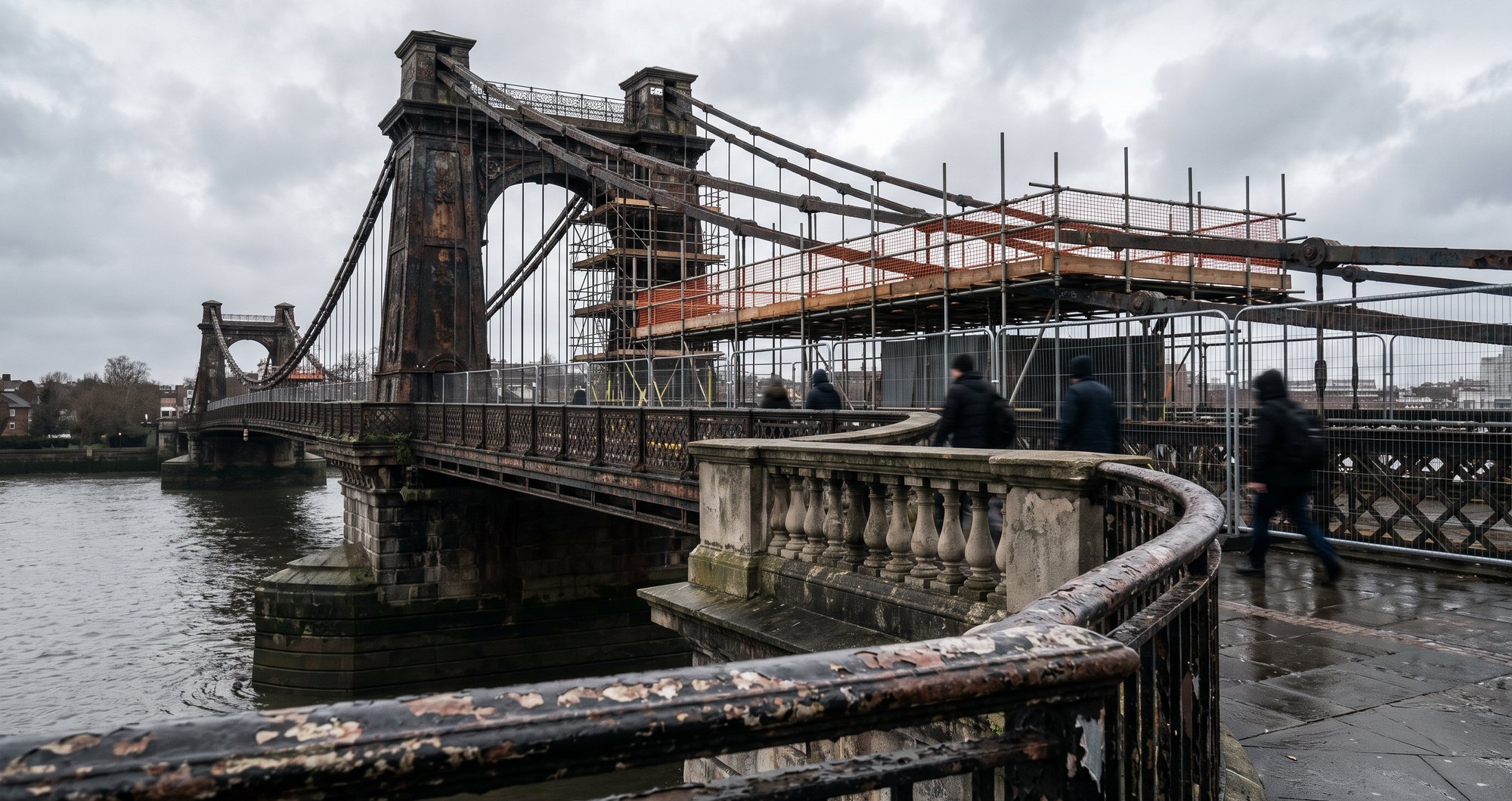
The hearing examined a number of high profile closures and repair programmes. Hammersmith Bridge has been closed to motor traffic since 2019 on safety grounds, the committee heard, and Hammersmith and Fulham Council estimates £300 million would be required to fully restore the 139 year old structure. The council said £128 million would be needed to retain the bridge in its current pedestrian and cyclist only state.
Albert Bridge has been closed to vehicles since February and repair work is due to finish next year, the committee was told. Vauxhall Bridge has been closed since 2023, with work to reopen it also planned for next year.
Age, heavier vehicles and climate cited as factors
Committee members were told that a combination of ageing materials, heavier traffic and climate effects are accelerating structural decline. Satbir Gill set out the broad picture from the returns, and witnesses at the meeting pointed to specific drivers of deterioration.
Andrew Burton, highways director for the Royal Borough of Kensington and Chelsea, said the average vehicle weight has risen substantially, from about 1.5 tonnes a decade ago to about two tonnes now, and that bridge damage scales with weight. Burton told the committee that Albert Bridge’s deck had to be replaced five years earlier than forecast because of wear linked to vehicle weight, and that Chelsea Bridge now requires an interim assessment as a result of similar concerns.
Simon Latham of the City Bridge Foundation emphasised that many Thames crossings are constructed from Victorian cast iron and other historical materials, which require ongoing maintenance and careful management, the committee was told. The meeting highlighted the challenge of maintaining heritage structures to modern standards while managing costs and traffic needs.
Transport for London said it keeps restrictions in place where necessary to preserve safety. TfL’s Carl Eddleston told the committee that the organisation’s bridges remain safe with those restrictions in place and that TfL invests about £30 million a year in structures.
The Department for Transport said it launched a Structures Fund this year and is considering applications from bridge owners, the committee was told. No further funding decisions were announced at the meeting.
Incomplete data and financial pressures
Committee members repeatedly noted the limitations of the data. The 30 bridge returns are self reported by owners and eight bridges did not supply information for the dataset presented to the committee, Satbir Gill said. That means the assessment does not necessarily capture the full condition profile of all Thames crossings.
Financial pressures were a recurring theme. The council’s estimates for Hammersmith Bridge underline the scale of resources some restorations require, and witnesses described a need to balance long term investment against immediate safety measures. No new funding commitments were made during the hearing, and the Department for Transport’s Structures Fund remains under consideration for applicants.
The committee heard detailed technical accounts of wear and repair schedules, and was told of planned completion dates for the most prominent current works. Members are likely to pursue further scrutiny of reporting standards, the completeness of data returns and the allocation of central funding in the weeks ahead, the meeting concluded.
The session took place on 3 November and assembled technical advisers and local highway officers to present the assessments and the current state of repair across the river’s crossings within Greater London.