
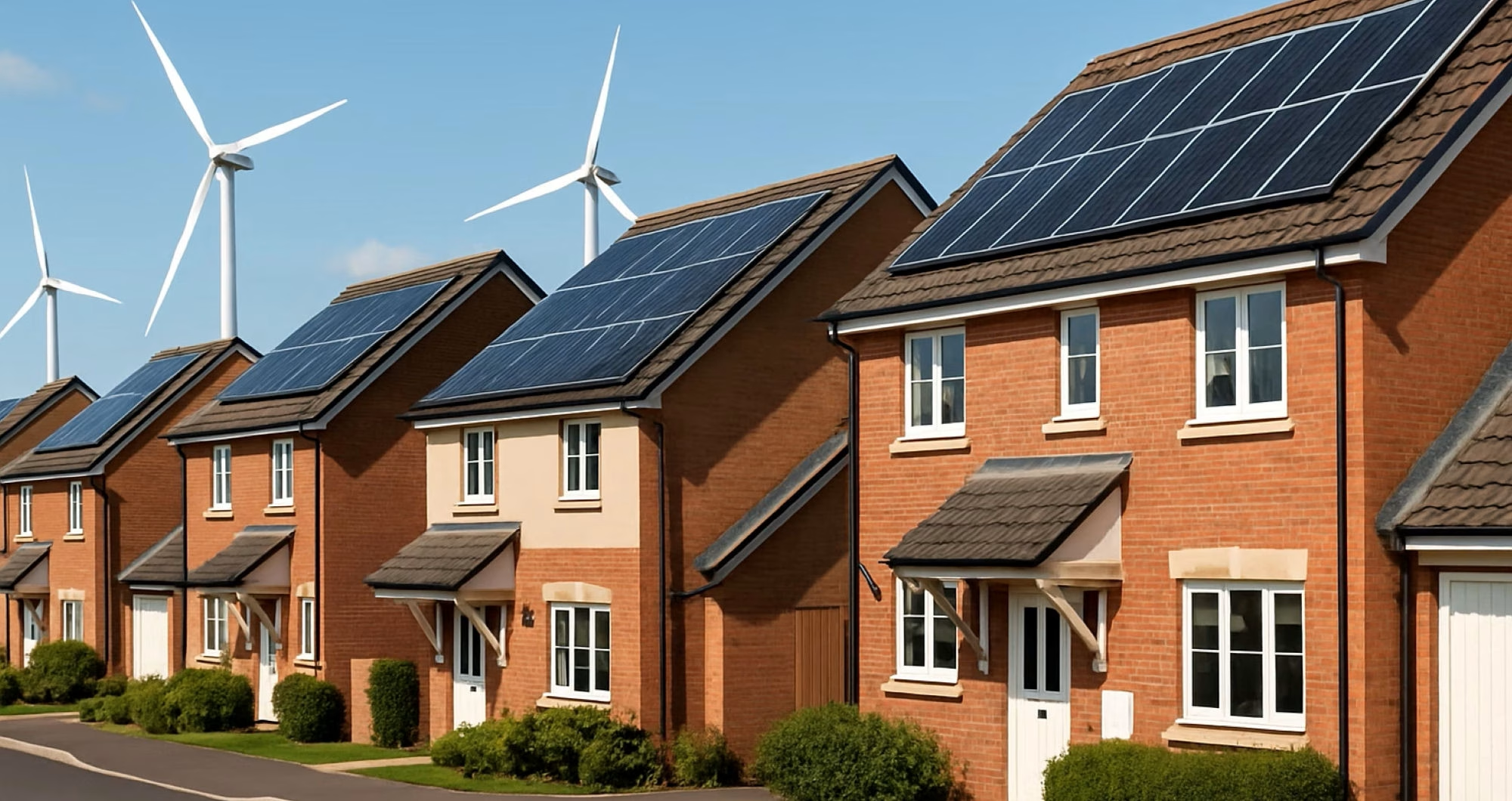

As switching returns, challenger suppliers like Ovo face the balancing act of price, transparency, and renewable ambition
Rising Costs and Market Pressures
The UK energy market has emerged from one of the most turbulent periods in recent history. Wholesale prices surged following global instability, pushing suppliers to the brink and forcing households into higher bills. Today, while prices have stabilised compared to the peak of 2022–2023, the financial pressures remain significant.
Suppliers are tasked with navigating the fine line between recovering high wholesale costs, maintaining profitability, and earning consumer trust. For households, this means the stakes have never been higher: choosing the right tariff can be the difference between financial stability and mounting monthly expenses.
Ovo Energy, one of the UK’s largest challenger suppliers, finds itself at the heart of this debate. With strong green credentials and a reputation for innovation, it has attracted millions of customers — yet it has also faced scrutiny over customer service, complaint handling, and billing transparency.
Balancing Clean Energy and Consumer Confidence
The demand for renewable energy has never been stronger. Consumers increasingly expect their supplier to provide greener tariffs, reflecting the wider shift towards decarbonisation. Ovo has positioned itself as a leader in this area, offering 100% renewable electricity on many tariffs and investing in carbon-cutting initiatives.
But the challenge lies in ensuring that these sustainable ambitions are matched with affordability and reliable customer service. Past concerns about overcharging and complaint handling have created trust hurdles that suppliers must overcome to maintain loyalty in a highly competitive market.
Tim Bailey, spokesperson for Free Price Compare, said:
“The energy market is about more than just price. Consumers want greener options, but they also need confidence in how their supplier treats them.”
“Clean energy is vital, but trust is non-negotiable. Price, service, and sustainability must all align.”
— Tim Bailey, spokesperson, Free Price Compare
Why Consumers Are Comparing Tariffs Again
After years of volatility, the return of competitive switching is reshaping household choices. Consumers are no longer locked into a single path but are once again weighing up the benefits of challenger suppliers like Ovo.
Platforms that allow households to compare Ovo Energy prices are seeing renewed interest as customers look beyond headline rates. Transparency over billing, clarity on renewable commitments, and evidence of strong customer service are increasingly part of the decision-making process.
Bailey added:
“Cost remains the number-one concern, but consumers are savvy. They’re checking the details — from tariff terms to customer reviews — before making the switch.”
Understanding Ovo Energy Tariffs
Ovo Energy tariffs cover a wide spectrum of household needs, from standard variable tariffs tied to the Ofgem price cap through to fixed-rate deals offering short-term certainty. Some plans also incorporate smart meter technology and usage insights, helping customers track and reduce their energy consumption.
Yet analysts warn that value is not defined by price alone. Service quality, accurate billing, and complaint resolution all influence how consumers assess their experience with a supplier.
That is why consumers are urged to review Ovo Energy tariffs in detail, checking not just unit rates and standing charges but also the wider benefits or limitations of each plan.
Reputation and Reviews Still Matter
While price and clean energy remain strong selling points, reputation plays a vital role in consumer choice. For Ovo, independent feedback remains mixed: many customers highlight its renewable credentials and innovative tools, while others cite frustrations with service or complaint handling.
Review platforms remain a useful resource for households weighing up their options. Access to Ovo Energy reviews helps potential customers balance the positives and negatives before making a final decision.
Bailey explained:
“Reviews give households a voice. They highlight the strengths of a supplier, but they also reveal the gaps. Both matter when families are deciding who to trust with such an essential service.”
Looking Ahead: The Supplier Challenge
The wider industry agrees that the future of the energy market will be shaped by three pillars: cost, clean energy, and consumer trust. Suppliers able to align all three stand to grow, while those who fall short risk losing ground in an increasingly competitive landscape.
For Ovo, the opportunity is clear. Strong renewable credentials and a growing customer base position it as one of the UK’s leading challengers. But its ability to balance affordability with reliable service will determine how it fares as switching accelerates into 2026.
As households continue to seek both value and transparency, comparison platforms like Free Price Compare will play a critical role in helping consumers cut through the noise and find the supplier — challenger or established — that best meets their needs.
Bailey concluded:
“Energy isn’t just about unit rates. It’s about trust, sustainability, and service. Suppliers who get that balance right will be the ones who thrive.”







