
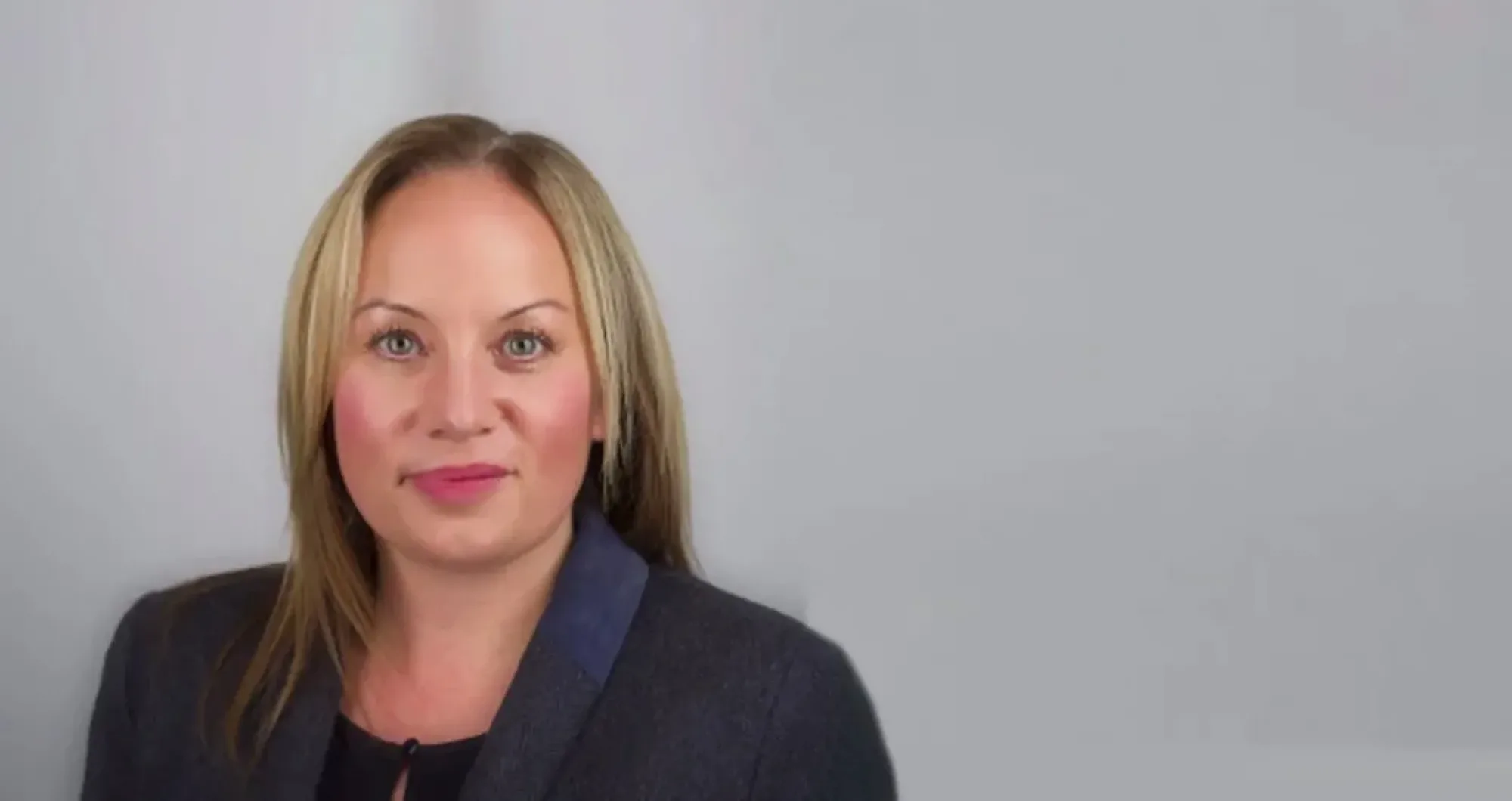

Exclusive Interview with Sarah Armstrong-Smith
Sarah Armstrong-Smith is one of the UK’s leading voices in resilience, cybersecurity, and digital transformation. As Chief Security Adviser at Microsoft Europe, she has spent her career helping businesses navigate some of the world’s most complex technological and security challenges — from the Millennium Bug to the modern realities of ransomware, cyberattacks, and crisis management.
In this exclusive interview, cybersecurity speaker Sarah Armstrong-Smith shares her unique insights on the evolving threat landscape, the critical importance of business continuity, and why building a human-centred approach to cybersecurity will be essential for the future of leadership, trust, and innovation.
Q: From your vantage point as a cybersecurity leader, what do you view as the most pressing threats businesses face today, and how should they strengthen their resilience against these evolving risks?
Sarah Armstrong-Smith:
“Cybercriminals are opportunistic and thrive in a crisis. Over the last 12–18 months, we’ve seen a massive increase in phishing attacks preying on people’s fears and emotions. Attackers pretend to be your bank, a charity, or an organisation offering support. They try to trick you into giving up credentials or clicking on malicious links.
“We’ve also seen a rise in ransomware attacks, particularly targeting healthcare and critical infrastructure. It was shocking to us that during a pandemic, attackers still targeted hospitals and emergency services because they believed those institutions would be more likely to pay.
“Businesses need to adopt an ‘assume compromise’ mindset. No matter how strong your cybersecurity is, attackers will try to find a way in. The focus should be on preparedness: what happens if someone accesses your systems? If your data is leaked, what’s the impact? Where should you prioritise your security efforts?
“Cybersecurity isn’t just about defences—it’s also about crisis response. If your network goes down, can your business revert to manual processes? How do you communicate with customers and partners? The response strategy is just as important as prevention.”
Q: Since taking on the role of Chief Security Adviser at Microsoft Europe during such a pivotal moment, what professional milestone or achievement stands out most to you?
Sarah Armstrong-Smith:
“Well, for me, I actually joined Microsoft one week after the UK went into lockdown. So, my entire Microsoft career to date has been from this very office! It’s been interesting to be in the middle of a global pandemic, joining a new company, but also seeing the inner workings of Microsoft.
“Microsoft is a massive organisation with over 160,000 employees worldwide, but beyond keeping the company running, we also had to ensure our customers were operational. Then there was the massive acceleration to the cloud, particularly collaboration tools like Teams.
“It was incredible to see how Microsoft rose to the occasion, supporting customers and new users. In my role, I work with strategic and major customers across Europe, acting as an executive sponsor across different sectors. It allows me to understand their challenges, especially around cloud adoption and digital transformation.
“No matter how bad things get—and we’ve had major crises over the years—I always focus on opportunities. What can we learn? What can we do better? That’s why I’m proud to work at Microsoft.”
Q: Reflecting on your early experience tackling the Millennium Bug, what critical lessons did that period teach you about large-scale technological threats and business resilience?
Sarah Armstrong-Smith:
“I think having a background in business continuity has enabled me to think about the big picture. I was always thinking about worst-case scenarios—what is the worst thing that could happen? But we also need to think wider. We need to consider incidents that are not just relevant to our own company but that impact cross-sector and even global changes.
“I think back to 9/11 as a really good example of a major incident at massive scale that we probably never saw before. The way it was televised and the shock that came with it really brought home the impact of terrorism and how important business continuity is at that kind of scale.
“Bringing that forward to now, the global pandemic has really emphasised how interconnected and dependent we all are. That applies to small businesses as well as large enterprises. When we consider these threats, it’s not just about business continuity but also cybersecurity and attacks. We have to think holistically, much wider. This is where resilience to all of these types of threats comes to the forefront.”
Q: In your opinion, how has the media historically shaped public perception of digital threats such as the Millennium Bug—and what is its role today in influencing cybersecurity narratives?
Sarah Armstrong-Smith:
“Potentially. Sometimes the media can really help, but they can also hinder. The problem is scare-mongering, blowing things out of proportion. People have a tendency to believe what they read on the internet without fact-checking, and that has become more difficult due to the number of information sources available.
“Where do you go to get factual information? People read things on social media—Facebook, Twitter—and it’s really hard to decipher fact from fiction. The media can sometimes blow things out of proportion. It’s important to find the right sources of information and utilise intelligence to cut through the noise and get real, actionable insights.”
Q: What initially inspired your journey into cybersecurity, data protection, and digital transformation, and how has your career evolved through the major shifts in technology over the past two decades?
Sarah Armstrong-Smith:
“I’ve been working in the technology environment for over 20 years now, and I trace this back to 1999. I was actually working for a water utility company during the Millennium Bug in 2000. Many companies were on large transformation programmes to recode a lot of their computers and servers because the theory was that at the stroke of midnight, a number of computers and servers would go into meltdown due to the way the Year 2000 was coded into various systems.
“For me, from a young age, I’ve always been driven to keep asking ‘why’ and abundant questions. What if the systems go down? What if we can’t get people to work? What if all of these things happen? At the time, I didn’t realise I was looking at business continuity. It just felt like common sense to keep asking these questions. That was the start of my career.
“I always look at that moment as the point where my career began. From business continuity, I then pivoted over the next 20 years into disaster recovery, cybersecurity, fraud, crisis management, and all of that falls under the banner of resilience. That’s how my career has evolved, and it’s been fantastic.”
Q: In terms of workplace diversity and inclusion, what fundamental changes do you believe are still needed to improve gender representation and create more equitable opportunities in business and tech?
Sarah Armstrong-Smith:
“We need people who can think outside the box, and that’s why diversity is so important. It’s not just about gender; it’s about diversity of background, experience, and culture. Inclusion is about removing false barriers—like the idea that tech is only for men or that you need to be highly technical to work in cybersecurity. That’s not true.
“We also need to rethink how we support young people. Expecting them to decide their career path so early is unrealistic. People should try different things, pivot through their careers, and that should be encouraged. Life expectancy is increasing, meaning careers will be longer. People will take breaks, start families, and shift industries. It’s about enabling flexibility and options.”
Q: If you could offer one piece of advice to your younger self—or to emerging professionals entering the cybersecurity field today—what would it be, and why?
Sarah Armstrong-Smith: “Don’t be afraid to keep pushing yourself forward. When I was younger, I had a habit of volunteering for things I didn’t fully understand, but it always led to growth. People hesitate to apply for roles if they don’t meet 100% of the requirements, but you don’t have to know everything. You learn on the job.
“I never planned to work in tech. I originally wanted to be a graphic designer because I loved art. Careers aren’t linear, and that’s okay. Just take opportunities, keep learning, and enjoy the journey.”
This exclusive interview with Sarah Armstrong-Smith was conducted by Mark Matthews.







