
Fighting in Djugu territory in the Democratic Republic of the Congo’s Ituri province has killed at least 16 civilians, displaced more than 13,000 people and forced humanitarian organisations to suspend or reduce work, placing both emergency assistance and Ebola-control activities under renewed pressure.
The reported toll and displacement figure describe a fast-moving situation in an area where insecurity has repeatedly interrupted access to communities. The immediate consequences extend beyond people leaving their homes. Families uprooted by violence can lose access to food, healthcare, nutrition services, cash assistance and water and sanitation support at the same time, while the organisations intended to help them may be unable to move safely.
Services reduced as access narrows
At least five humanitarian organisations have suspended operations or scaled them back in the affected area. The reduction means 10,000 or more people could lose access to urgently needed assistance. The risk is especially acute where households depend on regular distributions, community health services or practical support to obtain food and clean water.
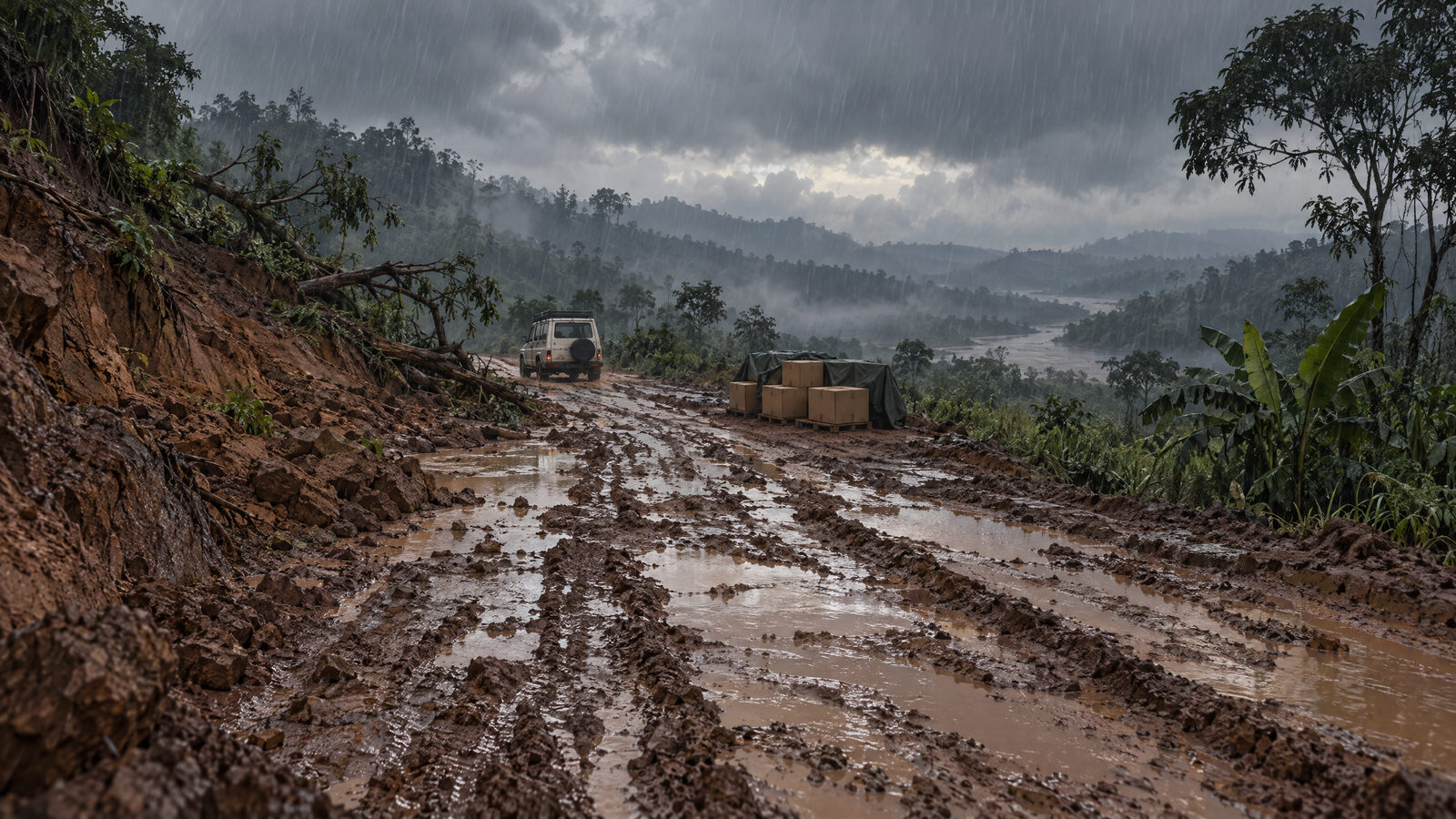
Humanitarian work in conflict-affected places depends on more than supplies being available. Teams need safe routes, enough staff, the ability to communicate with communities and reliable access to the places where needs are greatest. When one of those conditions fails, a delay in one service can quickly compound another: a family that misses food support may also be unable to reach healthcare, while a displaced person may be harder for community workers to contact.
People at the Rhoe displacement site face a further risk. Some 50,000 internally displaced people there may not receive the assistance they need if access remains restricted. That does not establish that aid has stopped permanently, but it underlines the scale of the immediate operational exposure should insecurity continue to limit movements and programme delivery.
Ebola response faces practical obstacles
The violence is also disrupting work to contain the Ebola outbreak. Community engagement and surveillance have been affected, while the transport of laboratory samples and patients has been delayed. These are practical parts of an outbreak response rather than optional additions: engagement can help people understand how to seek care safely, surveillance can identify possible new cases and timely transport helps connect patients and samples with the facilities able to assess them.
Ituri is already dealing with the combined pressures of conflict, displacement and a serious public-health emergency. Sudden population movements can make it more difficult to maintain contact with communities, follow up health concerns and keep essential services running. Restricted access can also leave health and humanitarian workers unable to reach places where the needs are changing most rapidly.
The latest figures should be treated as preliminary operational assessments in an unstable environment. The reported civilian death toll is a minimum, and displacement totals can change as more people are registered or as conditions allow further assessment. No responsibility for the fighting has been established here.
A significant escalation in the same crisis
This development represents a sharper phase of an already serious emergency in Djugu. Earlier reporting from the same area had described at least four displaced people killed and more than 3,000 people fleeing around Rhoe. The newer assessment records a substantially higher reported civilian toll and displacement total, alongside specific disruption to multiple aid operations and to Ebola-response activities.
The central question now is whether safe, sustained access can be restored quickly enough for assistance and health work to resume at the scale required. Until it is, civilians displaced by the fighting and communities relying on routine support will remain exposed to further gaps in essential help.