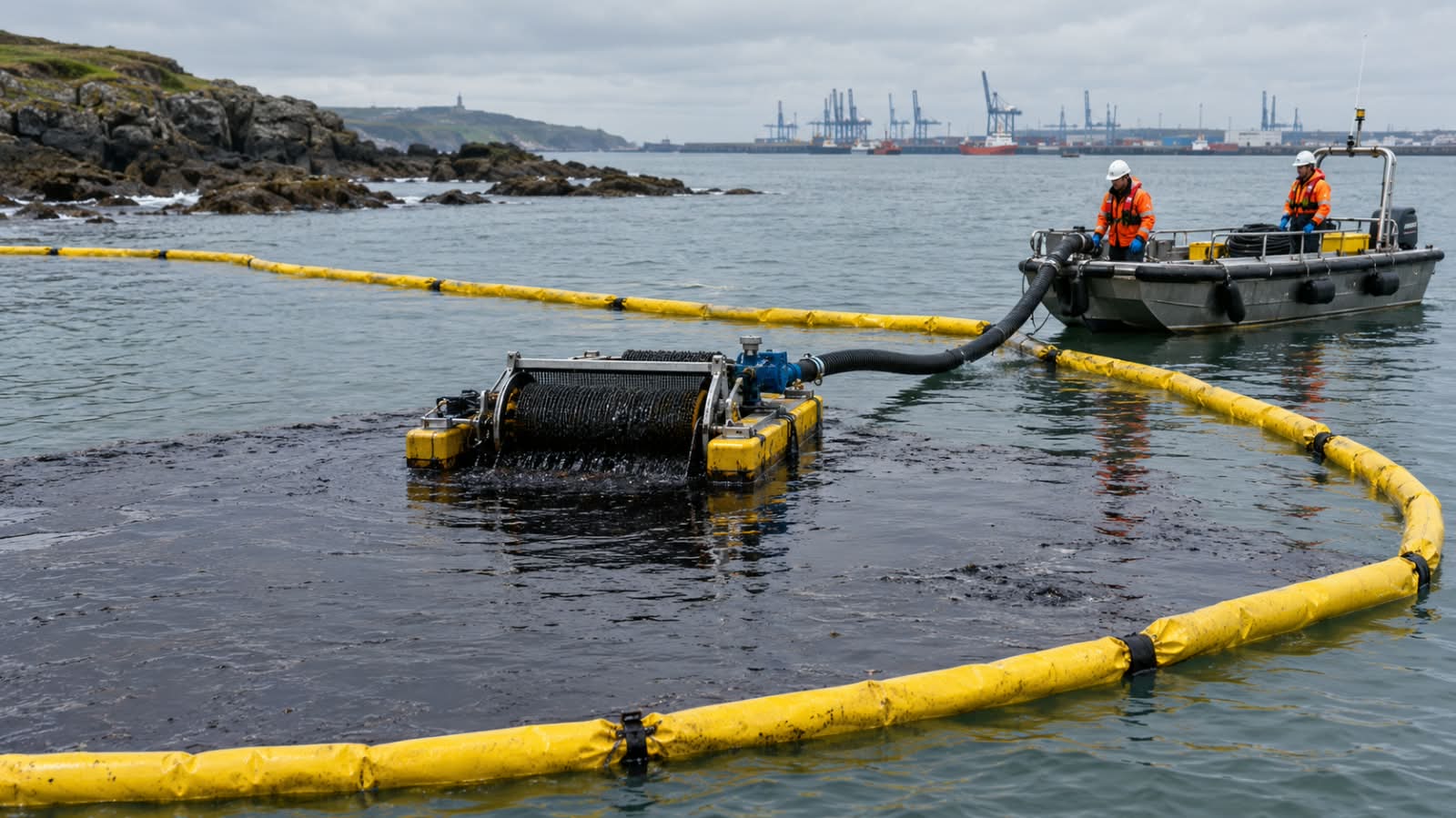

When an industrial accident or marine incident discharges hydrocarbons into aquatic ecosystems, the resulting environmental threat requires immediate, precise mitigation. Because petroleum products possess a lower specific gravity than water, they naturally migrate upward, forming a persistent surface film that starves aquatic flora and fauna of oxygen and light. Around the UK coastline, where busy ports, offshore installations and shipping lanes sit close to sensitive habitats, a fast and clean response matters more than ever. To neutralise this hazard without introducing harmful chemical dispersants, professional response teams rely heavily on oil skimmers and other mechanical recovery devices. For a step-by-step breakdown of these procedures, this guide on how oil skimmers work in spills is useful reading for engineers, environmental consultants and port authorities dedicated to protecting marine habitats.
The Core Mechanical Philosophy
At its foundation, an industrial recovery unit exploits the physical properties of immiscibility and surface tension. Rather than attempting to dissolve or emulsify a petroleum slick, which can cause secondary pollution, response teams utilise specialised equipment engineered to selectively target and lift hydrocarbons off the water surface.
The recovery sequence follows a highly coordinated engineering workflow designed to maximise oil-to-water recovery ratios and minimise secondary waste generation.
The Step-by-Step Response Workflow
1. Initial Assessment and Spill Profiling
Before deploying heavy recovery assets, response crews conduct a thorough environmental reconnaissance. They evaluate the surface area, wind velocity, tidal vectors and the specific viscosity of the spilled fluid. Light refined products behave differently under wave action compared to heavy crude oils, dictating both the placement strategy and the choice of mechanical apparatus.
2. Hydrodynamic Containment
Because winds and strong currents can rapidly disperse a slick over vast marine expanses, containment barriers are deployed immediately. These floating curtains act as physical dams, corralling the floating pollutant into a concentrated pool. Concentrating the slick significantly increases layer thickness, which optimises recovery speeds for subsequent mechanical intervention.
3. Strategic Deployment and Positioning
Once the pollutant is contained, recovery units are positioned precisely at the thickest accumulation zone. Accurate placement prevents the intake of excessive ambient water, ensuring that pumps and collection reservoirs operate at maximum efficiency.
4. Selective Surface Attraction
As the machinery activates, its active collection components, whether rotating drums, continuous belts or oleophilic disks, interface directly with the floating hydrocarbon layer. Oleophilic materials possess a natural affinity for oil, allowing them to attract and bind petroleum while largely repelling water.
5. Mechanical Extraction and Scraping
Once the oleophilic medium or weir mechanism collects the pollutant, it passes through specialised wiper blades, scrapers or squeeze rollers. These precision components shear the adhered oil away from the moving media surface, funnelling it directly into temporary transfer channels without diluting the catch with excessive water.
6. Transfer and Secondary Storage
Finally, transfer pumps draw the recovered fluid through heavy-duty hoses into secure storage bladders, drums or shore-based tanks. Depending on the purity of the recovered fluid, the hydrocarbons can often be routed to recycling facilities for industrial reprocessing. When engineering large-scale municipal or coastal clean-up operations, procuring certified hardware from a trusted floating oil spill skimmer manufacturer helps ensure long-term operational reliability and strict compliance with environmental protection standards.
Tailoring Technology to Environmental Demands
Because industrial and marine spills vary drastically in scale and composition, different mechanical designs serve distinct operational environments:
- Weir Systems: Utilise gravity and adjustable overflow gates to skim high-volume, thick surface layers.
- Oleophilic Drum and Disk Units: Rely on rotating cylinders or plates that selectively capture medium-to-light oils with minimal water pickup.
- Belt and Brush Models: Employ continuous loops or specialised bristles to lift viscous, heavier sludge from challenging water surfaces.
Conclusion
Effective spill mitigation relies on a seamless integration of rapid detection, strict containment and precise mechanical extraction. By utilising purpose-built recovery systems that respect the natural physics of water and petroleum, environmental teams can safeguard marine ecosystems, recover valuable resources and restore ecological balance with maximum efficiency.