
A kitchen sink has to work hard. From morning coffee cups and lunch prep to evening washing up, it is one of the busiest spots in the home. So while style matters, the real question for many households is simple: which sink material is easiest to keep clean?
Experts at online bathroom and kitchen retailer Plumbworld say that the best low-maintenance choices are usually brushed stainless steel or quality granite composite, with ceramic also offering an easy-clean option for those who prefer a classic finish.
What makes a sink easy to clean?
A sink is easy to live with when it resists stains, wipes down quickly and doesn’t show every water mark, food splash or surface scuff.
The material matters, but the finish can make just as much difference. Brushed, matt and lighter finishes tend to be more forgiving than polished, glossy or very dark surfaces. This is worth remembering if you want a kitchen that looks clean without needing constant attention.
Brushed stainless steel: best for busy homes
Stainless steel remains one of the most practical kitchen sink choices. It is non-porous, hygienic, heat-resistant and simple to rinse clean after everyday use.
For most marks, warm soapy water and a soft cloth are enough. Tea, coffee, sauces and grease will usually wipe away easily because they do not soak into the surface.
The main thing to watch for is water spots, especially in hard-water areas. Stainless steel can also develop fine surface scratches over time, although these often blend into the finish. For the easiest upkeep, brushed or satin stainless steel is the best choice because it hides marks better than polished steel.
Granite composite: stylish and low maintenance
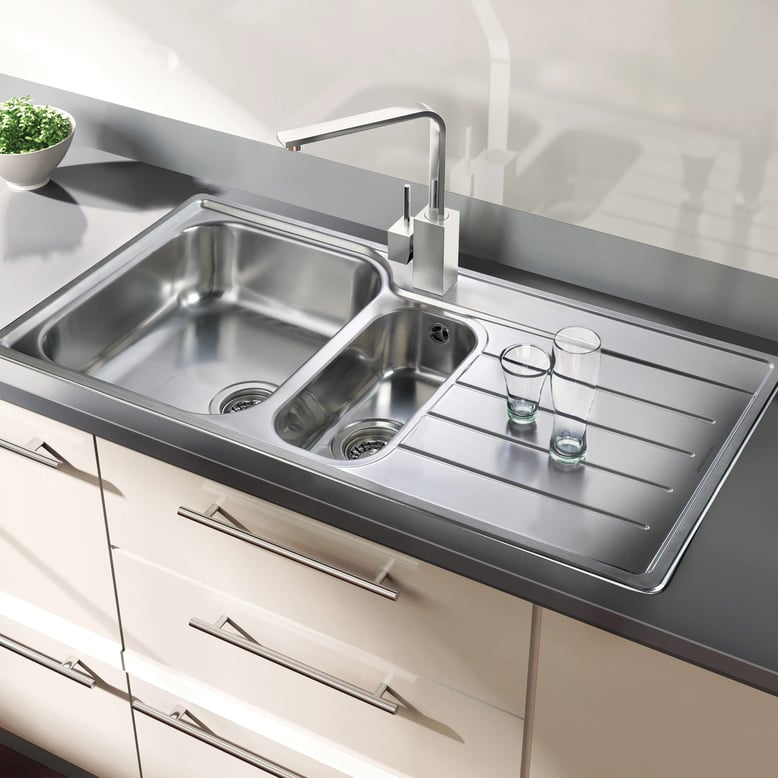
Granite composite is another strong option for a low-maintenance kitchen. Its matt, solid surface helps disguise everyday marks and water spots, making it popular in modern interiors.
Good-quality granite composite sinks are hard-wearing, stain-resistant and non-porous. Food, grease and liquids sit on the surface rather than soaking in, so a quick wipe with warm soapy water is usually enough.
Dark composite sinks can show pale, chalky marks in hard-water areas. This is usually limescale rather than fading, and regular wiping plus occasional descaling with a suitable cleaner can help restore the finish. If you want the easiest option, lighter composite colours are often more forgiving than black or very dark shades.
Ceramic: classic, bright and easy to wipe
Ceramic sinks are a popular choice for traditional, shaker and country-style kitchens, although they can also work well in more modern spaces.
The glazed surface is smooth and non-porous, so tea, coffee, food residue and grease can usually be wiped away with warm soapy water. A white ceramic sink can look beautifully fresh when looked after properly.
However, ceramic can show metal marks if pans, trays or tins are dragged across the surface. These marks are often metal transfer rather than true scratches and can usually be removed with a gentle cleaner suitable for ceramic. Ceramic can also chip if hit hard with heavy cookware, so it benefits from careful use.
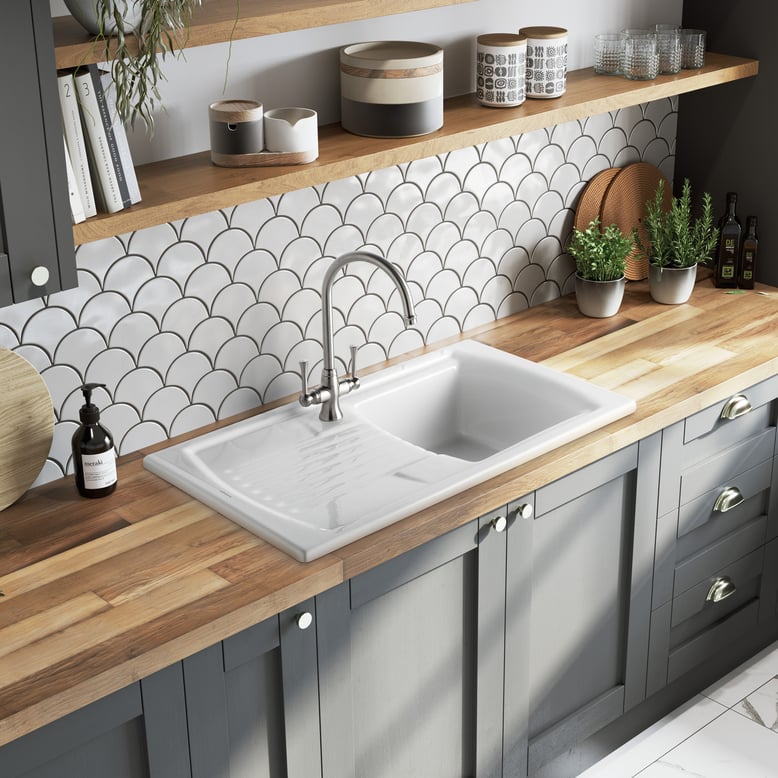
The everyday marks to watch for
Most kitchen sink marks come from common household use. Tea, coffee and wine should rinse away from stainless steel, granite composite and ceramic if cleaned off quickly. Grease and oil can be removed with some warm, soapy water.
Strong food colours, such as turmeric or curry sauces, should be wiped away quickly, especially on lighter sinks. Limescale is another common issue and often appears as a white or chalky film where water has dried. It is most noticeable on dark composite and polished stainless steel.
How to keep any sink looking its best
For everyday cleaning, just keep it simple. Use warm soapy water, a soft cloth or a non-scratch sponge, then make sure you rinse well. Drying the sink after use will help reduce water spots and limescale.
Avoid wire wool, abrasive pads and harsh chemicals left sitting on the surface. Wet metal items, such as tins or cutlery, should also not be left in the bowl for long periods, as they can leave marks.
Which sink is easiest to clean?
For the simplest all-round choice, brushed stainless steel is hard to beat. It is practical, hygienic, durable and forgiving in everyday use.
Granite composite is also a great low-maintenance option, especially in a matte or lighter finish. Ceramic is easy to wipe clean and offers a bright, timeless look, although it may need a little more care around metal marks and heavy cookware.
The best sink for your home depends on how you use your kitchen. For a busy family life, choose brushed stainless steel. For a sleek modern look, consider granite composite. For classic charm, ceramic remains a beautiful and practical choice.