
The euro area economy has continued to expand through the energy-price shock that began in early 2026, but the European Central Bank says the resilience seen so far reflects a combination of structural changes and temporary support that may not last. In an analysis published on 21 October, the central bank said real GDP excluding Ireland was 0.6 per cent higher in the second quarter of 2026 than in the final quarter of 2025.
The analysis is not a new interest-rate decision or an operational policy measure. It examines why economic output has held up despite disruption to energy markets and sets out areas where European economies could become better able to withstand future shocks. Its conclusions combine observed economic data with interpretation and projections, and the authors stress that the outlook remains uncertain.
Lower exposure to fossil-fuel prices
A central explanation is that the euro area economy uses less oil for each unit of economic activity than it did decades ago. Households and businesses have improved energy efficiency, while production has shifted towards services and other activities that are generally less energy-intensive. The analysis estimates that the economy is now about half as reliant on oil as it was in the early 1990s.
The shock unfolded in waves. The initial conflict in the Middle East sent oil prices sharply higher before they eased following a June US-Iran memorandum of understanding. A second wave from July brought another significant rise in oil prices, higher refining margins and a sustained increase in gas prices. The analysis says Europe remains exposed to global energy markets, even though fossil-fuel price movements now have a smaller effect on the wider economy than in the past.
Growth in renewable electricity has also changed how energy markets transmit price movements. Where renewables or nuclear power provide a larger share of electricity, gas-fired plants set the wholesale electricity price less often. Spain is cited as an example: during the first nine months of the year, gas plants set prices in just over one-fifth of hours in 2026, compared with about four-fifths in the same period of 2020. In France, the proportion fell from about three-fifths to about one-fifth, with nuclear generation an important part of the energy mix.
Support that may fade
Fiscal policy has provided another cushion. The expected fiscal stance for 2026 shifted from an expansion of 0.25 percentage points of gross domestic product in projections made in December 2025 to 0.5 percentage points in the latest projections cited in the analysis. The authors link much of the increase to higher defence and infrastructure spending in Germany, with energy-cost measures in euro area countries also contributing.
That figure describes the change in the fiscal stance, rather than a cash package worth 0.5 per cent of GDP. The analysis warns that some measures are temporary, fiscal room is limited in several countries and projections point to less support in later years. Governments may therefore have less capacity to cushion another shock to the same extent.
External demand has been more favourable than expected. The December 2025 outlook projected global trade growth of 2 per cent for 2026; the latest projection cited by the authors is 4.7 per cent. They identify trade in artificial-intelligence-related goods and investment as part of the improvement. Demand for technology equipment and specialised manufacturing products has supported the euro area, while AI-linked investment has also contributed to domestic demand.
The analysis does not treat that boost as assured. It notes that an AI-related reversal could expose sectors that have benefited from strong demand. It also describes labour-market resilience as a source of support for household income and consumption, while acknowledging that the outlook is highly uncertain.
Building resilience beyond the current shock
The authors identify significant downside risks, including further geopolitical escalation, disruption to energy supply chains, weaker financial-market sentiment, renewed trade tensions and extreme weather. Several could interact and develop quickly. The policy argument is to reduce reliance on imported fossil fuels, expand and connect electricity grids across borders, and ensure cheaper renewable power can reach places where it is needed.
They also argue that the benefits of artificial intelligence will depend on how quickly its use spreads across firms and sectors. Better channelling of savings towards productive investment, including through a deeper European savings and investment union, is presented as another way to support long-term growth and resilience.
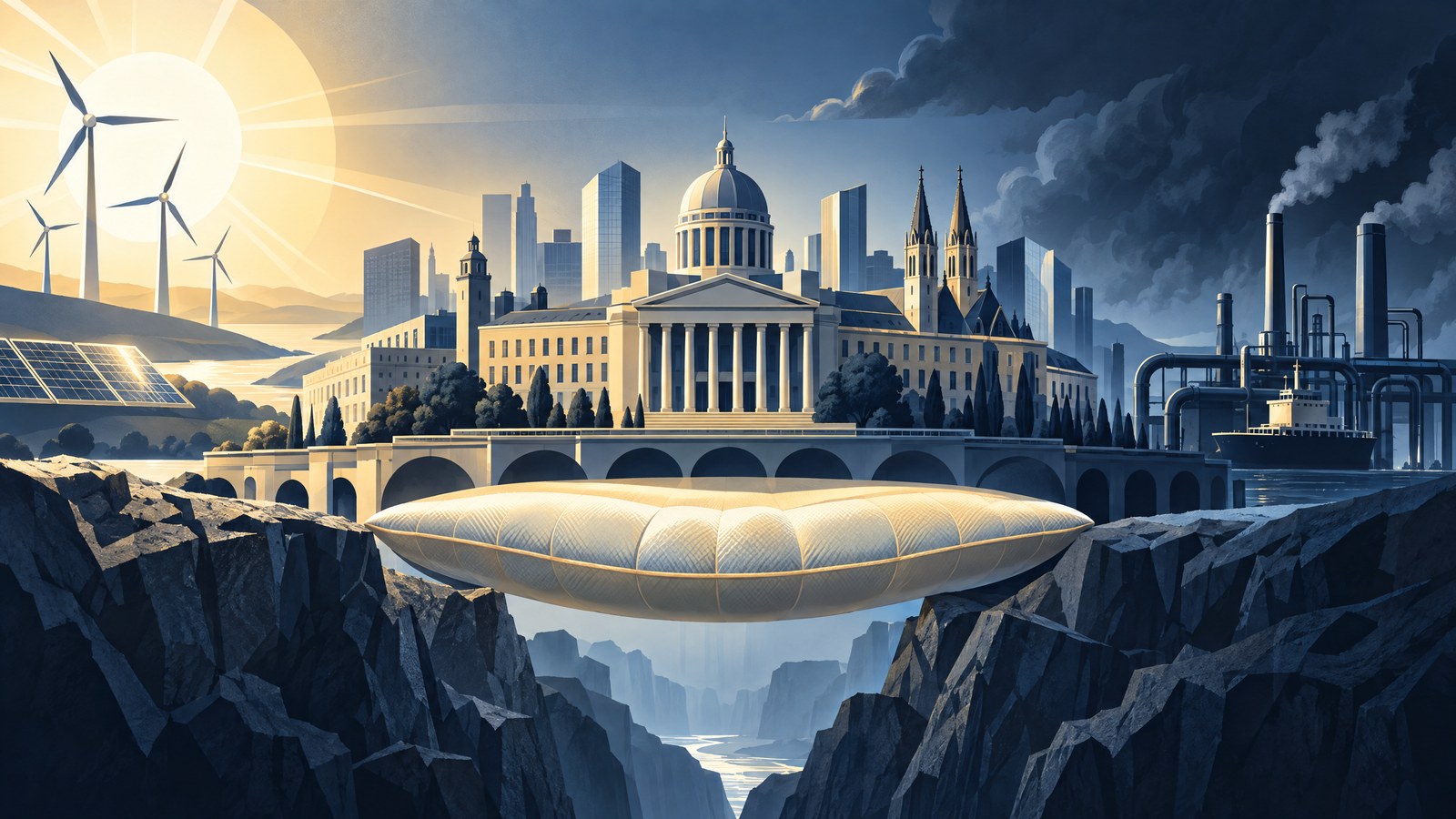
The distinction running through the analysis is between durable adaptation and temporary buffers. Improved efficiency, a less energy-intensive economic structure and greater low-carbon generation can reduce exposure over time. Fiscal support, buoyant global demand and the current AI investment upswing may provide relief now, but the authors say none should be assumed to persist at its present strength.