
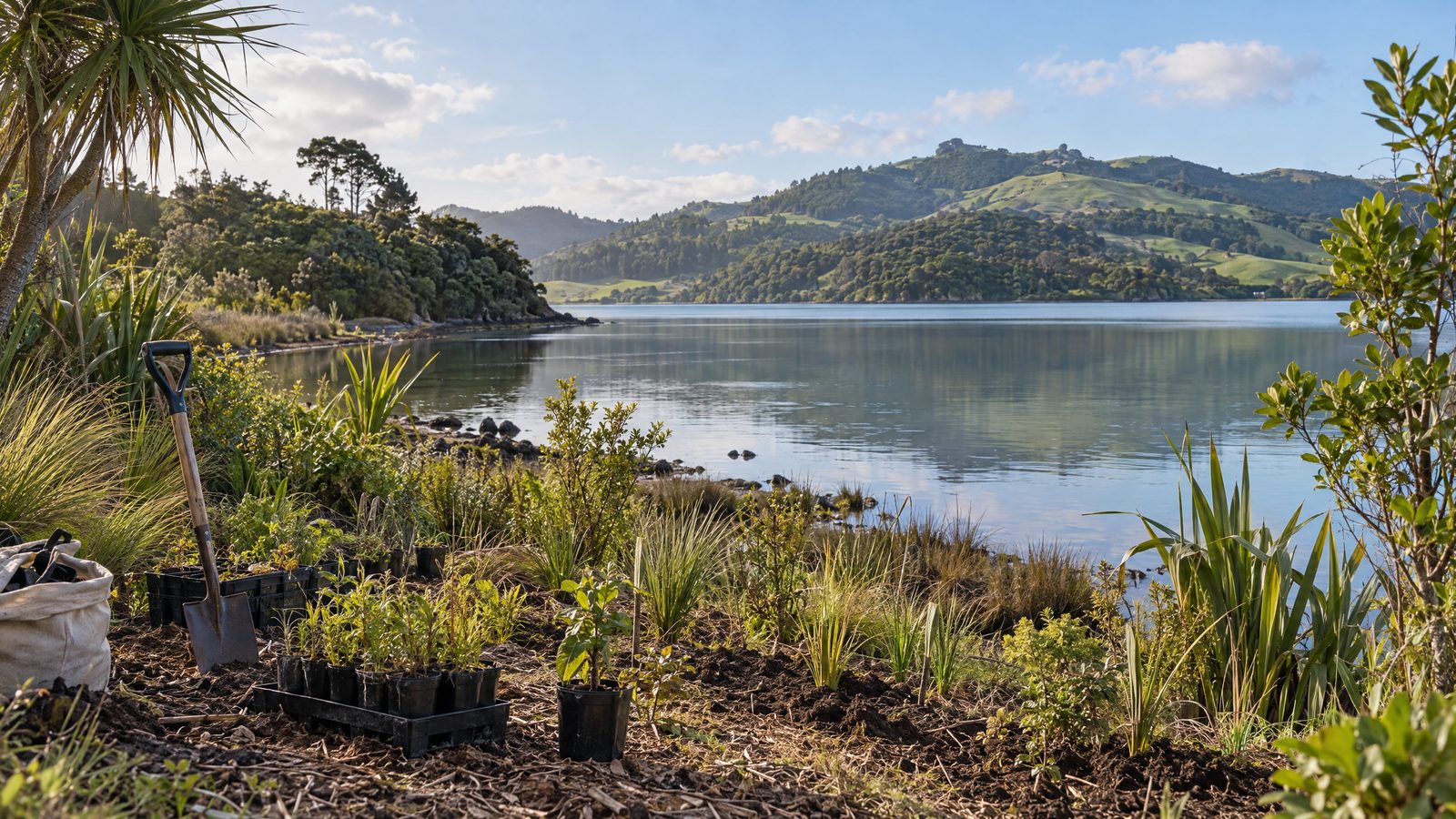

A $3 million government grant will fund enabling work for the first stage of a project to restore Lake Ōmāpere, Northland’s largest lake. The announced package covers regulatory approvals, road access, a water-level control weir and design work for future water-storage infrastructure.
The grant comes from the Regional Infrastructure Fund. The first stage, named He wai ora; he iwi ora — “if the water is well, the people are well” — is estimated to cost about $5.9m, with contributions expected from multiple partners. Lake Ōmāpere GP Limited is leading the project on behalf of the Lake Ōmāpere Trust. The government announcement describes the funding as an important step towards a longer-term restoration vision, rather than a completed clean-up or a guarantee of a particular water outcome.
Enabling work, not a finished restoration
The listed activities span preparation and infrastructure. Regulatory approvals and access work can help make later work possible; the weir is intended to control lake levels, while the water-storage element is still at the design stage. The announcement does not provide a construction timetable, a consent decision, or a date when water would be available for public or commercial use. Nor does it say that the grant covers the whole estimated first-stage cost.
That distinction matters because raising or managing water levels is not, by itself, evidence that lake water quality will improve. A 2024 review of decades of research found that an earlier feasibility assessment of raising the lake level by 2.5 metres had not demonstrated that water quality would improve enough for community use. The current announcement identifies design work for future storage infrastructure, but supplies no new water-quality findings or confirmed storage capacity.
Lake Ōmāpere lies near Kaikohe and covers about 12.3 square kilometres. It is relatively shallow: published measurements put its average depth at roughly 2.6 metres, with summer levels reported as low as 1.5 metres. Sediment entering the lake after surrounding forest clearance has contributed to the loss of depth. Regular algal blooms have also affected its condition. These pressures help explain why the project links restoration with water resilience, while also underscoring that improved supply remains an objective, not an established result.
A long-term cultural and environmental ambition
For Ngāpuhi, the lake has been regarded as a food source and a taonga. The restoration plan has been developed with whānau, hapū, iwi and community involvement, alongside scientific and ecological expertise. Its wider aims include water quality, indigenous biodiversity and community wellbeing. A previous drought illustrated the practical stakes: an attempt to use the lake as an emergency source for Kaikohe was unsuccessful because of water-quality concerns.
The government says a healthier lake could support more resilient regional water supplies, productive land during dry periods and opportunities for Māori economic development. Those are potential benefits, not impacts already delivered by the new funding. The release does not set out measurable targets for bloom reduction, biodiversity recovery or supply volumes, so progress will depend on subsequent approvals, detailed design, funding contributions and implementation.
The $3m commitment therefore advances a defined first package of preparatory and water-management work within a larger, multi-partner effort. Its significance is the move from a broad restoration ambition towards funded enabling steps. The harder test will come later: whether the work can secure approvals, address the lake’s underlying water-quality pressures and deliver benefits that local communities can safely use. For now, the grant supports that next phase; it does not establish that the lake has been restored.







