

In today’s digital age, many of us spend countless hours in front of screens, I know I do but have you ever thought about what this might be doing to your eyes? A recent survey reveals some eye-opening statistics about Brits’ eye test habits and screen time usage, shedding light on how we might be neglecting our eye health.
Key Data Highlights:
- 40% of Brits are due for an eye test
- Brits spend nearly 2 hours on digital devices in bed each day
- Almost 30% of young people (16-24) aren’t aware of the need for regular eye tests
- 23% of Brits want to reduce their screen time
- 1 in 5 people are unaware of the benefits of blue light-blocking filters
The Eye Test Gap
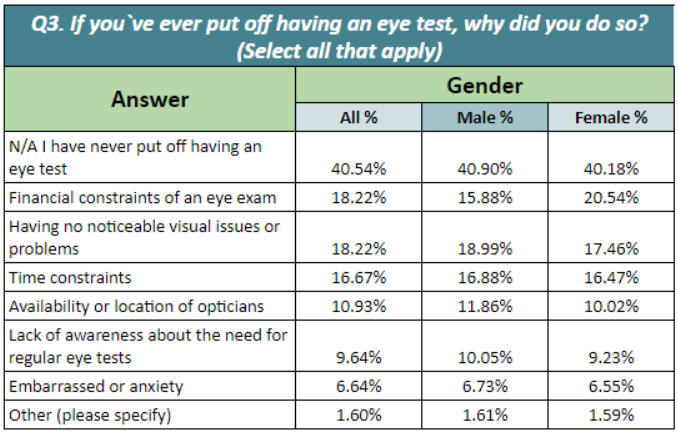
According to the survey of 2,000 people in the UK, by Ocushield nearly 40% of Brits are overdue for an eye test. It turns out men are more likely to neglect their eye health, with 45.6% admitting they haven’t had an eye test in the past two years, compared to 33.5% of women. Even more concerning, 6.1% of men haven’t had an eye test in the last 10 years, and 6.7% have never had one at all. Women are faring slightly better, but still, 3.6% haven’t visited an optician in the past decade, and 3.8% have never been tested.
The Generation Gap
The survey also reveals a significant gap in awareness among younger people. While 41.9% of all respondents believe they need an eye test every two years, a whopping 30% of 16-24-year-olds are unaware of this necessity. In fact, 11.9% of this age group think eye tests are only needed every three years, compared to just 6.3% of 45-54-year-olds. Given that opticians recommend biennial eye tests, this lack of awareness among younger people is particularly worrying.
The Digital Eye-ra
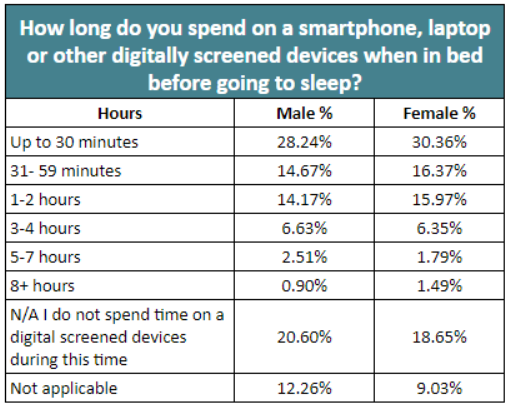
Our reliance on digital devices is only growing, and with it comes concerns about the harmful effects of blue light emitted by screens. The survey found that nearly 10% of individuals spend almost two hours on screens while in bed each day. Even more striking, 4.1% of 16-24-year-olds admitted to spending up to eight hours on their devices in bed. This habit not only increases exposure to blue light but also disrupts sleep patterns and overall well-being.
Additionally, 15.1% of respondents spend up to two hours in front of a screen before going to sleep, with 9.9% of 25-34-year-olds spending up to four hours scrolling before bed. This excessive screen time can lead to eye strain, headaches, and poor sleep quality.
Digital Eye-Q
When it comes to knowledge about the negative impact of blue light on eyes, 10.8% of people are unaware of the dangers. Among 16-24-year-olds, 14.8% lack awareness, while 11.9% of 34-45-year-olds are in the same boat. Moreover, one in five individuals are unaware of the benefits of blue light-blocking filters, which can help reduce eye strain and improve sleep quality. Notably, 27.2% of those over 55 are unaware of these benefits.
Alarmingly, 31.3% of the nation sees a screen as the first and last thing each day. A further 23.2% wish to reduce their screen time, with 12.4% concerned about the amount of screen time required for work and 20% worried about screen time at home.
Taking Action for Eye Health
So, what can we do to better protect our eyes? It starts with prioritizing regular eye examinations and adopting healthier screen habits. Regular eye tests are crucial for detecting and addressing any potential vision problems early on. Given the rise in digital device usage, especially among younger generations, it’s important to take proactive measures to protect our eye health. Investing in blue light-blocking solutions, such as filters, can significantly reduce the negative impact of prolonged screen time on eye health and overall well-being.
In a world where digital screens are a constant presence, it’s easy to overlook our eye health. However, this survey serves as a wake-up call. By making small changes—like scheduling regular eye tests and being mindful of our screen time—we can take significant steps toward protecting our vision. So, let’s make our eye health a priority and ensure that we see the world clearly, both now and in the future.
Featured Photo by David Travis on Unsplash







