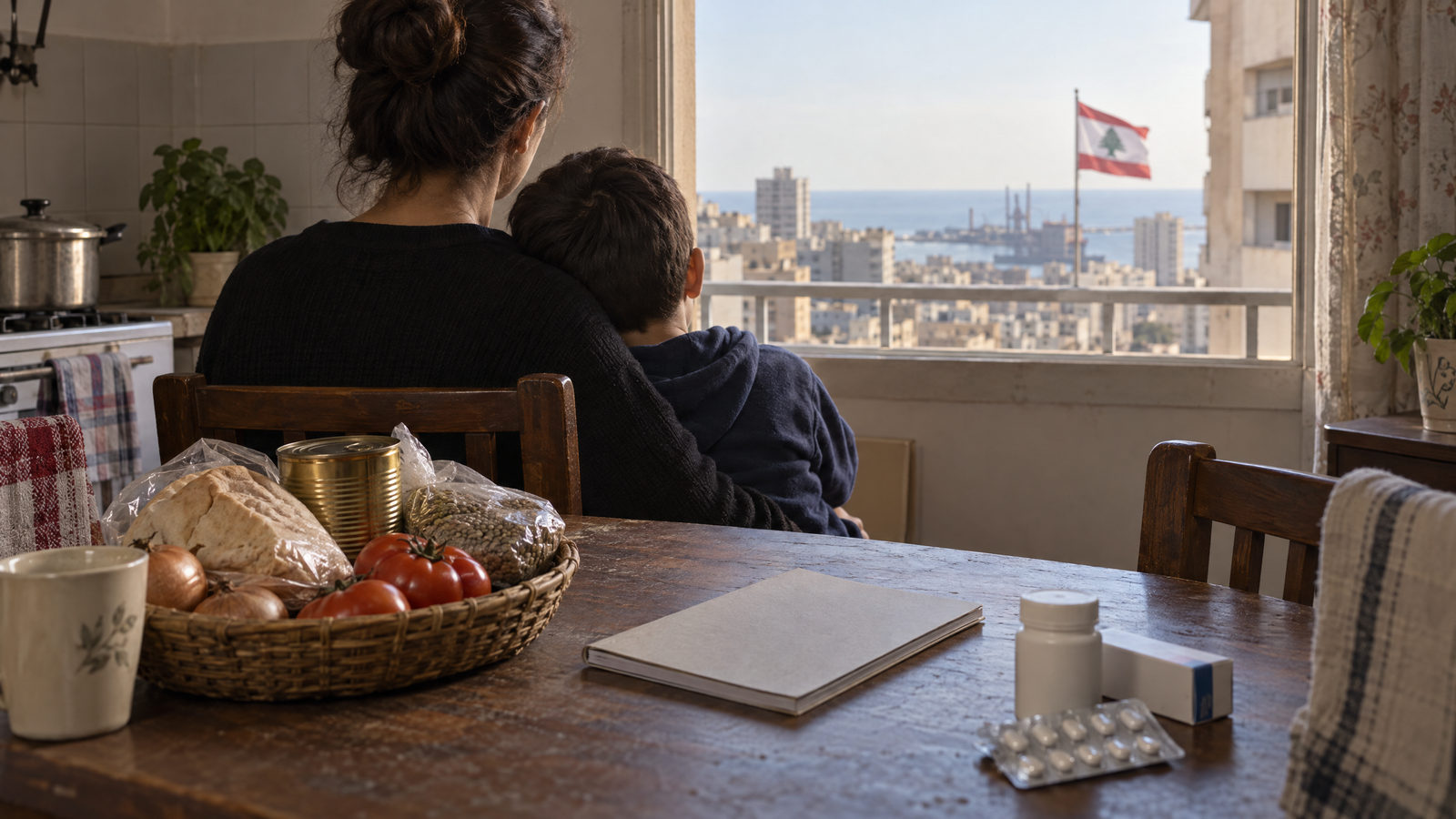

Four in five households in Lebanon say it has become harder to pay for basic necessities, with children increasingly exposed to hunger, missed medical care, interrupted education and work. A new UNICEF assessment, An Enduring Nightmare, traces how a prolonged economic crisis and renewed hostilities are narrowing family choices well beyond the immediate effects of damage and displacement.
The assessment’s July 2026 telephone survey interviewed 3,016 people across the country. It found that 82 per cent of households were finding it more difficult to afford essentials than three months earlier. In the two weeks before the interviews, 22 per cent said their children had gone to bed hungry. Among households with children under five, only one in ten could provide a sufficiently nutritious diet.
Costs are shutting children out of care
Financial pressure is also limiting access to treatment. Nearly a third of households, 31 per cent, said children had not received health care they needed, mainly because the family could not afford it. Seven in ten said meeting a child’s health needs had become harder over the previous three months. Six in ten had cut health spending, while 38 per cent reported that their children lacked access to essential medicines.
These figures describe overlapping strains, not separate problems. A household that has to reduce spending on medicine or food may also have less money for transport, school costs and other essentials. The assessment’s findings show that the pressure is already reaching children’s daily routines, from what they eat to whether they can attend school or receive treatment.
More families report children working
Fourteen per cent of surveyed households reported that at least one child had worked in the 30 days before the survey. The comparable proportion in a January 2025 assessment was six per cent. The new figure is more than twice as high, although it measures households reporting child work rather than the number of children involved or the type of work they did.
That distinction matters: the result signals a growing household protection concern, but does not by itself show how many hours children worked, whether work was paid or what tasks they performed. At the same time, education is becoming harder to sustain. Almost half of households, 46 per cent, had reduced education spending, and 17 per cent said a child had stopped attending school. Among children still enrolled, 29 per cent were not learning as expected, often amid difficulty concentrating and emotional distress.
Damage to 436 schools has put about 100,000 children at risk of having no classroom available. Even where buildings remain usable, reduced household spending, interrupted attendance and children’s emotional strain can make regular learning difficult. The survey therefore points to both a shortage of accessible places and the barriers families face in keeping children engaged.
Emotional strain compounds material hardship
The burden is not only financial. More than half of households said their children’s emotional well-being had worsened, while 63 per cent reported that children were anxious or nervous. Separately, an estimated 770,000 children experienced psychological distress over the six months covered by the assessment. That estimate reflects the scale of need across the conflict-affected areas; it is not a count of children interviewed in the household survey.
The family-level findings come against a background of economic contraction dating back to late 2019 and hostilities that escalated in March 2026. An April ceasefire reduced the intensity of fighting, but air strikes and demolitions in southern Lebanon continued. Displacement and damage to essential infrastructure have added pressure to services on which children depend.
Emergency efforts include treating injured children, delivering supplies to shelters and medical facilities, and supporting displaced families. The next challenge is to keep those immediate services connected to longer-term support: affordable health care and medicines, safe and reliable schooling, nutrition assistance, and protection for children at risk of work. Restoring buildings alone will not address the household costs that are keeping children from care and education.
The survey offers a warning about where hardship is being transferred. When families cannot meet basic needs, children absorb the consequences through poorer diets, unmet medical needs, lost learning and work. Sustained recovery will depend on whether households can regain access to essential services before these interruptions become entrenched in children’s lives.