
Barking and Dagenham, Enfield, Greenwich and Newham are each set to receive £222,000 through a new national programme intended to improve access to healthy, affordable food. The four equal allocations add up to £888,000 for the capital, within an almost £10 million package covering 45 local authorities in England.
The funding is aimed at places selected for high levels of deprivation and childhood obesity. It is intended to let councils develop responses around local needs rather than prescribe a single model for every area. The money is being provided to local authorities; no specific London projects, delivery partners or start dates have yet been identified.
What the funding could support
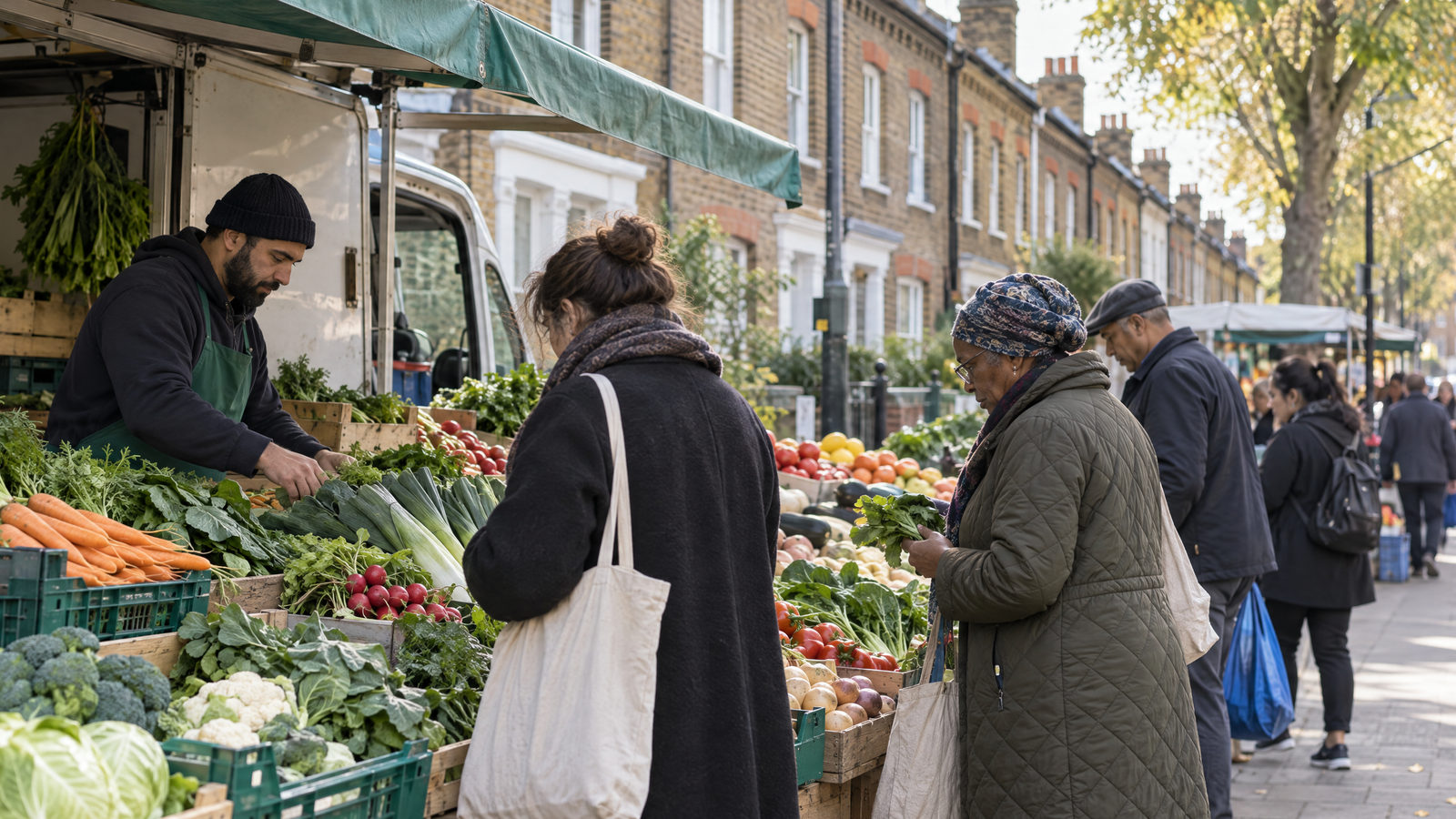
Possible uses include community food shops, mobile greengrocers, lunch clubs, community kitchens, and cooking or nutrition programmes. Councils may also use the money to build the capacity needed to understand local food needs and plan a response. These are options for locally designed work, not a list of projects already approved in the four boroughs.
That flexibility could allow a borough to strengthen affordable fresh-food provision, support shared meals or help residents develop practical food skills, depending on local circumstances. The programme is also intended to build on existing community projects, with businesses, charities and philanthropic funders expected to be part of efforts to extend their reach and bring additional investment into neighbourhoods.
The award does not specify how much must be spent on any one activity, whether councils will pass grants directly to community groups, or how residents and local organisations can shape proposals. Nor does it establish that an existing food shop, lunch club or redistribution project will receive a share. Those decisions remain for the councils as they develop local plans.
Why access matters
Food insecurity is not limited to people who have run out of food. It can also mean being uncertain whether a household can obtain enough suitable food, or being unable to afford an adequate diet consistently. In 2024/25, 6.0 million people—9 per cent of the UK population—lived in food-insecure households. Among children, the figure was 14 per cent.
The programme links the selection of authorities to both deprivation and childhood obesity, placing access to food within a wider public-health and inequality challenge. Affordable food is one part of that picture: local work can also involve the places where people buy food, community support and opportunities to prepare nutritious meals. The funding announcement does not claim that any single intervention will resolve food insecurity or reduce obesity on its own.
London boroughs already approach food policy through a range of local partnerships and services, but needs and existing provision differ from one neighbourhood to another. A mobile greengrocer may address a different gap from a community kitchen or a lunch club. The purpose of giving councils room to design the work is to allow choices to reflect those local differences, rather than assume the same project will suit all four areas.
Local plans are the next step
The immediate next stage is for the four councils to decide how to use their allocations and what local delivery should look like. The programme has not set out a public timetable for individual projects, the process for selecting community partners or when residents will see services begin. Those details will determine how quickly the funding translates into practical support.
For residents, the allocation is a commitment to develop local food-access solutions, not confirmation that a new shop, meal service or other facility is opening now. The eventual impact will depend on which proposals each borough pursues, how they work with community organisations and whether further funding can be brought in alongside the initial £222,000. Until those plans are published, the specific benefits in Barking and Dagenham, Enfield, Greenwich and Newham remain to be decided.