

25 emerging designers reveal radical new approaches to waste, biomaterials and regenerative design at London’s Yorkton Workshops, 14–15 November 2026.
What if your next refrigerator was built by bacteria? Your guitar made from recycled plastic? Or discarded cardboard was transformed into furniture rather than sent for pulping?
These are just some of the thought-provoking ideas being presented at GREEN GRADS at Yorkton Workshops, a two-day exhibition celebrating the next generation of environmentally conscious designers, makers and innovators.
Taking place on 14–15 November 2026 at Pearson Lloyd’s East London gallery, the exhibition brings together 25 recent UK graduates whose pioneering projects challenge conventional design thinking and offer imaginative responses to the climate and biodiversity crises.
From experimental biomaterials and circular manufacturing to endangered species, heritage crafts and nature-inspired technology, the exhibition explores how design can become a force for environmental regeneration.
Founded in 2021 by design journalist and curator Barbara Chandler MBE, GREEN GRADS has now championed 300 emerging creative talents, providing a platform for graduates committed to creating a greener, cleaner future.
The 2026 exhibition, sponsored by acclaimed design studio Pearson Lloyd, marks the third time the practice has hosted GREEN GRADS at its Yorkton Workshops gallery.
Barbara Chandler MBE, founder and curator of GREEN GRADS, comments:
“When I founded GREEN GRADS in 2021, I never imagined that by our sixth cohort we would have reached 300 graduates. In the beginning, it was a challenge to fill an exhibition. Today, we’re seeing an extraordinary number of emerging designers putting the environment at the heart of their work.
“Once a GREEN GRAD, always a GREEN GRAD. Our earliest recruits are now out there making a real difference, whether through their own practices or within established brands. But what our graduates value most is the sense of community – a growing network of creative talent supporting and inspiring one another.
“Through our exhibitions, events, seminars and website, we’re also helping connect these emerging designers with industry, opening doors to career opportunities, media exposure and funding. It’s incredibly rewarding to see how far they’ve come and the impact they’re already making.”
Rethinking Waste: From Discarded Plastics to Design Objects
Waste becomes an unexpected design resource throughout the exhibition.
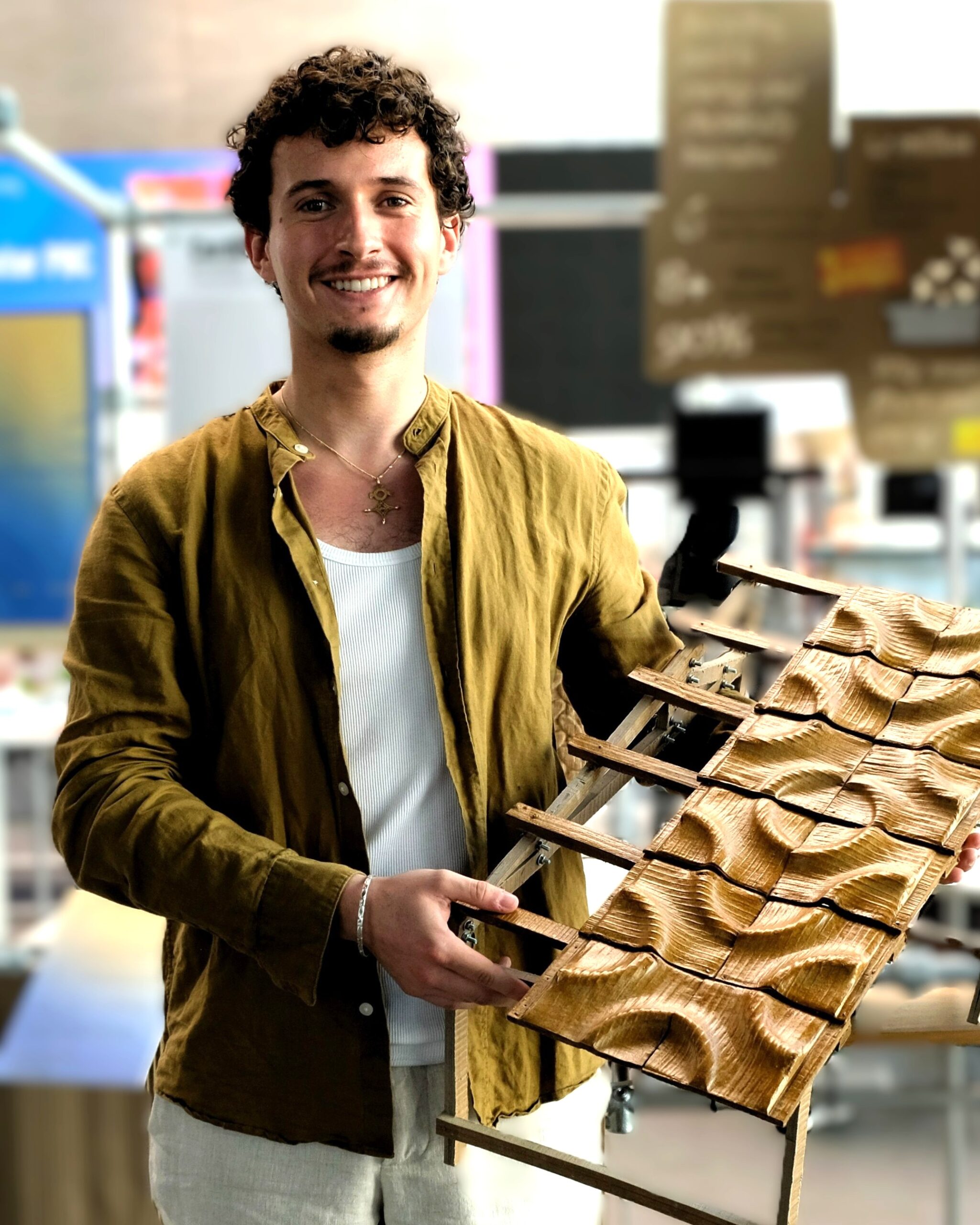
Designer Adam Allcorn challenges the use of exotic timber in musical instruments with a fully functional guitar made from recycled PET plastic. His timberless design demonstrates how recycled materials can deliver a high-quality instrument while offering the potential for components to be melted down and repurposed at the end of their life.
Meanwhile, Gabriel Barnett tackles one of the more frustrating challenges of domestic recycling: soft plastics. His compact countertop device compresses bread bags, crisp packets and other flexible packaging into dense discs, exploring new ways to make collecting and transporting difficult-to-recycle plastics more manageable.
Antoine Mehdi El Adib has developed CardWich, an innovative alternative to conventional cardboard recycling. Rather than breaking down cardboard fibres through energy-intensive pulping, his process uses low heat and water-based starch to transform waste corrugated cardboard into strong, lightweight, biodegradable boards.

Elsewhere, Eva Xiste transforms discarded hotel cotton into elegant footwear, proposing an alternative to the disposable polyester slippers widely used in hospitality. Katy Pilling gives shredded textile waste a second life in innovative knitted upholstery, while Hattie Ayers celebrates the imperfections of reclaimed timber through her Clyft furniture collection.
Dan Davies highlights the circular potential of aluminium with a collection of door furniture produced using traditional sandcasting techniques.
The Material Revolution: Seaweed, Eggshells and Bacteria
A new generation of designers is looking beyond traditional industrial materials, turning instead to nature for inspiration.
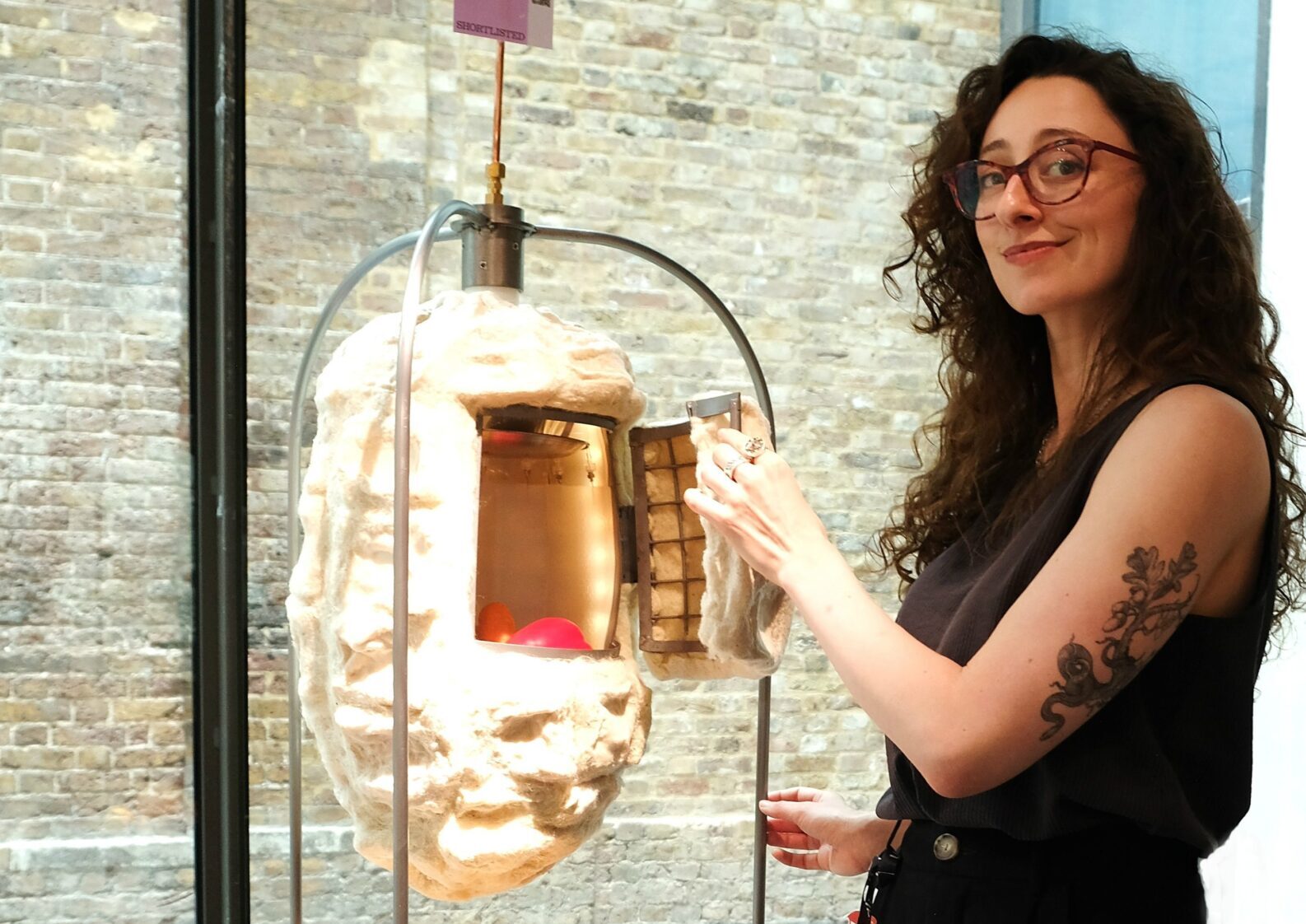
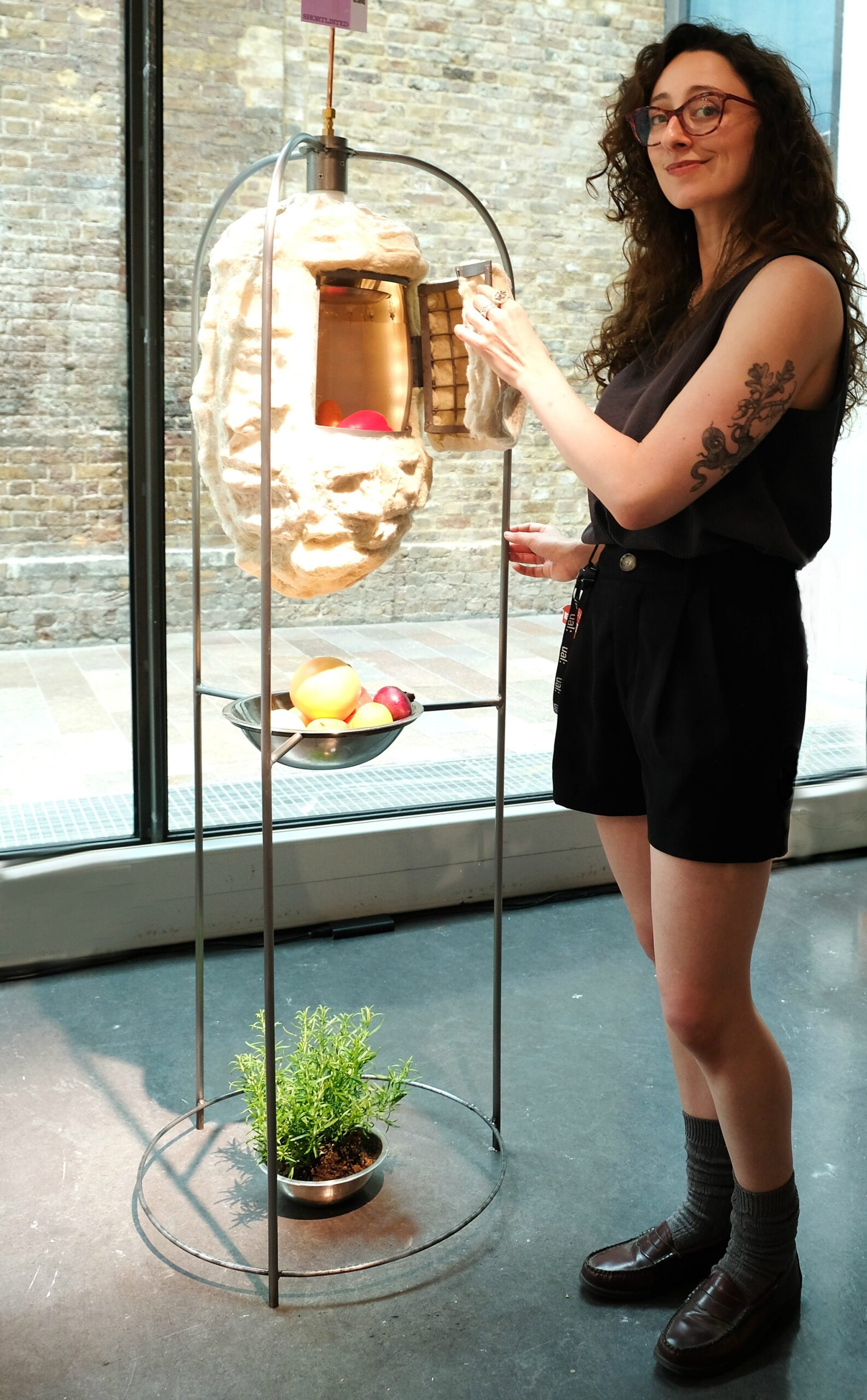
Among the most intriguing projects is Audrey Levy’s Xero Cool, a speculative refrigerator concept built around bacterial cellulose and solar-powered cooling.
Challenging the environmental impact of conventional refrigeration, Levy explores how a highly porous bacterial cellulose material could provide thermal insulation, reimagining how we might keep food cold in a warming world.
The exhibition also presents an extraordinary range of experimental biomaterials developed from everyday natural resources.
Nefali Vitoraki explores materials derived from fruit peel, Neve Mills works with eggshells, Flora Houldsworth investigates the possibilities of fish skins, and Ruby Holt experiments with seaweed.
Together, their projects challenge perceptions of waste, demonstrating how natural by-products could become valuable resources for future design and manufacturing.
Designing With Nature, Not Against It
Beyond materials and manufacturing, GREEN GRADS explores the relationship between design, biodiversity and the natural environment.
Oscar Nicol-Schwarz presents cloud-like kinetic lighting installations that appear to breathe as visitors move past, creating an interactive experience intended to reconnect people with the natural world.
Artist Rosie Redwood has created a striking 3.3-metre-wide cyanotype, capturing the impression of a human figure surrounded by foliage through direct exposure to sunlight. The work becomes a collaboration between the artist, plants and the sun itself.
Susie Lonie’s colourful ceramic animal sculptures initially appear playful and celebratory. Yet her collection, Disappearance, carries a more urgent message, with each sculpture representing an endangered or vulnerable species.
Rediscovering Local Materials and Forgotten Crafts
At a time when the UK imports much of its timber, several GREEN GRADS are reconsidering the value of local resources and traditional techniques.
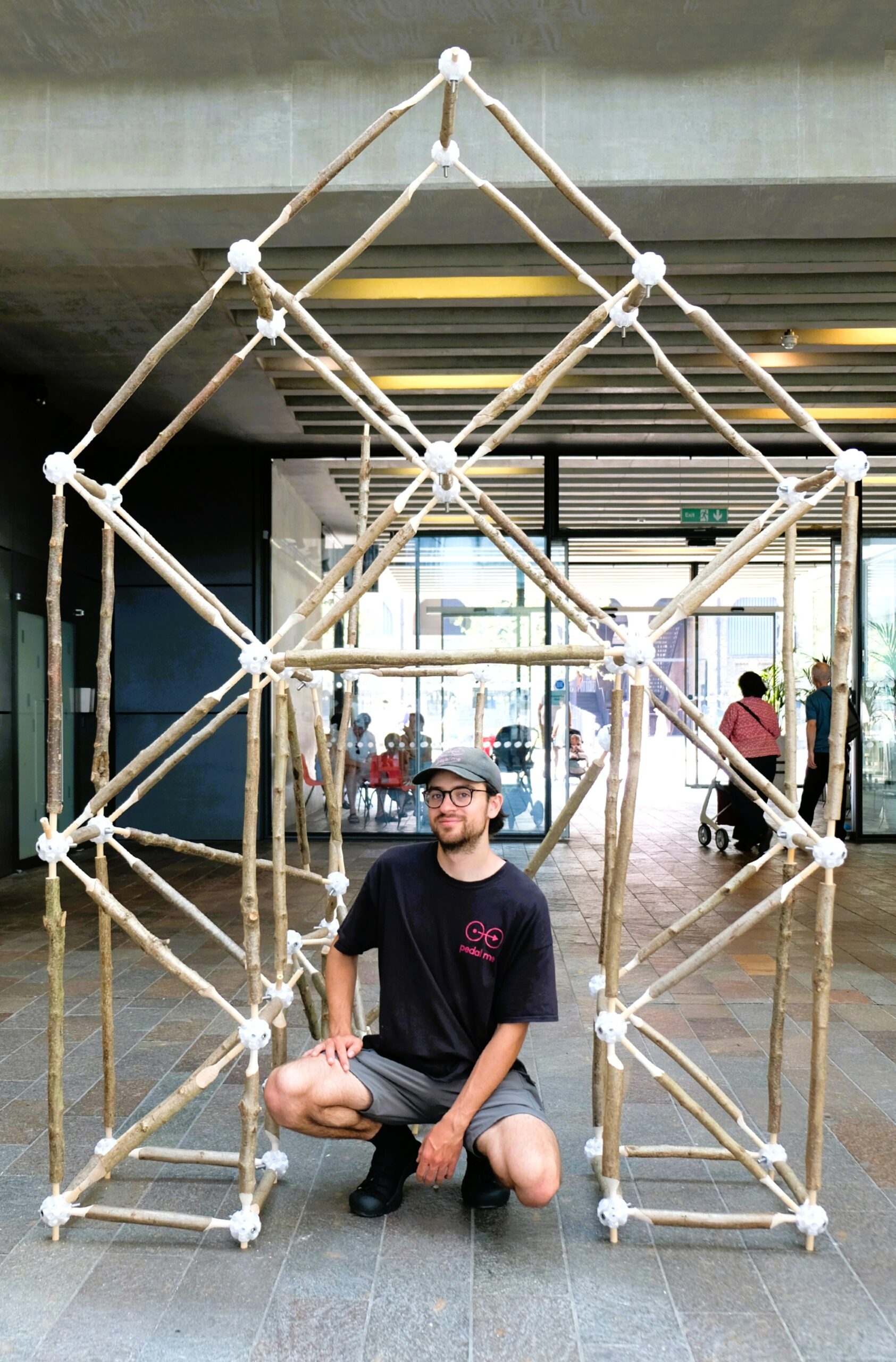
Antoine Leger has developed an inventive connector system that enables irregular coppiced timber to be used in structures, opening new possibilities for locally sourced wood.
Ed Satchell combines coppiced timber and waste wool from his family farm to create a handcrafted chair celebrating the connection between design, craftsmanship and the land.
A striking wall hanging, The Wool We Waste, by the Mud Collective, five Royal College of Art graduates, makes a powerful case for returning to renewable, locally sourced wool over synthetic fibres.
Iris Reed similarly explores the preservation and revival of heritage crafts through furniture that celebrates local materials, cultural identity and slower, low-energy production methods.
Beyond the Exhibition: Design as Activism
GREEN GRADS is as much about changing attitudes as creating new products.
Photographer Zoe Irving, from Falmouth University, presents Textile Tales, a specially commissioned large-format zine documenting five graduate designers working with natural dyes, wool, heritage crafts and future biomaterials.
The exhibition also features research by Dr Julia Romer, whose PhD project, How Green Is My School?, examines how primary school children experience, understand and engage with sustainability education.
A dedicated feature, SUCCESS!, celebrates the achievements of previous GREEN GRADS, documenting how members of the growing creative community have developed their projects and made an impact since the initiative launched in 2021.
The Next Generation of Design
The exhibition arrives as the design industry faces increasing pressure to confront its environmental responsibilities.
According to the Design Council, 80% of a product’s environmental impact is determined at the design stage, reinforcing the importance of rethinking materials, manufacturing and consumption from the outset.
With their combination of practical innovation, material experimentation, traditional craftsmanship and environmental activism, this year’s GREEN GRADS demonstrate the role emerging designers could play in shaping a more sustainable future.
And with 300 graduates now part of the initiative, GREEN GRADS is building a growing community of creative thinkers united by a shared conviction:
“Today’s graduates are tomorrow’s planet.”
Exhibition Information
GREEN GRADS at Yorkton Workshops
Dates: Saturday 14 – Sunday 15 November 2026
Opening times:
- Saturday: 11am–7pm
- Sunday: 11am–6pm
Venue: Yorkton Workshops, 1–3 Yorkton Street, London E2 8NH
Admission: Free
Website: www.greengrads.co.uk
Instagram: @greengradsuk
Sponsor and host: Pearson Lloyd
Founder and curator: Barbara Chandler MBE, awarded an MBE in the King’s Birthday Honours 2026.







