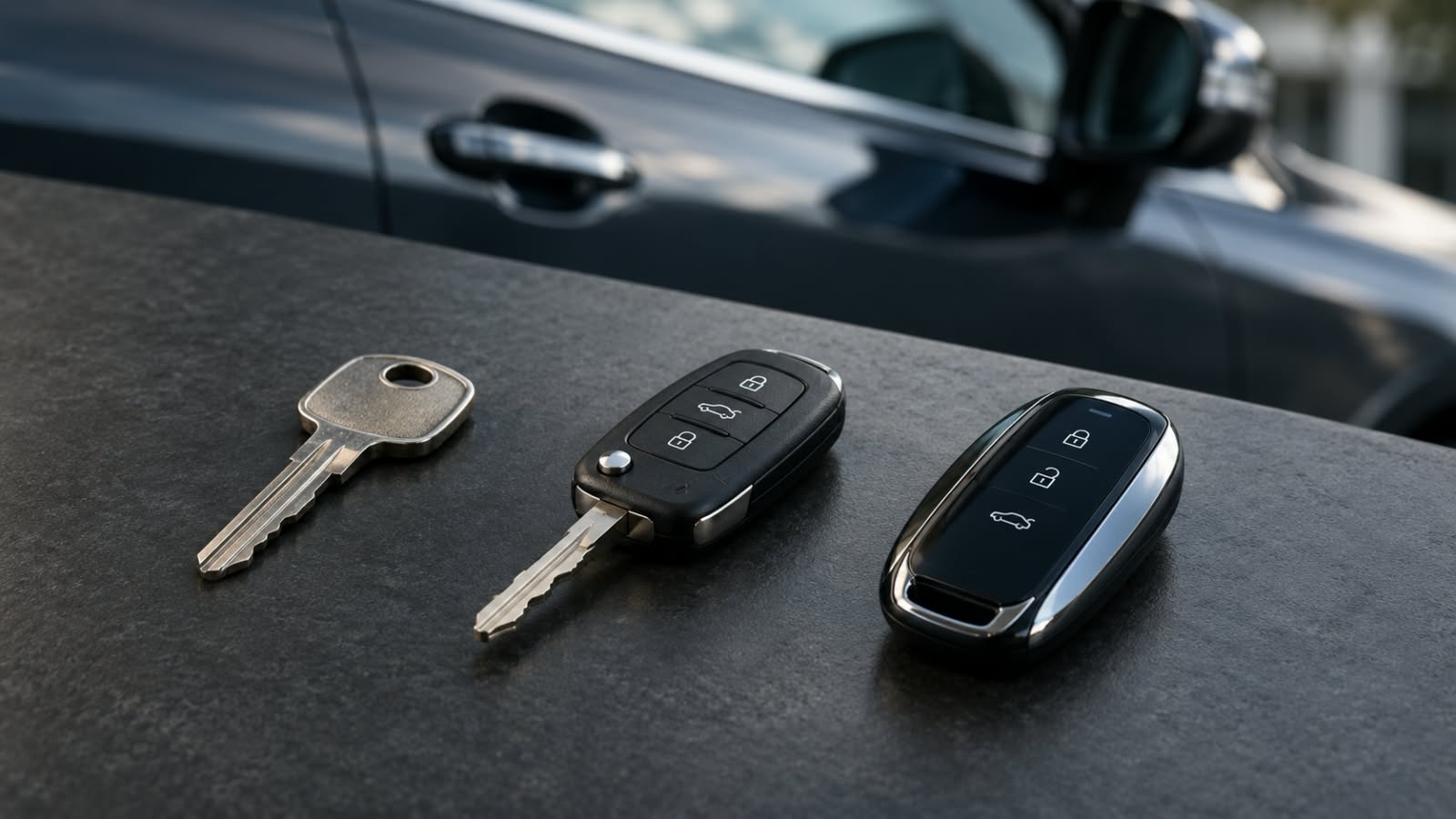

For generations, a car key was a relatively simple object. A shaped piece of metal went into the ignition, was turned, and the engine started. That description no longer reflects the technology found in many of today’s vehicles.
Modern car keys can incorporate transponders, remote-control electronics, proximity technology and sophisticated security systems. For motorists, this means that losing a key, damaging a remote or needing a spare can involve far more than having a new blade cut. As cars have become more electronically integrated, the humble key has effectively become part of the vehicle’s security system.
From a metal key to an electronic security device
Traditional vehicle keys provided a physical means of operating the locks and ignition, and the shape of the blade had to match the vehicle’s mechanical locks. The introduction of electronic immobilisers changed that relationship.
A modern vehicle can use an electronic transponder in the key. The vehicle’s security system checks whether the key is authorised before allowing the engine to start. As a result, a key can look perfectly correct but still fail to start the vehicle if its electronic components have not been programmed and recognised by the car. This is an important point for anyone who has never needed to replace a modern car key.
Remote keys added another layer of technology
Remote central locking brought another significant change. Instead of locking and unlocking the vehicle with the blade, drivers could press a button on a remote fob, and manufacturers gradually added functions such as remote boot release and panic alarms.
This also introduced new points of failure. Buttons can wear out, casings can crack, batteries can fail and electronic components can develop faults. In some cases, repairing the key or replacing its casing is enough; in others, the complete key or remote needs to be replaced. Not every faulty car key requires the same solution.
Keyless entry and proximity technology
More recent vehicles have taken the concept further with proximity and smart-key systems. The vehicle detects an authorised key nearby, so the driver may be able to unlock the doors and start the engine without taking the key out of a pocket or bag.
This is convenient, but the technology inside the key is much more complex. A replacement smart key needs to be compatible with the vehicle and, where required, correctly programmed to its security system.
Keyless systems have also created a new security risk. In so-called “relay attacks”, thieves use devices to pick up the signal from a key inside a home and relay it to the car, allowing them to unlock and start it without the key itself. Drivers with keyless cars can reduce the risk by storing keys in a signal-blocking pouch or tin, keeping them away from doors and windows, checking whether keyless entry can be switched off, and using a visible steering lock.
What happens when a car key is lost?
Losing a car key is particularly inconvenient when it is the only working key. The first question is whether the key has been misplaced or may have been stolen. If it could have fallen into the wrong hands, the vehicle’s security should be considered, as well as getting a replacement.
Depending on the vehicle, replacing a lost key can involve cutting a new blade, programming electronic components and configuring the car so that the new key is recognised. That is why motorists should give accurate details when requesting a replacement: the make, model, year and type of key system can all affect what is required.
Do you always need to visit a dealership?
Not necessarily. The growth of specialist mobile auto locksmith services has changed the way motorists can deal with key problems.
A suitably equipped mobile technician can bring key-cutting, diagnostic and programming equipment directly to the vehicle. Depending on the make, model and security system, this can allow replacement and programming work to be completed at the customer’s location, rather than having the vehicle transported elsewhere. A reputable professional should also check that the person requesting the work is authorised to have it carried out on the vehicle.
Why having a spare key makes sense
Many motorists only think about replacement keys after something goes wrong. If a driver still has one working key, getting a spare is usually far less disruptive than waiting until the only key is lost or damaged. A spare gives another option if the original is misplaced or stops working, and for families who share a vehicle, more than one working key is simply practical.
Not every key problem means you need a new key
A common misconception is that a faulty key automatically needs to be replaced. Depending on the fault, a specialist may be able to repair a damaged remote, replace a casing, fix worn buttons or diagnose an electronic problem. Other faults will require a replacement key and programming.
This is why diagnosing the problem first is worthwhile. A good professional should explain what is wrong and the available options, rather than assuming that the most expensive solution is needed.
Choosing a specialist for modern vehicle keys
The equipment and knowledge needed to work with modern vehicle keys vary significantly between vehicles. A specialist may need to understand mechanical key cutting alongside transponder technology, remote systems, immobilisers and vehicle-specific programming procedures, so drivers should consider more than just the price.
Questions worth asking include:
- Does the technician have experience with your particular vehicle?
- Can the key be supplied, cut and programmed at your location?
- What proof of vehicle ownership or authorisation is required?
- Is the work covered by a warranty?
- Will the replacement key be tested before the technician leaves?
- Is the quoted price for the complete job or just the key itself?
These questions help motorists understand exactly what they are paying for.
Mobile car key services are changing how motorists deal with emergencies
More sophisticated vehicle security has also created a specialist industry that can deal with many key problems away from the traditional dealership. Businesses such as 247 Auto Locksmith provide mobile vehicle key services across Surrey, Sussex, Kent and South London, including car key replacement, key programming and related vehicle locksmith services, covering lost, damaged and spare keys.
For a motorist dealing with a lost or damaged key, having a specialist come to the vehicle removes one of the biggest practical problems: getting the car to a location where the work can be done.
The car key of the future
Vehicle technology continues to move towards greater integration between physical keys, electronic security and digital systems, including phone-based keys on some newer models. What began as a simple mechanical device is now an important part of a vehicle’s security.
Whether a driver has lost their only key, needs a spare, has a damaged remote, or is having problems with a smart key, getting the right diagnosis and using the right equipment makes the process much simpler. The car key may look small, but in a modern vehicle it plays a surprisingly important role in keeping the car secure.