

Lucas Schiavini was twenty-two when his code first reached millions of people. Working at Nelogica, one of Brazil’s largest financial technology companies, he helped build the mobile applications behind Profit and Vector (trading platforms used by over two million active traders daily).
Now twenty-eight, Schiavini has moved from fintech to artificial intelligence, building AI agents for US tech companies from his base in São Paulo. His trajectory offers a glimpse into how engineers from emerging markets are shaping the future of software development.
Building at Scale
At Nelogica, Schiavini’s primary challenge was implementing Kotlin Multiplatform, a technology that allows developers to share code between Android and iOS applications. The work required deep technical expertise and coordination across multiple engineering teams.
The implementation was successful. His technical write-up on the process was read over 1,000 times on Better Programming, and he was invited to speak at The Developer’s Conference 2021 in Brazil.
“Fintech forces you to think about reliability in a way that other industries don’t,” Schiavini explains. “When traders depend on your app, every millisecond matters. Every crash costs someone money.”
An Unconventional Start
Schiavini’s path to engineering began earlier than most. At seventeen, he passed the entrance exam for the University of Brasília’s Control and Automation Engineering program but was too young to legally enrol. Rather than wait, he took the government to court and won the right to start early.
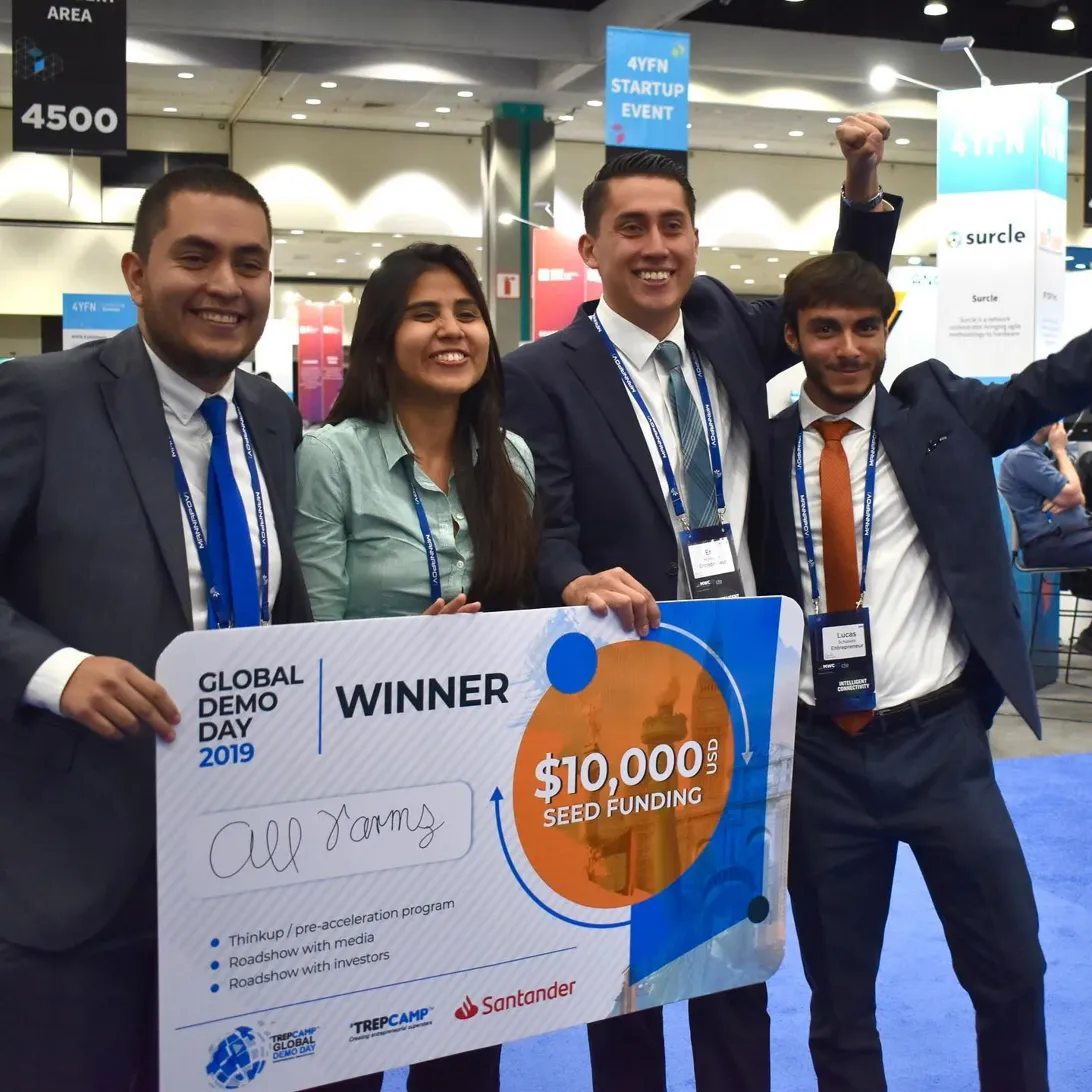
During his studies, he competed in robotics for five years, with his team placing fourth and eighth at the Latin American Robotics Competition. He also co-founded AllFarmZ, an agtech startup that won first place and $10,000 at TrepCamp, a global entrepreneurship competition held at UC Berkeley.
Between classes and competitions, he found time to write a book. Robótica Educativa em 365 Dias teaches children the fundamentals of robotics through Arduino-based projects. It remains in print today.
From Risk Theory to AI
In 2025, Schiavini attended the Real World Risk Institute, an executive program led by Nassim Nicholas Taleb. The curriculum covered decision-making under uncertainty, tail risk modelling, and the limitations of traditional forecasting methods.
“Taleb’s frameworks changed how I approach building products,” Schiavini says. “Most startups optimise for the average case. But the companies that survive are the ones that prepare for the worst case.”
He has since applied those principles to his consulting work. Through his firm VIVICTUS, he builds AI-powered applications for US-based clients, specialising in rapid development cycles that take products from concept to production in weeks.
The Rise of AI Agents
Schiavini’s current focus is on AI agents (software systems that use large language models to perform complex tasks autonomously). It is one of the fastest-growing areas in technology, and Schiavini believes it will define the next decade of software development.
“We’re moving from software that responds to commands to software that takes initiative,” he says. “That’s a fundamental shift in how humans and computers work together.”
Alongside his client work, he is developing Vedeggio, a personal finance application designed for users who find traditional budgeting tools overwhelming. The app reflects his design philosophy: simple, effective, and built for long-term use.
What’s Next
Schiavini will present at WebSummit Rio in 2026. He continues to build for US clients while developing his own products.
“I’ve been coding since I was twelve,” he says. “The tools change, but the goal stays the same: build things that help people.”