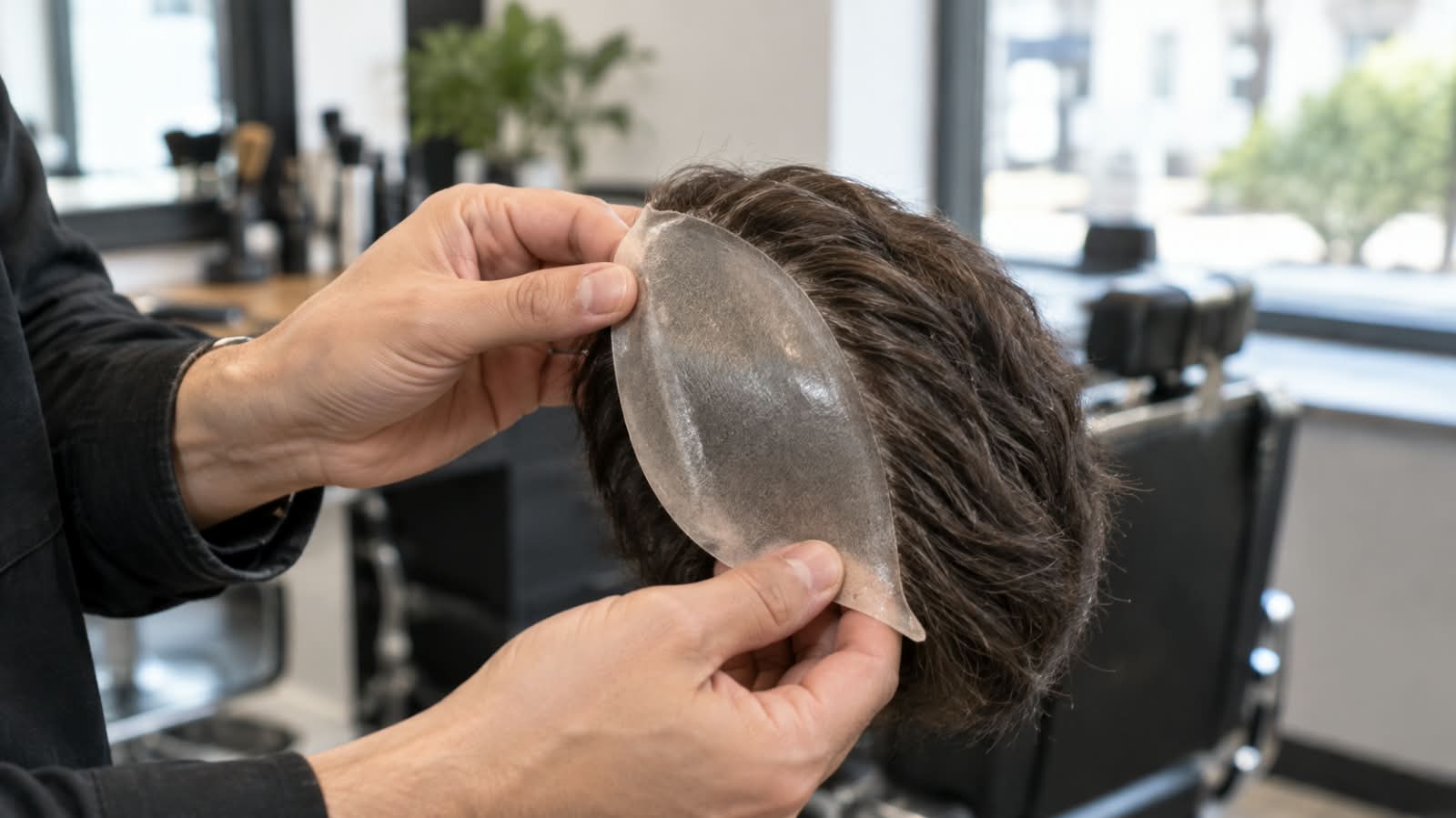

When choosing a hair system, it’s easy to focus on hair colour, density, length, or hairstyle. But there’s another detail that can have a major impact on how the system looks and feels: base thickness.
The base is the material that sits between the scalp and the hair. Depending on the system, it may be made from polyurethane (often called “skin”), lace, monofilament, or a combination of materials. Even small differences in thickness can affect the appearance of the hairline, how the system feels against the scalp, and how easy it is to handle.
Thinner doesn’t automatically mean better. Understanding the trade-offs can help you choose a base that suits both your appearance and daily routine.
What Does Base Thickness Mean?
Base thickness generally refers to how thick the material supporting the hair is, particularly with polyurethane or skin hair systems.
Skin bases come in different thicknesses. Some are extremely thin and flexible, while others use slightly heavier polyurethane for additional strength.
A thinner base tends to conform closely to the shape of the scalp. Because there is less material between the hair and skin, it can create the impression that the hair is growing more directly from the scalp.
As thickness increases, the base may become easier to handle and more durable, but the edge can also become more noticeable if the system isn’t properly fitted and attached.
This balance between appearance and practicality is one of the main reasons base thickness deserves attention.
Why Thin Bases Can Look More Natural
One of the biggest advantages of a thin base is its ability to blend with the scalp.
When polyurethane is sufficiently thin and translucent, the wearer’s scalp tone can show through the material. This reduces the visual contrast between the system and the surrounding skin.
The edge is important too.
A thick edge may be easier to detect, especially around an exposed front hairline. A very thin edge can sit more closely against the skin, creating a smoother transition.
This is one reason ultra-thin skin hair systems are often considered by men who place a high priority on a discreet appearance, particularly when they want hairstyles that expose some or all of the front hairline.
However, a realistic result still depends on correct attachment, density, hair colour, and styling. Base thickness is only one part of the equation.
Thickness Can Affect Everyday Comfort
A hair system isn’t something you wear for a few minutes. Many users keep their systems attached throughout their normal daily activities, so comfort matters.
Thin bases tend to be lightweight and flexible. They can follow the contours of the scalp closely and may feel less bulky than heavier materials.
But thickness isn’t the only factor affecting comfort.
Climate, activity level, scalp sensitivity, attachment method, and how long the system remains attached can all influence how comfortable it feels.
Someone living in a hot climate, for example, may place more importance on ventilation. In this situation, lace may be worth considering because its open construction allows more airflow than a solid polyurethane base. In the UK’s generally milder weather, many wearers find a thin skin base comfortable day-to-day, though those who exercise heavily or travel somewhere hot may still prefer the extra breathability of lace.
The best choice depends on the wearer rather than a single measurement.
There Is a Trade-Off With Durability
The same characteristic that makes an extremely thin base attractive can also make it more delicate.
Very thin polyurethane needs careful handling during installation, removal, cleaning, and maintenance. Pulling aggressively on the base or using improper removal techniques may damage it.
Slightly thicker skin systems generally provide more material strength. For some wearers, this can make everyday maintenance easier.
This creates a straightforward trade-off:
A thinner base may prioritise discretion and flexibility, while a thicker construction may prioritise strength and easier handling.
First-time wearers shouldn’t automatically choose the thinnest option available simply because it sounds more realistic. Consider how comfortable you are with regular maintenance and how frequently you’re prepared to replace the system.
Base Thickness Can Influence the Hairline
If you plan to wear a hairstyle with the hair brushed back or away from the forehead, the front edge becomes especially important.
The transition between the forehead and hair system should be difficult to notice at normal viewing distances.
Thin bases have an advantage here because their edges can lie very close to the skin. With suitable attachment and a properly designed hairline, this can create a smooth transition.
For hairstyles with a fringe or hair styled forward, however, the edge of the system is naturally less exposed. In that situation, choosing an extremely thin base may be less important.
Your preferred hairstyle should therefore influence your base choice.
Hair Density Should Match the Base
Base thickness and hair density shouldn’t be considered separately.
Very thin bases are usually most convincing when paired with realistic hair density. Adding excessive amounts of hair can defeat the purpose of choosing a highly discreet base.
Natural hair isn’t equally dense across every part of the scalp. Hairlines in particular often have a softer appearance before gradually becoming denser further back.
Age matters as well.
A density that looks completely natural on a man in his twenties may look unusually heavy on someone several decades older. Matching the system to the wearer often produces a better result than simply choosing the maximum available density.
Attachment Makes a Difference
Even an extremely thin base can become noticeable when poorly attached.
Adhesive needs to be applied correctly so the base sits flat against the scalp. Wrinkles, lifted edges, or adhesive residue around the hairline can make the system easier to detect.
Scalp preparation also matters. Oils, sweat, and residue can interfere with bonding, potentially causing sections of the base to lift prematurely.
Different bases may also work better with different attachment methods. Some wearers prefer liquid adhesive, while others find tape more convenient.
The right method depends on the base construction, lifestyle, desired hold time, and personal maintenance preferences.
Don’t Choose by Thickness Alone
It’s tempting to compare two hair systems based on a single specification, but base thickness doesn’t tell the entire story.
Before making a decision, consider:
- Whether you want an exposed or covered hairline
- Your preferred hair density
- How often you exercise or sweat
- Your local climate
- How frequently you want to maintain the system
- Your experience with installation and removal
- How much durability matters to you
- Your preferred attachment method
For example, someone focused on achieving a highly discreet exposed hairline may prioritise a very thin base. Someone who wants easier handling and longer wear from each system may prefer a somewhat stronger construction.
Neither choice is automatically right or wrong.
Finding the Right Balance
The most natural hair system isn’t necessarily the one with the lowest thickness measurement.
A realistic result comes from several elements working together: a well-fitted base, appropriate density, a believable hairline, matching hair colour and texture, proper attachment, and a haircut that blends with the wearer’s existing hair.
Comfort works in much the same way.
A lightweight base can feel great, but so can a breathable construction that better suits an active lifestyle. Durability may also become more important if frequent replacement isn’t practical.
Instead of looking for the thinnest possible system, think about the balance you want between realism, comfort, durability, and maintenance.
Once those priorities are clear, base thickness becomes much easier to evaluate—and you’re more likely to choose a hair system that works not just in photos, but in everyday life.