
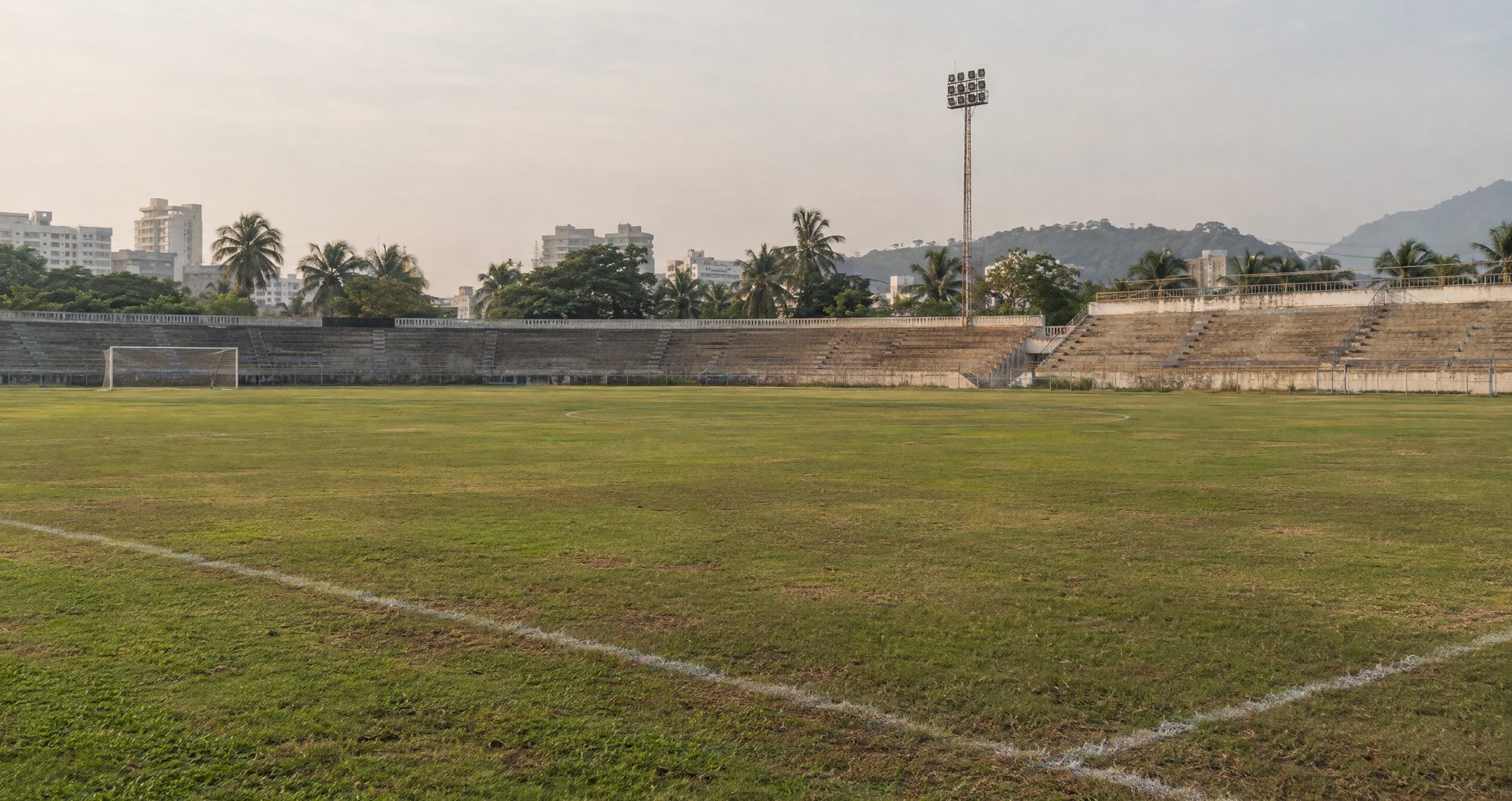

Haiti’s national police say they and a government security task force have regained control of Sylvio Cator stadium in Port-au-Prince, after the football ground spent more than two years under gang control.
Police said the operation took place early on 12 November and covered the stadium and its surrounding area. They said control was then handed to Salvadoran forces, which took over responsibility for securing the area.
El Salvador’s president, Nayib Bukele, described the recovery as a joint operation involving Haitian police, Haiti’s armed forces, the task force and Salvadoran special forces. The police account identifies the police and task force as the forces that regained the area, and places the Salvadoran handover afterwards. The accounts therefore differ on the role of Salvadoran personnel in the initial operation.
Haiti’s sports ministry subsequently described the operation as having been carried out by Haitian security forces with Salvadoran military support. The available accounts do not establish precisely which actions each force took during the recovery.
A sporting venue in the capital
Sylvio Cator is the country’s principal football stadium and has long been associated with the national team. Armed gangs took over the ground in 2024, and the Haitian football federation reported at the time that it had lost possession of the facility and that it had been vandalised.
The loss of the stadium was one part of the disruption to Haitian football. The national team played World Cup qualifying matches outside the country, including in Curaçao. Haiti went on to qualify for the 2026 World Cup, where it was eliminated in the group stage.
The reported recovery does not mean that the stadium is ready to host matches again. On 13 November, the sports ministry said the government was working towards restoring the ground and committed to starting a full rehabilitation once security in the area had been consolidated and normal life had resumed in the city centre.
That commitment is conditional. The ministry did not give a start date, a budget or a date for the stadium to reopen. Establishing security at the venue and carrying out the work needed to make it usable are separate steps.
Plans for an operations base
Bukele said the forces planned to establish an operational base at the stadium from which to advance further into gang-controlled areas. His announcement described an intended use of the site; it did not establish that a permanent base had already been completed.
The police statement did not provide a toll for the stadium operation or say whether there had been clashes or arrests. Its account of recovering the stadium and surrounding area should not be treated as proof that every nearby neighbourhood is secure or that the wider violence in the capital has ended.
The stadium operation comes during a wider Salvadoran deployment in Haiti. Four Salvadoran aviation technicians serving with an internationally backed security force went missing after their vehicle was attacked on 18 October. The additional Salvadoran deployment followed their disappearance; their fate remained unclear in the subsequent accounts.
Most of the Salvadoran personnel sent in the additional deployment are not part of the internationally backed Gang Suppression Force and fall outside the monitoring arrangements of the United Nations support office for that force. That distinction concerns the arrangements governing the deployment, not a finding that personnel have acted unlawfully.
A human rights organisation has called on Haiti and El Salvador to make public the agreement governing the deployment and explain the rules on the use of force, oversight and reporting possible violations. It has also called for civilians to be protected and for access to food and medical care to be maintained. Those appeals concern the wider operation and do not establish that a violation occurred at the stadium.







