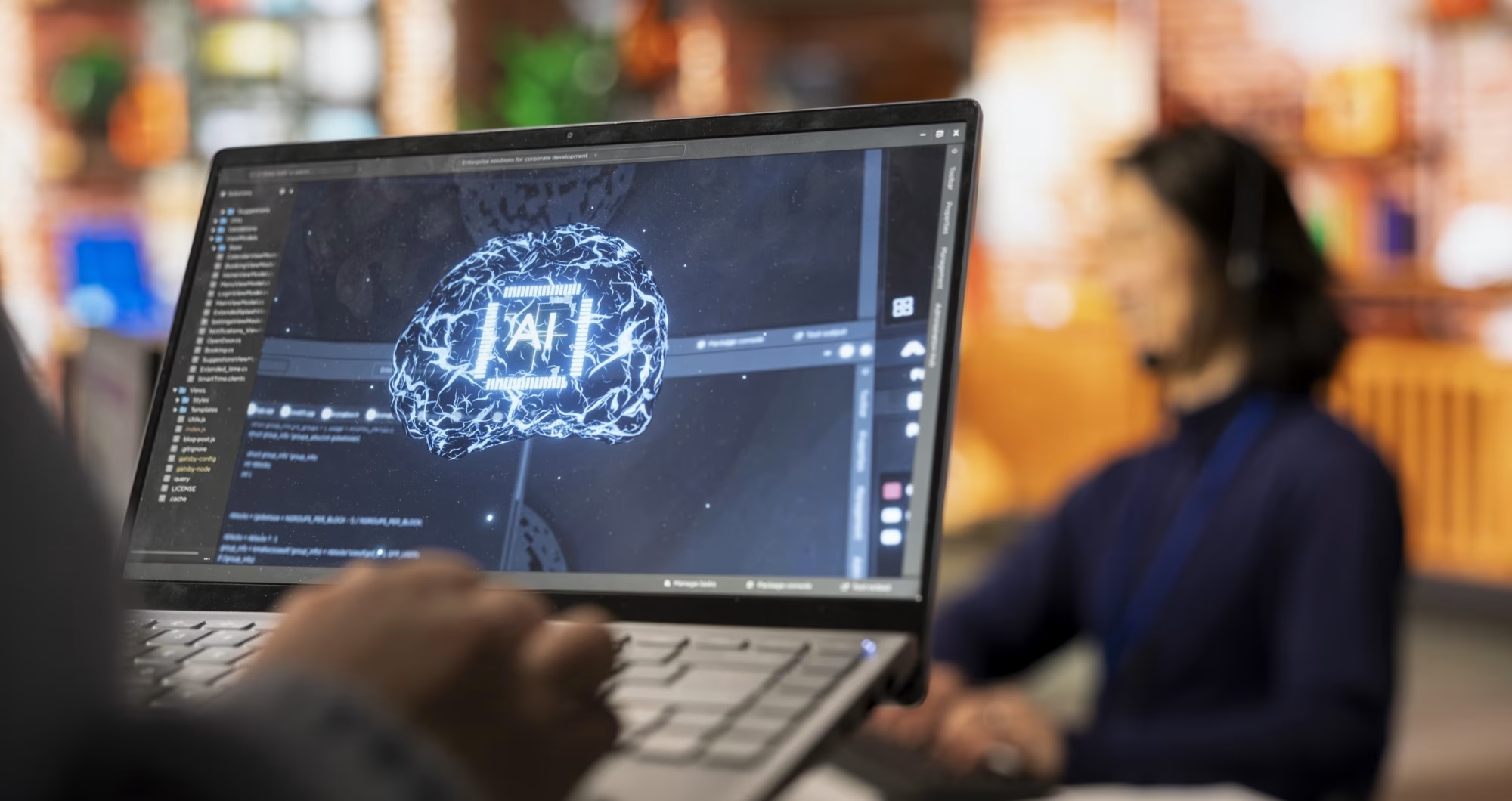
The world of artificial intelligence is moving at a breakneck pace, especially in the realm of image generation. Just when we think we’ve seen it all with platforms like Midjourney and DALL-E, a new contender emerges, promising to redefine the boundaries of digital creativity. The latest to catch my eye is Nano Banana, an advanced AI image generator that makes a bold claim: it’s powered by Google’s state-of-the-art Gemini 2.5 Flash Image API.
As a tech reviewer who has tested dozens of AI tools, I’ve learned to temper my expectations. The promises of “perfect character consistency” and “revolutionary natural language editing” are common marketing refrains. But the connection to Google’s latest API was intriguing enough to warrant a deep dive. Is Nano Banana truly a leap forward, or just another drop in the AI ocean? I signed up to find out.
First Impressions: A Clean Entry into AI Art
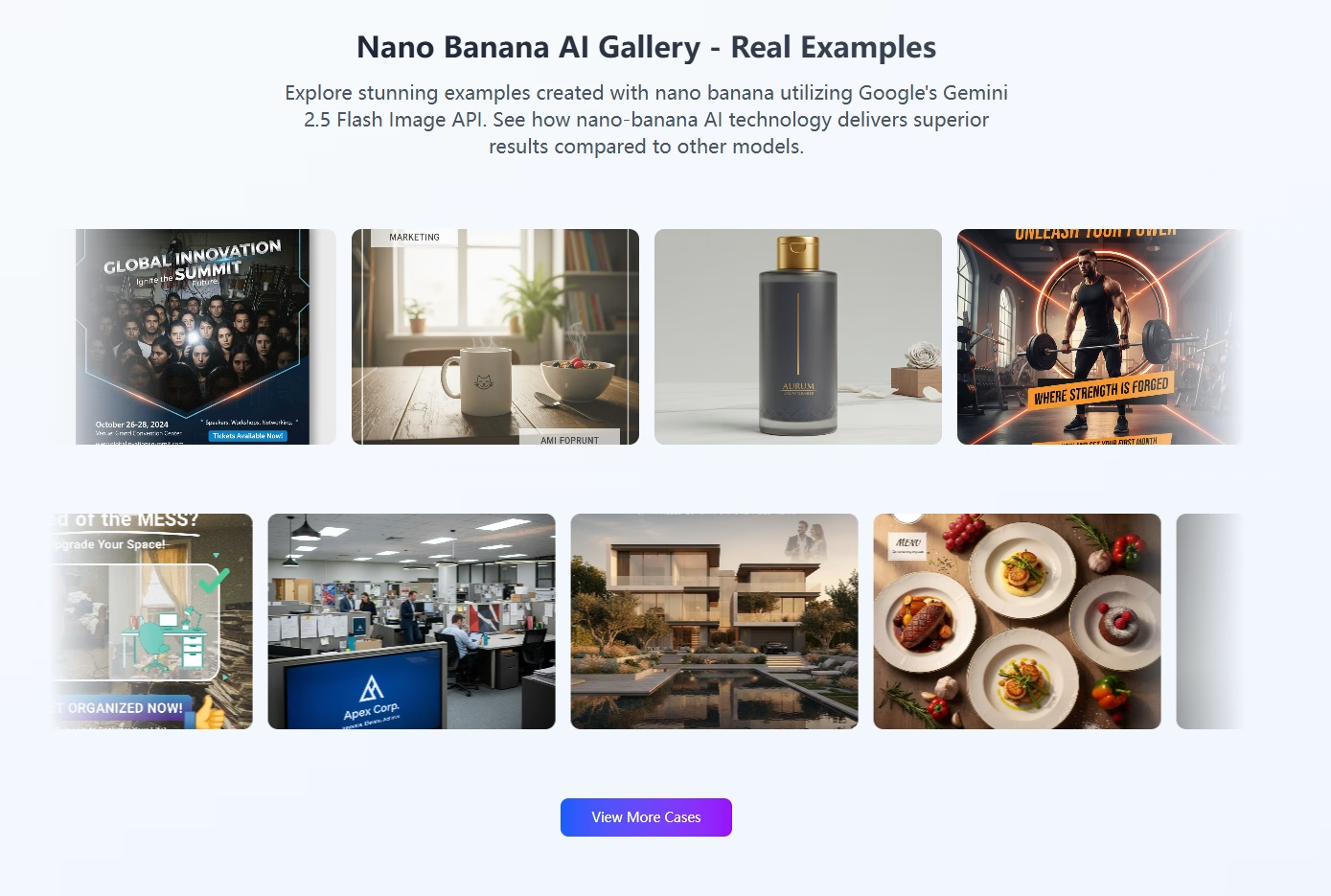
My journey began on the Nano Banana homepage. The design is clean, modern, and refreshingly free of the clutter that plagues many new tech platforms. It gets straight to the point, showcasing stunning example images and highlighting its core features. The message is clear: this tool is about power and simplicity.
Getting started was a breeze. The platform offers new users 5 free credits, which, according to their pricing model, is enough to generate two images (as each generation costs 2 credits). This is a smart move, as it provides a risk-free opportunity to test the service’s core functionality. After a quick sign-up, I navigated directly to the AI Image Generator.
The generator interface itself is a testament to minimalist design. You’re presented with two primary modes, “Text to Image” and “Image to Image,” a prompt box, and a few basic settings like the number of images to generate. There’s no overwhelming sea of sliders and toggles. For users who might be intimidated by more complex platforms, this straightforward approach is a significant advantage. It invites you to start creating immediately.
Putting the Generator to the Test: From Simple Prompts to Complex Characters
It was time to burn my free credits and see what this engine could do. I decided to start with a classic, descriptive prompt, similar to one of their examples:
Prompt 1: “A breathtaking sunset over the mountain peaks with golden clouds floating in the sky.”
I hit “Generate Image” and waited. The generation speed was impressive—within about 20 seconds, my image appeared. The result was genuinely stunning. The AI didn’t just create a generic sunset; it captured the subtle interplay of light and shadow, the soft diffusion of golden hour light through the clouds, and the majestic scale of the mountains. The colors were vibrant but realistic, avoiding the overly saturated look some models produce.
For my second and final free generation, I wanted to test one of Nano Banana’s biggest claims: superior character consistency. This is a well-known pain point for AI artists, where generating the same character across different scenes is often a frustrating exercise in trial and error.
Prompt 2: “Photorealistic portrait of a female scientist with kind eyes and silver hair tied in a bun, wearing a white lab coat, working in a futuristic laboratory with glowing blue holographic displays.”
This prompt was more complex, with specific details about the character and her environment. Again, the result was remarkable. The portrait was incredibly detailed, from the fine lines around the scientist’s eyes to the subtle texture of her lab coat. The background was equally impressive, with the holographic displays casting a soft, blue glow on her face, demonstrating a sophisticated understanding of light and environment. While a single image can’t fully validate the claim of multi-image consistency, the level of detail and identity preservation in this one generation was a very promising sign. It felt less like a random generation and more like a snapshot of a real person in a real place.
The Promised Land: Advanced Features That Set Nano Banana Apart
While the text-to-image generator is the main attraction, Nano Banana’s true potential seems to lie in its advanced editing features. According to the site, the platform goes far beyond simple generation.
- Prompt-Based Local Edits: This is the holy grail for many creators. The promise is the ability to upload an image and make targeted changes using natural language commands like, “Change the color of her dress to red” or “Add a pair of glasses to his face.” The platform claims it can do this without altering the character’s identity or disrupting the overall composition, a feat that would make it superior to traditional photo editing tools for many tasks.
- Character Identity Preservation: This is the feature I was testing with my second prompt. Nano Banana claims its model, powered by Gemini 2.5 Flash, excels at maintaining facial identity and style across multiple edits and generations. For storytellers, marketers, and comic artists, this is a game-changer, enabling the creation of consistent narratives with recurring AI-generated characters.
- World Knowledge Integration: By leveraging Gemini’s vast knowledge base, the AI understands real-world context. This means it can generate historically accurate scenes, recognise famous landmarks, and understand complex relationships between objects, leading to more coherent and believable images.
These features, particularly the in-painting and editing capabilities, position Nano Banana as more than just a generator—it’s aiming to be a comprehensive AI image editing suite.
A Look at the Pricing Structure: Is It Worth the Investment?
Free credits are great, but for any serious creator, a subscription is necessary. Nano Banana uses a credit-based system, which is transparent and easy to understand: 1 image generation costs 2 credits.
The platform offers three main monthly subscription tiers:
- Basic ($9.99/mo): Includes 100 credits, enough for 50 high-quality images. This plan is perfect for hobbyists, students, or anyone who needs to generate images occasionally.
- Pro ($29.99/mo): The most popular plan, offering 500 credits (250 images). It adds priority generation, enhanced customer support, and additional format downloads. This tier is clearly aimed at professional creators, social media managers, and small businesses.
- Max ($79.99/mo): Designed for heavy users and enterprises, this plan provides 1600 credits (800 images), the fastest generation speeds, and a dedicated account manager.
The Pro and Max plans also mention that advanced image editing tools and a professional editing suite are “Coming in October,” which further solidifies the platform’s ambitious roadmap. For those willing to commit, a 20% discount on yearly plans adds significant value. Compared to other services on the market, the pricing feels competitive, especially given the advanced capabilities promised by the underlying Gemini API.
Final Verdict: A Powerful and Promising Tool for the Future of Creativity
After spending time with Nano Banana, I can say that it does more than just talk the talk. While I was only able to scratch the surface with the free trial, the quality of the initial generations and the promise of its advanced feature set are incredibly compelling. The platform successfully marries the raw power of Google’s latest AI with a user-friendly interface that is accessible to beginners and professionals alike.
Its key differentiators—unmatched character consistency, intuitive natural language editing, and deep world knowledge—are the very features that today’s digital creators are clamouring for. Nano Banana isn’t just another image generator; it’s a sophisticated tool that feels like a genuine step forward.
If you are a digital artist, a marketer looking for unique content, or simply an AI enthusiast curious about the next wave of innovation, I highly recommend giving Nano Banana a try. The future of AI-powered creativity may very well be spelt B-A-N-A-N-A.