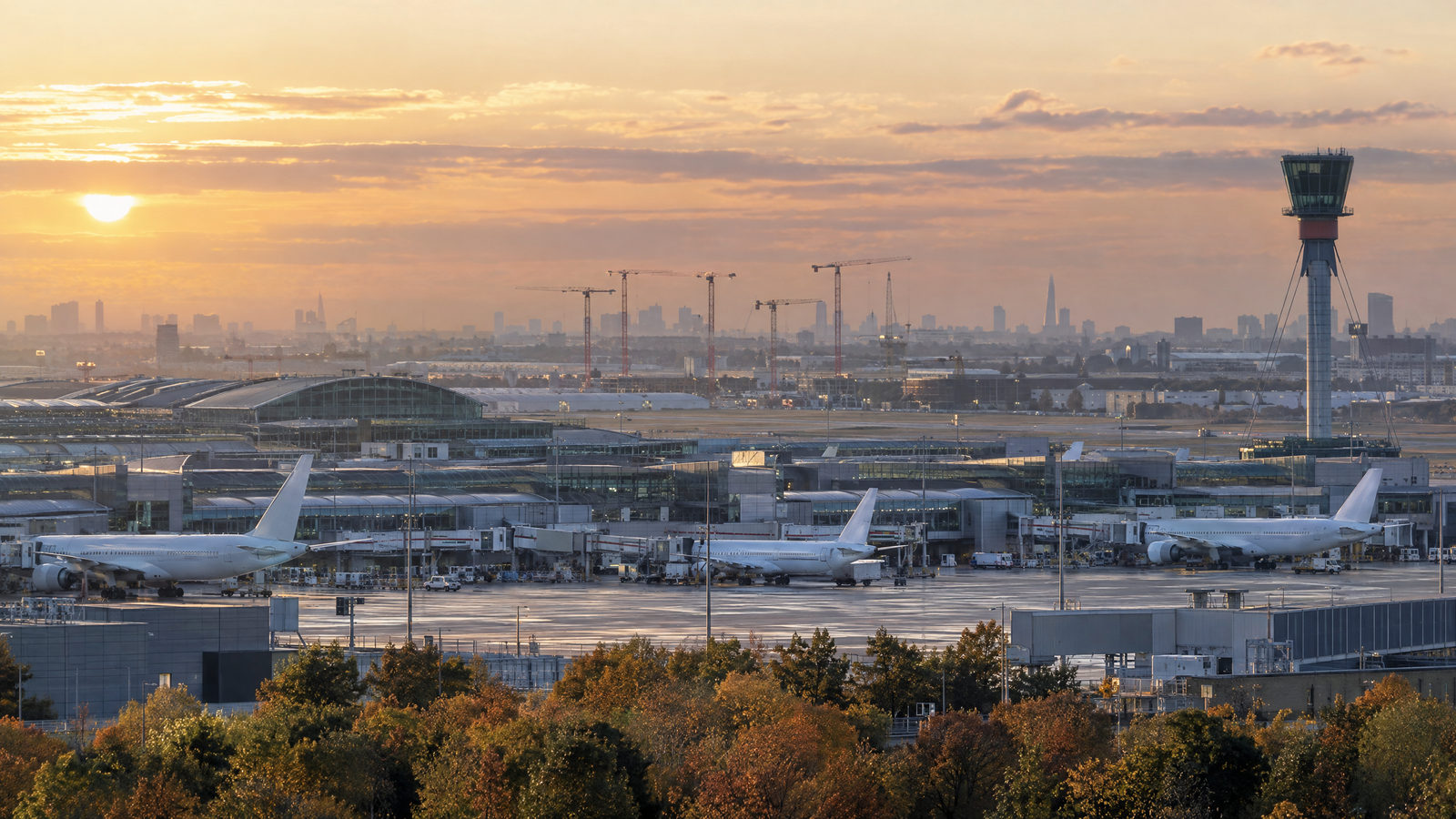

Heathrow has said its proposed third runway could open in 2039 rather than meet the earlier 2035 ambition, as the airport works towards securing planning permission by 2029. The revised outlook is not a new consented timetable: it reflects the airport’s stated expectation that a runway would open within a decade of permission being obtained.
The change is significant because the 2035 date had been presented as an ambitious goal for a project intended to increase capacity at the west London airport. Heathrow is the UK’s busiest airport and currently operates with two runways. A third runway remains a proposal, not an approved construction project, and there is no live planning application for it.
Heathrow’s position is that its focus has consistently been on obtaining planning permission by 2029. On that basis, a ten-year build and delivery period would point to 2039. The airport has indicated that a faster outcome would depend on further action to simplify planning and regulatory processes. That means the newly reported date should be understood as a possible delivery scenario rather than a firm opening commitment.
The Government has acknowledged that the earlier timetable was always demanding. It has said it will continue working with the promoter and other parties to ensure the right framework is in place for an application to be considered, while stressing that it cannot pre-judge an ongoing process. That distinction matters: the planning route still has substantial stages to complete before a final decision can be made.
Earlier this year, ministers launched a consultation on a planning framework for the expansion. It set out tests any future scheme would need to satisfy on air quality, noise, climate change and economic growth. The consultation closed at the beginning of September. The framework is intended to guide future decisions, rather than grant development consent itself, so it is only one element of the path towards a planning application and eventual determination.
The proposal is part of a wider modernisation plan for the airport. The overall programme has been put at about £49 billion, with the runway element estimated at roughly £33 billion alongside other airport works. Supporters argue that more capacity could improve connectivity, support supply chains and create jobs. Heathrow says the scheme would be privately financed and could support at least 108,000 new jobs, though those are projected benefits rather than outcomes that have already been delivered.
For communities around the airport, the programme continues to raise practical questions well beyond the runway itself. Previous plans have involved major changes to local infrastructure, including the M25, as well as implications for homes, noise and air quality. Environmental compatibility will remain central to any assessment. Government policy requires a future proposal to be consistent with legal climate commitments, while advisers have recently warned that aviation emissions policy would need to be strengthened for expansion to be compatible with national targets.
The 2039 scenario therefore does not resolve the debate over Heathrow’s expansion. It clarifies the timescale the airport now sees as realistic if permission is secured in 2029, but it leaves the planning decision, detailed design, conditions and delivery programme still to come. For passengers, local residents, businesses and airlines, the immediate development is a reset of expectations: the project is still being advanced, but its possible operational date has moved four years beyond the previous target.