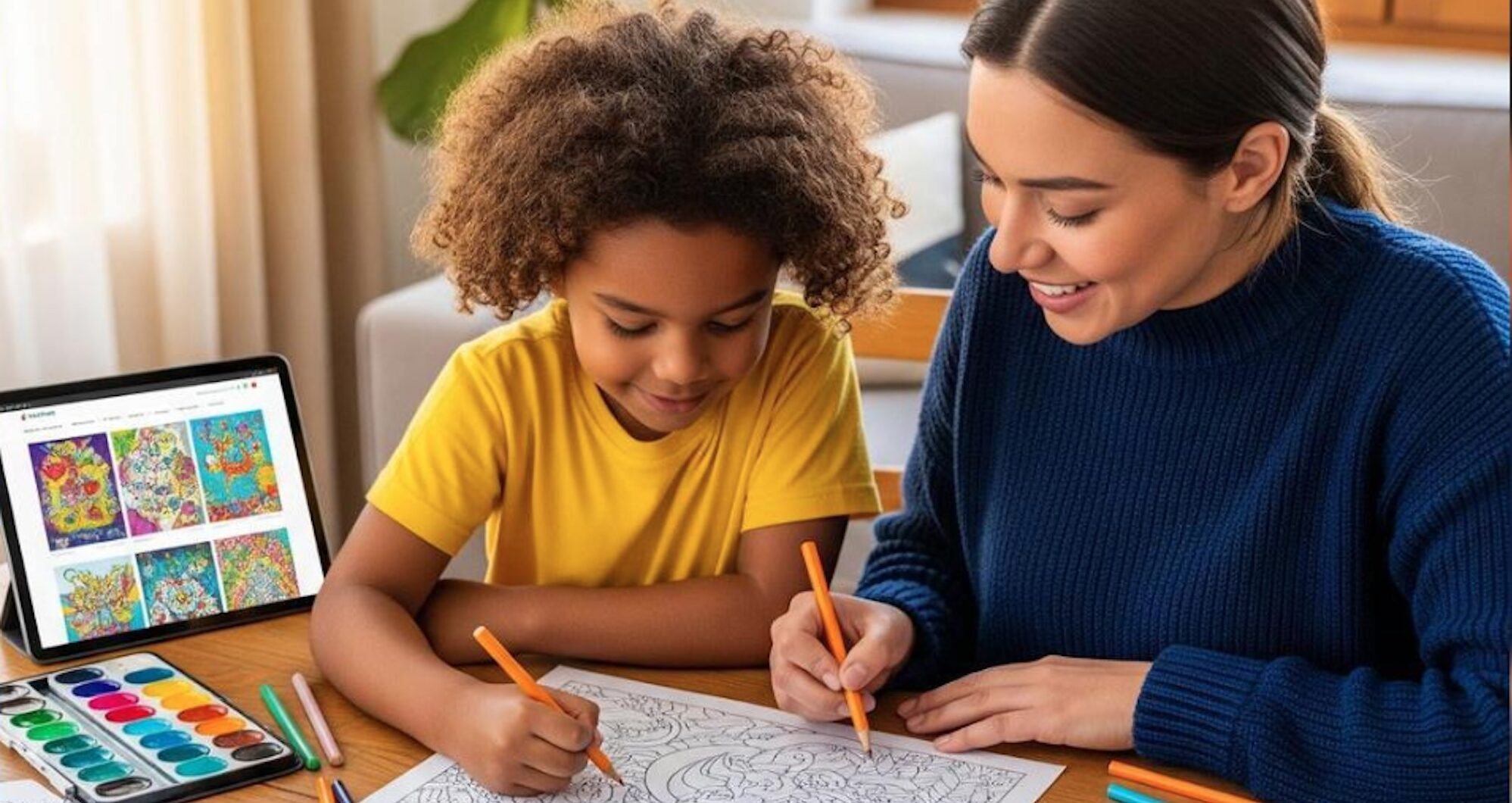

At a time when artificial intelligence and digital screens increasingly dominate childhood and adult life, a quiet analogue revolution is taking place across classrooms, therapy centres and family homes. The humble act of colouring — once seen simply as a recreational activity for young children — is now earning global recognition as a scientifically supported tool for cognitive growth, emotional regulation and creative development.
Within education communities in the UK and United States, printable Colouring Pages are now widely adopted as a low-cost, high-impact resource providing measurable benefits for students of all ages. Far from being a nostalgic relic of the past, coloring has re-emerged as an essential part of modern mental-health and academic learning strategies. Explore printable Coloring Pages
The Neuroscience Behind Colouring: Why It Works
Over the last decade, a growing body of research from institutions such as the American Journal of Art Therapy and the International Journal of Behavioural Development has highlighted how structured colouring engages key areas of the brain responsible for focus, visual-motor coordination, memory processing and emotional control.
“Colouring activates both hemispheres of the brain simultaneously — logic in selecting patterns, and creativity in choosing colours,” explains Dr. Hannah Morgan, Cognitive Neuroscientist specialising in early-childhood development. “This unique balance produces a calming effect similar to meditation, improving attention and reducing anxiety.”
Unlike free drawing, which can trigger performance pressure or decision overload, structured colouring templates provide boundaries that allow cognitive rest while still exercising motor and perceptual skills. This is particularly beneficial at a time when attention spans are shrinking due to digital overstimulation.
Educational Impact: A Tool Used by Teachers and Therapists
Teachers across the US and UK report that integrating colouring into daily routines improves classroom behaviour and enhances academic readiness.
“Students who struggle to stay focused during lessons often thrive when colouring is used as a transition or brain-reset activity,” says Emily Waters, primary education researcher and former classroom teacher. “It restores calm, builds fine-motor strength and prepares children for handwriting far more effectively than screen-based tools.”
Therapists affirm the same outcomes in behavioural support and emotional therapy environments, describing colouring as a stabilising sensory tool that reduces stress and supports communication.
More Than Art: Colouring as a Framework for Thematic Learning
Today’s printable colouring resources have evolved far beyond cartoon characters. They now serve as academic learning assets covering literacy, numeracy, science, environmental awareness and cultural topics. One fast-growing category is Seasons & Weather Colouring Pages, which visually teach natural cycles, climate patterns and scientific concepts in an intuitive way. Browse Seasons & Weather Coloring Pages
“When children colour snowflakes, thunderclouds, rain cycles or spring blossoms, they’re not just decorating shapes — they’re interacting with real-world science through visual storytelling,” explains Dr. Mark Ellison, education specialist in early science communication. “This sensory connection dramatically improves memory retention and comprehension.”
Visual learning methods are particularly impactful for English-language-learners, special-education students and children who process best through hands-on engagement rather than verbal instruction.
A Creative Wellness Tool for Adults Under Pressure
The growth of adult colouring is not a trend but a psychological necessity. Studies from cognitive-behavioural researchers indicate that 20–30 minutes of focused colouring can lower cortisol levels, reduce intrusive thoughts and support emotional balance.
“Colouring is a form of structured mindfulness,” notes Dr. Rachel Ford, clinical psychologist. “It quiets internal noise and restores mental clarity, offering an accessible alternative to meditation for those who struggle with traditional methods.”
Libraries, community centres, rehabilitation programs and corporate wellness initiatives are now integrating colouring sessions into stress-relief workshops — reinforcing the fact that creativity is not just recreational, but restorative.
A Universal Resource Without Barriers
Unlike premium digital apps or specialised therapy tools, printable colouring sheets are inexpensive, inclusive and accessible for families, educators and care providers regardless of location or budget. In a time of increasing educational inequality, accessibility matters.
“Creativity should not depend on a family’s income level,” says Helen Ward, art-education advocate based in New York.
“Free printable resources give every child the opportunity to learn, express and grow.”
Platforms offering open access to colouring materials play an essential role in supporting educational equity, emotional health and community connection.
The Future of Creative Learning
Colouring is no longer just a childhood pastime — it is an educational instrument, a therapeutic support system and a bridge between generations. Its ability to blend science, art and emotional restoration makes it uniquely powerful in a world dominated by screens and speed.
As schools, families and mental-health professionals continue to recognise its value, colouring is positioned to remain one of the most accessible and effective self-care and learning tools available today. And sometimes, the simplest tools are the ones that change everything.