
Every morning, millions of people reach for a hairbrush without giving a second thought to how it was made. Behind what appears to be a simple grooming tool lies a surprisingly detailed manufacturing process — one that involves raw material grading, precision tooling, specialised assembly, and multi-stage quality control. Understanding how professional hair brushes are produced helps explain why specification differences between products matter, and why the gap between a well-made brush and a poorly made one shows up directly in hair health outcomes.
This article walks through the full production process of a professional hair brush, from raw material sourcing to finished product inspection, based on the manufacturing practices used in Dongguan, China — one of the world’s primary production centres for hair care tools. The facility types described here produce everything from boar bristle paddle brushes to flexible nylon detangling brushes, across both retail and professional channel specifications.
Raw Material Selection: Where Quality Begins
The production of a professional hair brush begins not on the factory floor but at the raw material sourcing stage. The two most critical material decisions are bristle specification and base material selection.
Bristle material is the variable that most directly affects a brush’s performance against the hair. Natural boar bristle is graded by the region of the animal from which it is sourced, the length and diameter of individual filaments, and the percentage of uniform filaments in each batch. First-cut bristle, sourced from the back and shoulders of the animal, produces longer, firmer filaments suitable for medium to thick hair applications. Second-cut bristle is finer and shorter, appropriate for fine hair where lower contact friction and softer scalp pressure are priorities.
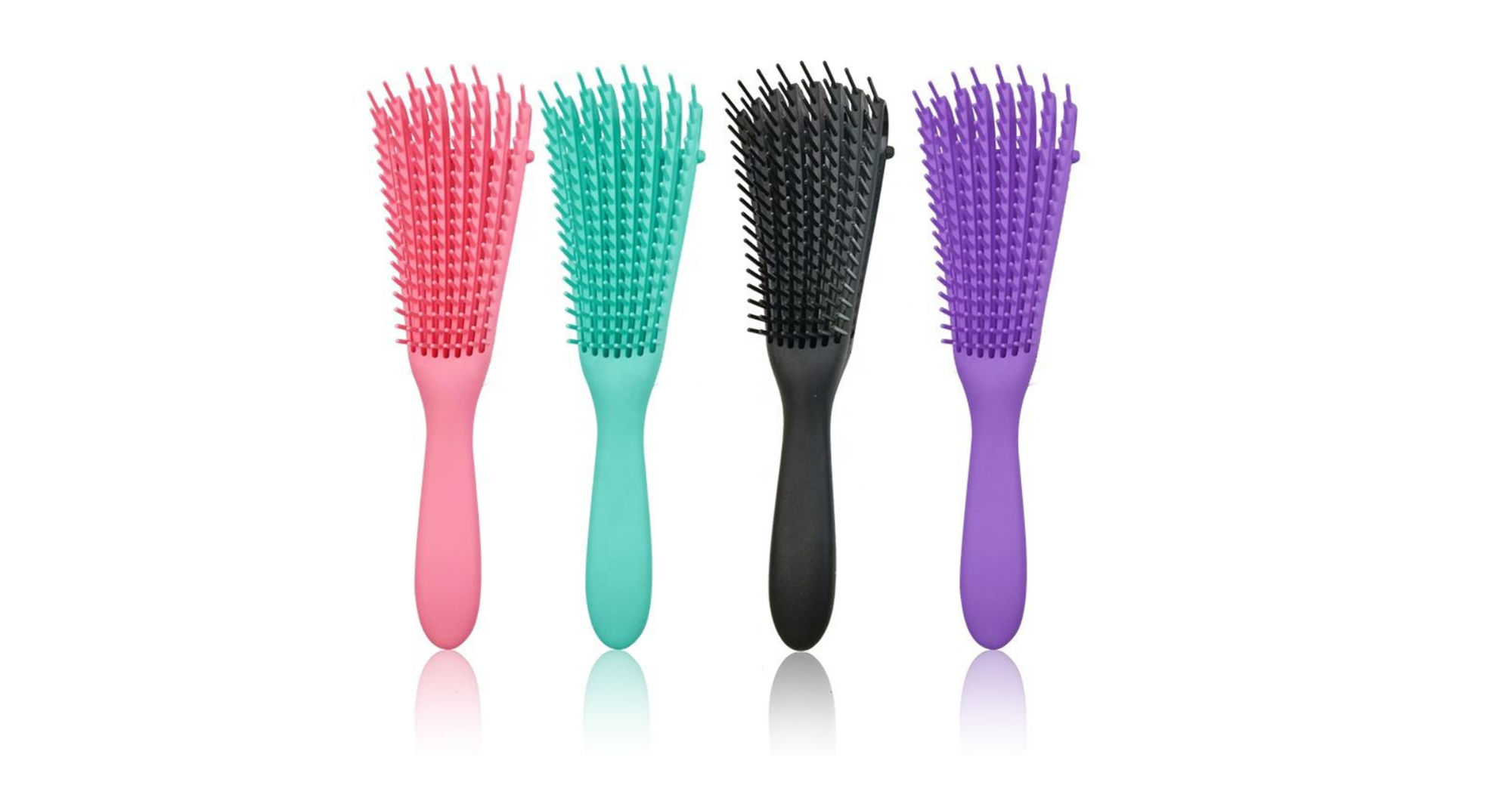
Synthetic nylon bristle is manufactured to a consistent filament diameter and requires quality checking for uniformity, flexibility rating, and tip finish. Ball-tip nylon pins — where a small rounded bead is formed at the tip of each filament — require a secondary processing step to produce the rounded end that prevents scalp scratching. Flexible nylon used in detangling brushes is produced to a different elasticity specification than standard nylon pins and undergoes separate flexibility testing before use.
Base and handle materials — typically ABS engineering plastic, polypropylene, or wood — are selected based on the intended product tier and handle design. Wooden handles require kiln drying to a precise moisture content before machining to prevent warping after production. ABS and polypropylene components are injection-moulded and require material certification to confirm they meet applicable safety standards, including restrictions on hazardous substances under REACH regulations.
Mould Development and Injection Moulding
Before any component can be produced at scale, the tooling must be developed. For new brush designs, this begins with mould engineering — the creation of precision steel moulds that define the exact shape of each plastic or rubber component in the brush.
Mould development for a single paddle brush typically involves separate moulds for the handle, the base plate, and the cushion pad. For complex handle geometries or ergonomic grip designs, mould development may take four to six weeks and requires multiple test shots — where initial samples are produced and measured against the design specification — before the mould is approved for production runs.
Once moulds are approved, injection moulding machines produce base components at high volume. Each shot is monitored for dimensional accuracy and surface finish. Components that fall outside tolerance — including warping, sink marks, or incomplete fill — are rejected at this stage rather than passed to assembly.
Cushion Base Assembly
For paddle brushes with an air-cushion base — the rubber pad that allows the pin rows to flex during brushing — the cushion assembly is a distinct production step. The rubber pad is cut to size, punched with the pin hole pattern, and bonded to the base plate before pin insertion. The cushion density and thickness determine how much the pins flex during brushing contact, which directly affects the mechanical pressure applied to the hair shaft and scalp.
Air-cushion base production requires consistent rubber compound specification and precise hole punching alignment. Misaligned holes produce uneven pin angles after insertion, which creates inconsistent friction distribution during use — a quality failure that is not always visible to the eye but is detectable in use.
Bristle Setting and Pin Insertion
Bristle setting — the process of inserting bristle filaments or nylon pins into the brush base — is one of the most technically demanding stages of hair brush production. In professional manufacturing facilities, bristle setting is performed by automated machinery that groups filaments into bundles of specified count, folds each bundle over a wire anchor, and drives the anchor into the base at a defined depth and angle.
The density of bristle rows, the angle of insertion, and the depth of each anchor point all affect how the brush performs against the hair. Incorrect anchor depth produces bristle that pulls out during use — one of the most common quality complaints in lower-specification brushes. Professional manufacturers test bristle retention force as part of the quality control process, verifying that each bristle bundle withstands a defined pull force before the product proceeds to final assembly.
For mixed bristle brushes — combining boar and nylon — the alternating bristle rows are set in a defined pattern that determines how the two materials interact with the hair during each brushing stroke. This pattern is a proprietary specification variable that differs between manufacturers and product tiers.
Quality Control and Certification
Finished brush products undergo multi-stage quality inspection before leaving the facility. Standard checks include bristle retention testing, dimensional verification against approved samples, surface finish inspection, and functional testing — where the brush is used against a standardised surface to confirm that pin angles and cushion flex meet specification.
For products destined for regulated markets, additional testing is required. Certifications such as ISO 9001 verify that the manufacturing management system is documented, consistently applied, and subject to ongoing third-party audit. Social compliance certifications, such as amfori BSCI, verify labour standards and factory working conditions through independent inspection. These certifications are increasingly required by retail buyers in North American and European markets as baseline sourcing conditions.
Packaging inspection is the final stage before shipment — checking that product labelling, barcode accuracy, and carton integrity meet the buyer’s specification and destination market requirements.
From Factory to Brand
The majority of professionally manufactured hair brushes are produced under OEM or private label arrangements, where the manufacturing facility produces to a buyer’s specification rather than under its own brand. This model allows brand developers — from independent beauty labels to large retail chains — to specify bristle grade, cushion base density, handle material, and finish without investing in their own production infrastructure.
Facilities such as JunYi Beauty, based in Dongguan, produce across the full range of brush formats — paddle, round, detangling, and mixed bristle — with specification options adjustable from the bristle grade level through to the finished packaging design. The ability to control specification at each production stage is what separates professional OEM manufacturing from commodity brush production, and it is the variable that determines whether a finished brush performs as its packaging claims.
For brand developers evaluating manufacturing partners, the production capability depth described above — from in-house mould development through multi-stage QC — is a meaningful benchmark for assessing whether a supplier can deliver to specification consistently across production runs. More detail on what that process looks like in practice from the buyer’s side is available in JunYi Beauty’s OEM and ODM service documentation.
For consumers, understanding that a hair brush is a precision-manufactured tool — rather than an undifferentiated commodity — provides a useful framework for evaluating the relationship between specification, price, and performance at the point of purchase. The bristle grade, cushion base construction, and pin retention quality of the brush in hand are the product of decisions made long before the product reached the shelf.