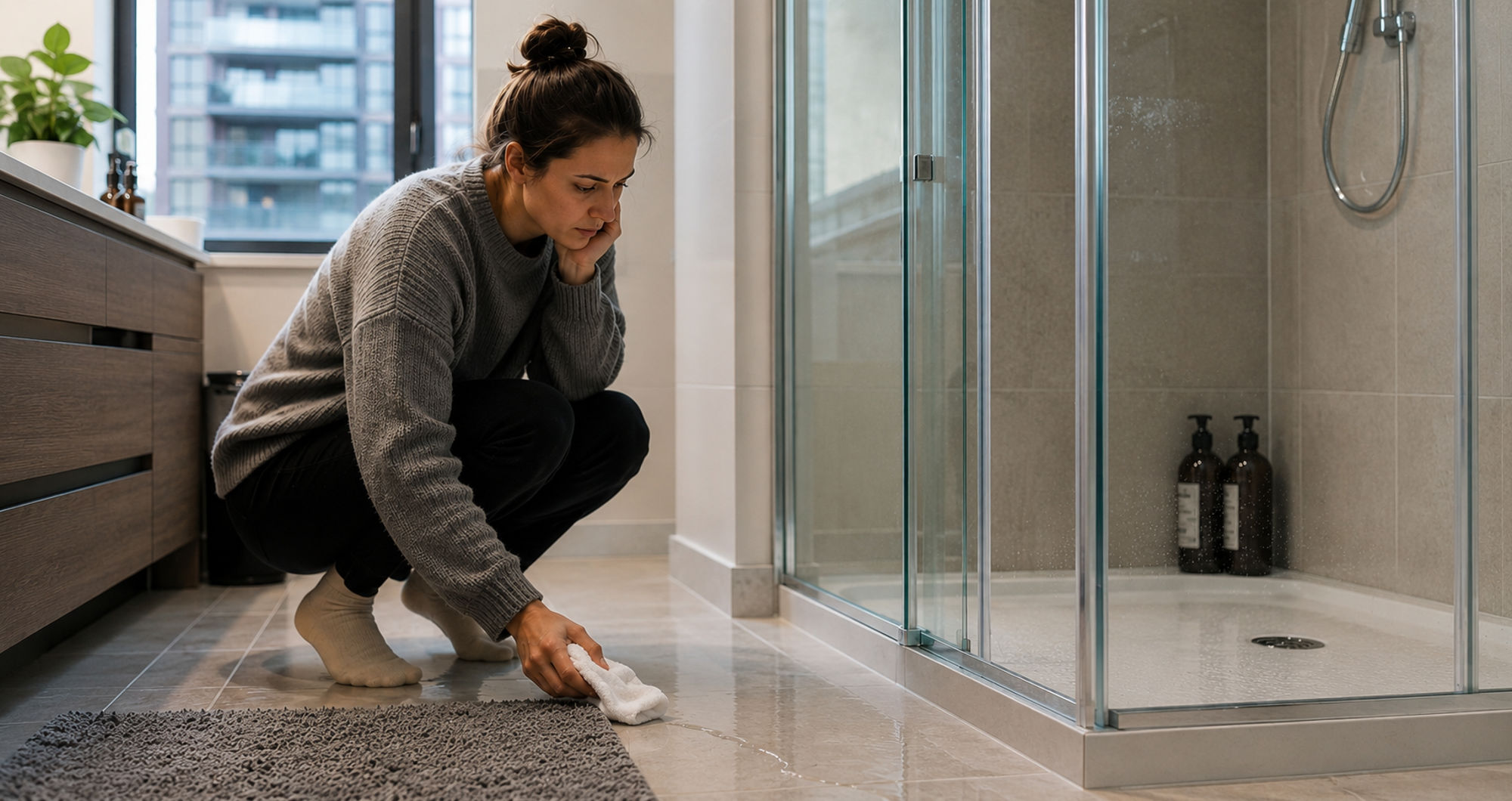

Renting a flat in London often means dealing with small problems before they become expensive ones. A leaking shower door may not feel urgent at first, but every shower can leave you with a damp bath mat, a wet floor, and the worry that moisture will lead to musty smells or swollen flooring.
It is also the kind of small issue that can become awkward at the end of a tenancy. No renter wants an ignored leak to turn into a deposit dispute when it is time to move out.
First, Find Where the Water Is Escaping
The first step is to find where the water is getting out. A puddle on the bathroom floor does not always show where the leak began. Water moves. It can run along the bottom of the door, drip from a side edge, or follow the frame before it reaches the floor. If you only look at the final puddle, you may end up replacing the wrong part.
Start by checking the shower while it is running. Watch the bottom of the door first. If water is coming from underneath, the bottom seal or sweep may be worn, split, or no longer touching the threshold properly.
Next, look at the side of the door. Pay attention to the point where the moving glass door meets a fixed glass panel or another closing edge. If water appears there, the problem may be with the vertical seal rather than the bottom strip.
You do not need specialist tools for this first check. A dry towel on the floor, a short shower test, and a careful look at the glass edges can tell you a lot.
When the Leak Comes From the Magnetic Closing Edge
If the leak is coming from the place where the shower door meets the fixed glass panel, the issue may be the magnetic closing edge. On many glass shower doors, magnetic seals help the door edges meet and hold together, but they only work well when the two sides line up.
Before replacing anything, check whether the closing edge is meeting as it should. Limescale, soap residue, or dirt on the glass can stop the magnetic edges from touching cleanly, so cleaning and drying the edge is a sensible first step.
Then look at the contact from top to bottom. Do the magnets meet evenly? Is the gap larger near the bottom? Does the door feel as if it has dropped slightly? Does the seal slide, twist, or sit at an angle?
In simple terms, check a few practical details first: how wide the gap is between the two glass edges, how thick the glass is, and how the door meets the fixed panel or opposite edge when it closes. Magnetic shower door seals are usually chosen by glass thickness, closing gap, door type, and seal angle. The point is not just to copy the old strip by appearance. It is to choose a seal that actually fits the glass and gap, so the magnetic strips inside the seals can meet properly.
How to Choose the Right Magnetic Shower Door Seal
Once those checks point to a worn or mismatched magnetic seal, choose the replacement using the same details that affect the closing edge: glass thickness, closing gap, door type, and profile angle.
Start with glass thickness, because the seal has to grip the glass securely. Then check the closing gap, which is the space the magnetic seal needs to close when the door meets the fixed panel or the opposite edge. If the gap is too small or too wide for the seal, the door may still fail to close tightly.
Door type also matters. Hinged, pivot, sliding, framed, and frameless shower doors do not always use the same magnetic profile. Then check the profile angle. Magnetic seals are commonly selected by 90°, 135°, or 180° profiles, and the wrong angle can stop the two magnetic edges from meeting cleanly even if the length looks right.
If you are still unsure which magnetic profile you need, a practical magnetic shower door seal guide with a quick profile selector can help narrow down the options before you choose a replacement. It also covers topics such as how to identify premium seals and why magnetic shower doors fail to close properly.
When You Are Not Sure Which Seal Matches
Choosing the right magnetic shower door seal can be harder than it first looks. In real bathrooms, glass thickness, closing gaps, door style, and profile angle all need to be considered.
But you do not need to become a shower door seal specialist overnight. Taking clear photos of your current seal and the closing edge can be a practical next step.
For example, showerdoorseal.uk, operated by Simba International Limited, is a UK-focused shower door seal supplier that can help renters and homeowners narrow down suitable replacement options from photos of the old seal, glass edge, and closing gap. That kind of check is useful when you do not want to study seal profiles in detail or risk ordering the wrong product.
Fix Small Leaks Before They Become Bigger Problems
A small shower leak is easy to live with for a while. You wipe the floor, change the bath mat, and tell yourself it is not serious enough to deal with yet.
But is that really what you want in your daily life: dealing with the same shower leak every day until it becomes a bigger repair?
A shower room leak is worth fixing early. Choosing the right shower door seal is a small step, but it can make the bathroom easier to keep dry and the flat more comfortable to live in.