As we are living in a digital world where people or companies spend time on the internet rather than anywhere else, gaining high-quality backlinks is essential for improving website exposure and search engine placement as well as enhancing the brand image. The primary integration of PR strategies and search engine link-building campaigns, PR link building, is one of the most effective means to attain such objectives. PR link building focuses on acquiring quality, editor-driven links from leading publications with built-in relevance that cannot be provided by paid or automated links, as opposed to other forms of link building.
However, the problem is choosing a good PR link-building service provider. Given the variety of options available, understanding what criteria to consider when looking for an agency to avoid brand misalignment is essential. This blog aims to help you fully understand PR link building and the benefits it presents, how it is distinct from ordinary link building, and factors to consider when choosing an agency.
Understanding PR Link Building and Its Role in Brand Growth
Digital PR Link Building vs. Link Building: What Is the Difference?
What usually happens in regular link building is that links are obtained with the primary purpose of increasing a website’s rank. These links include those from forums, directories, blog comments, and guest posts, and as such, they tend to lack the relevance and authority that would help shift the perception of a brand meaningfully. Digital PR link building, on the other hand, refers to a more refined type of link building that targets authoritative resources. As a rule, pillar content is produced in the form of news, articles, infographics, research, or thought pieces that can be presented to the relevant media for coverage that would result in backlinks.
Digital PR, unlike conventional link building, does not require a self-promotion-centred approach but rather a relationship-oriented one. It enhances a brand’s authority in its respective field and is therefore not only focused on improving SEO rankings alone. Bearing that in mind, key distinctions between PR link building and other link-building types include the following:
- Quality vs. Quantity: In PR link building, the emphasis is on acquiring a limited number of quality links from reputable sites rather than obtaining a large number of low-quality links, which is usually the case for regular link building.
- Content and Storytelling: Media coverage for any campaign depends on the ability to tell a compelling story and provide insights that are valued and appreciated, which is the essence of Digital PR.
- Audience and Impact: Most of the links that are acquired through PR link building are targeted at a wider but relevant audience, improving the visibility of the brand.
Digital vs. Traditional PR Strategies
Traditional PR aims at helping people or brands get noticed by raising their profile through print, television, radio, etc., while digital PR enables brands to advertise on the internet, social media, blogs, and news websites. In addition, digital strategies tend to be more analytically powered than traditional approaches, and this makes it possible to gauge success and improve strategies further. There is also the element of real-time interaction and communication with the audience that digital means can create, whereas the more classical tools are incapable of providing. Some of the other benefits of digital means over traditional PR include:
- Measurable Results: Since results can be tracked through analytics, knowing the return is not an issue.
- Broader Scope and Focus: The networks allow people from any part of the world to access them, and the campaigns are more targeted according to age and preference.
- Greater Interactivity: Since people receive promotional messages via the internet, it creates an opportunity to engage audiences and connect with them more personally.
Important Metrics for Digital PR Success
Several metrics need to be observed when we take stock of a digital PR campaign’s effectiveness. These metrics allow for an instant view of how the PR link-building campaigns went and offer some insights into what can be improved. Some of these metrics are very important; here are some:
- Domain Authority (DA): The higher the DA score of the sites linking to you, the more it increases your site’s reputation and thus its ranking on search engines.
- Referral Traffic: Knowing how many visitors come to your site thanks to PR links tells you the value of each PR link that you build.
- Engagement Metrics: Consideration of parameters such as social sharing, audience comments, or time spent on the page can be important in determining content consumption patterns by audiences.
- Brand Mentions: Knowing how people mention your brand on social media, blogs, and other platforms enables you to evaluate its level of awareness and recall.
- Conversion Rates: In all these activities, the end goal is always to achieve conversions—be it a purchase, a lead, or some other action. By tracking conversions, it is possible to evaluate how effective the campaign was in meeting the business goals.
What Are the Benefits of Digital PR Link Building?
The benefits of digital PR link building extend beyond SEO and encompass broader brand-building advantages. Some of the main benefits include:
- Enhanced Brand Authority: Links from credible sources reinforce your brand’s authority, positioning you as a thought leader.
- Improved Organic Rankings: High-quality backlinks improve your site’s authority, leading to better search engine rankings and visibility.
- Increased Traffic and Conversions: Links from reputable publications drive targeted traffic, which is more likely to convert into customers.
- Long-Term Value: Unlike paid ads, PR links have lasting value and continue to impact SEO and traffic long after the campaign ends.
- Social Proof and Credibility: Association with reputable sites lends social proof, increasing trust among potential customers.
Types of Links and Media Coverage to Expect from a Good PR Link Building Agency
A good PR link building agency should have the means to acquire different types of links and coverage that come with varying benefits. Here are some types you should expect to receive:
- Editorial Links: These are relevant and authoritative links embedded in high-quality sites with relevant content.
- Niche Edits: Links edited into existing quality sites to include relevant information.
- Guest Posting: Creating guest content for respected websites within the industry to enhance your brand.
- Influencer Partnership: Collaboration with an opinion or industry leader who can mention your brand on their channels.
- Press Releases: News distributed to the mass media that generates links.
Why Is It Important to Choose the Right PR Link Building Agency?
Impact on Brand Reputation
The PR link building agency you choose becomes your brand’s voice. They promote the fundamental message of your brand based on the objectives set out by your products or services. Therefore, you should select a partner who understands the essence of your business and its goals. Otherwise, some PR placements may distort the brand’s image and damage its reputation and credibility.
Long-Term Value of Quality Links Over Quantity
Digital PR revolves around artistic, focused, and strategic link building rather than excessive link generation. High-quality links on reputable websites have a broader SEO impact and enhance brand credibility compared to numerous low-quality links. Agencies that prioritise quality foster relationships with trusted publications and create relevant content aligned with your brand voice, ensuring all links serve a purpose.
Aligning PR Goals with Marketing and Business Objectives
When working with a PR link building agency, it is crucial to translate your PR goals into meaningful linking efforts that integrate with broader business and marketing strategies. This ensures that PR activities achieve brand objectives while enhancing profitability by maintaining consistent messaging across all platforms.
Key Factors to Consider When Selecting a PR Link Building Agency
1. Industry Expertise and Niche Knowledge
Understanding the particular field in detail, including the gadgets, technology, and field surrounding your agency, significantly improves the ability to formulate and structure the right messages for the desired target audience. While evaluating the agencies, check also their experience in your industry and how deep their niche knowledge is. Such an agency can:
- Find out which publications and which personalities are important for the sphere.
- Work on content that addresses the problems and possibilities within the industry.
- Get the particulars of the audience and what will appeal to them.
2. Experience and Track Record
An agency’s past performance should be the number one factor in the selection as it indicates a high potential of meeting expectations. Find agencies who can deliver for you where there is evidence through:
- Client Testimonials: Feedback from current or former clients highlights the agency’s strengths and weaknesses.
- Portfolio of Links and Placements: Quality placements in relevant online resources indicate the agency’s proficiency in obtaining needed links.
3. Transparency and Communication
The issue of fairness is critical in every PR partnership. It is to be expected that an agency with integrity will be honest with its clients about its methods, policies, and costs. Key criteria to consider include the following:
- Communication Style: Does the agency keep the client well-informed and updated about developments?
- Process Explanation: Are they ready to explain the details of their strategies and how they achieve placements?
- Reporting Practices: Look for agencies offering routine reports to help assess the quality and effectiveness of the links acquired.
4. Customised PR and Link Building Strategies
No two companies are alike and so a universal strategy for PR link building cannot be effective. Find agencies that:
5. Ethical Link Building Practices
Black hat methods can sometimes appear tempting. Unfortunately, these practices are increasingly common among marketers. However, ethical practices should always be prioritised to protect your agency’s reputation and avoid penalties, such as being banned by search engines. Always adhere to white hat link building techniques and avoid the following:
- Purchasing links in violation of Google guidelines.
- Engaging in black hat methods, such as link farms or embedded links, which can result in severe penalties.
- Using uninvited link injections that attempt to manipulate link placements.
6. Reporting and KPI Tracking
7. Pricing and Pricing Strategies
The firms that specialise in PR link building may embrace distinct billing approaches. To know which one works best for you, check the most widely used models below:
- By Project: Works best for single campaigns; it sets known limitations in terms of finances but may compromise on getting the big picture.
- By the Month: Ideal when there is a need for continuous PR link building outreach, relationship management and improvement.
- By Results: Some firms have particular objectives, such as a target number of links or a specific engagement level, and you pay them when the objectives are achieved.
The payment models vary, but it is also critical to analyse what exactly is included within a specific fee.
Questions to Ask a PR Link Building Agency Before Signing
Finding an agency that best suits your needs takes a lot of work. It’s important to ask questions that can help ascertain whether an agency meets your requirements.
Questions About Experience
1. Which brands in my field have you worked with before?
– Ensures the target audience and the niche is understood.
2. Do you have case studies that are similar to what we are trying to achieve?
– Lets you assess their performance with such brands.
Questions About Strategy and Approach
1. How do you go about obtaining quality links?
– Requirements for relevant sources as opposed to quantity.
2. Are specific strategies developed for each client?
– Specific strategies are usually more effective than a one-size-fits-all strategy.
Reporting and Communication
1. What key metric indicators do your people concentrate on in their reports?
– Knowing what the salient points in the KPIs will emphasise the areas to focus on regarding success.
2. What is the client’s update schedule?
– It is very important always to keep the client informed.
Ethical Standards and Practices
1. Which link-building techniques would you refrain from using?
– Ensures that only white-hat techniques are employed, so they do not incur any penalties.
2. What would you do if challenges or penalties occur?
– Shows a sense of experience and responsibility in pre-empting issues.
Red Flags to Watch Out for in PR Link Building Agencies
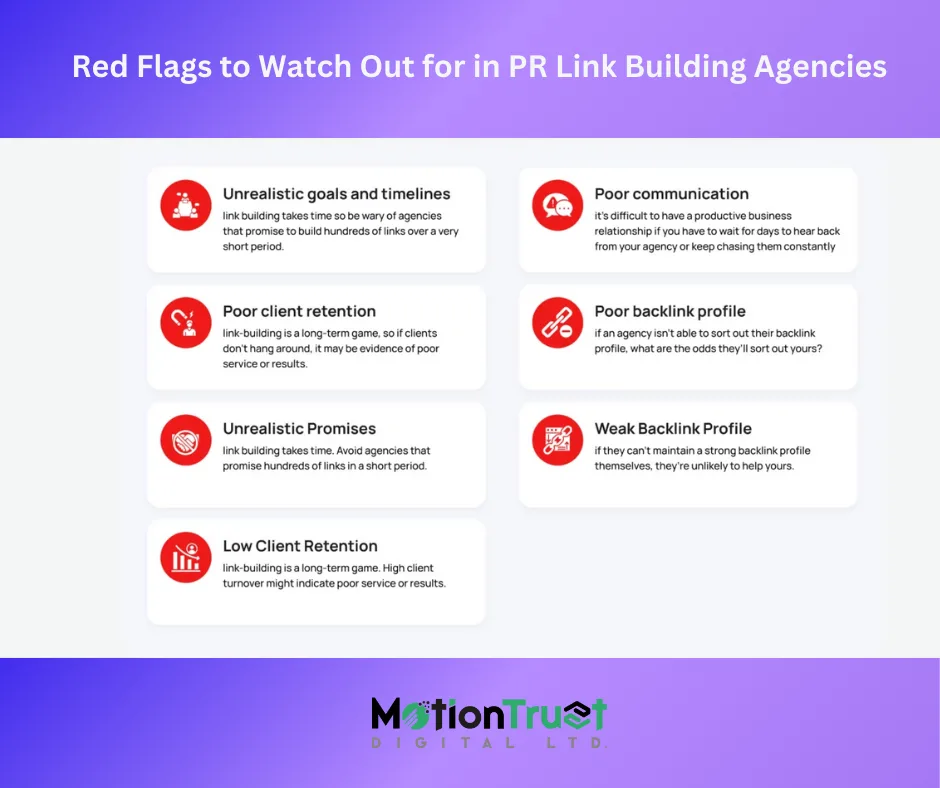
Not all PR link building agencies are considered professional, so do not hesitate to consider these red flags:
Assurance of quick results or a very high number of links
SEO and PR generally take time to achieve results due to resource constraints. Be cautious of agencies making wild claims of instant link building or dozens of links built in just a few hours. Building relationships for links is not an overnight task; it requires credibility to achieve necessary placements and is ultimately a numbers game.
Lack of Transparency in Strategy or Pricing
You may have experienced it yourself or heard of others dealing with agencies that were not thorough in explaining their processes or were ambiguous about costs. This likely indicates limited skills or unethical practices. Conversely, being upfront about prices and providing detailed service inclusions is a sign of great service.
Limited or Superficial Reporting
If a company appears with boring reports and claims a certain number of links without mentioning their quality, the excitement of the specifics, or the use of the links, then they are probably not worth the investment and return you are promising. It is a common practice for reporting to be boring, but a report intended for marketing purposes should contain fundamental metrics and evidence of value addition from the agency.
Black Hat Links
It is a common practice for agencies to follow trends, so avoid those that utilise unethical techniques, which include:
Link Brokers: A company that behaves in this manner is violating Google guidelines, which can result in bans.
Link farms: link building with irrelevant and uncontrollable sites will only tarnish your company image.
In your quest for link building, it is important to constantly remember to only use white-hat methods, as this is the only way to create a sustainable link profile for the long term.
How We Do It: Our 5-Step Digital PR Link Building Strategy
Effective link building, like many other disciplines, requires a structured plan. Here is one approach, broken down into five steps:
- Audience Analysis: Leverage audience characteristics, including demographic data, interests, and trusted sources, to identify the ideal clientele. Knowing your audience ensures campaign relevance and increases the likelihood of acquiring valuable placements.
- Content Development: Create engaging and relevant content, such as e-books, infographics, articles, and websites, to attract both media and audience attention.
- Outreach and Relationship Building: Communicate with journalists, bloggers, and industry influencers. Building media contacts fosters greater engagement and a willingness to cover your projects.
- Content Placement and Link Acquisition: Get your content published in high-ranking e-zines, magazines, and newspapers, ensuring valuable links are embedded in meaningful texts that address both your target consumers and search engines.
- Reporting and Optimisation: Measure the impact of each link—traffic, engagement, and conversion rates. Continuous monitoring allows for data-driven adjustments, enhancing the effectiveness of future campaigns.
Conclusion
An experienced and reputable PR link building agency can elevate your brand’s visibility and support its growth. The agency you choose should have extensive experience, demonstrate transparency, and adhere to ethical standards. It must offer proper PR services that align with your marketing strategies to achieve desired outcomes.
A blue-chip agency should consistently emphasise maintaining high-quality links and support ethical and sustainable brand growth. Building a strong foundation of trust is key to ensuring that your digital PR link building objectives, such as SEO and branding, are successfully realised. With the right agency, you can grow your brand the right way in today’s competitive digital landscape.