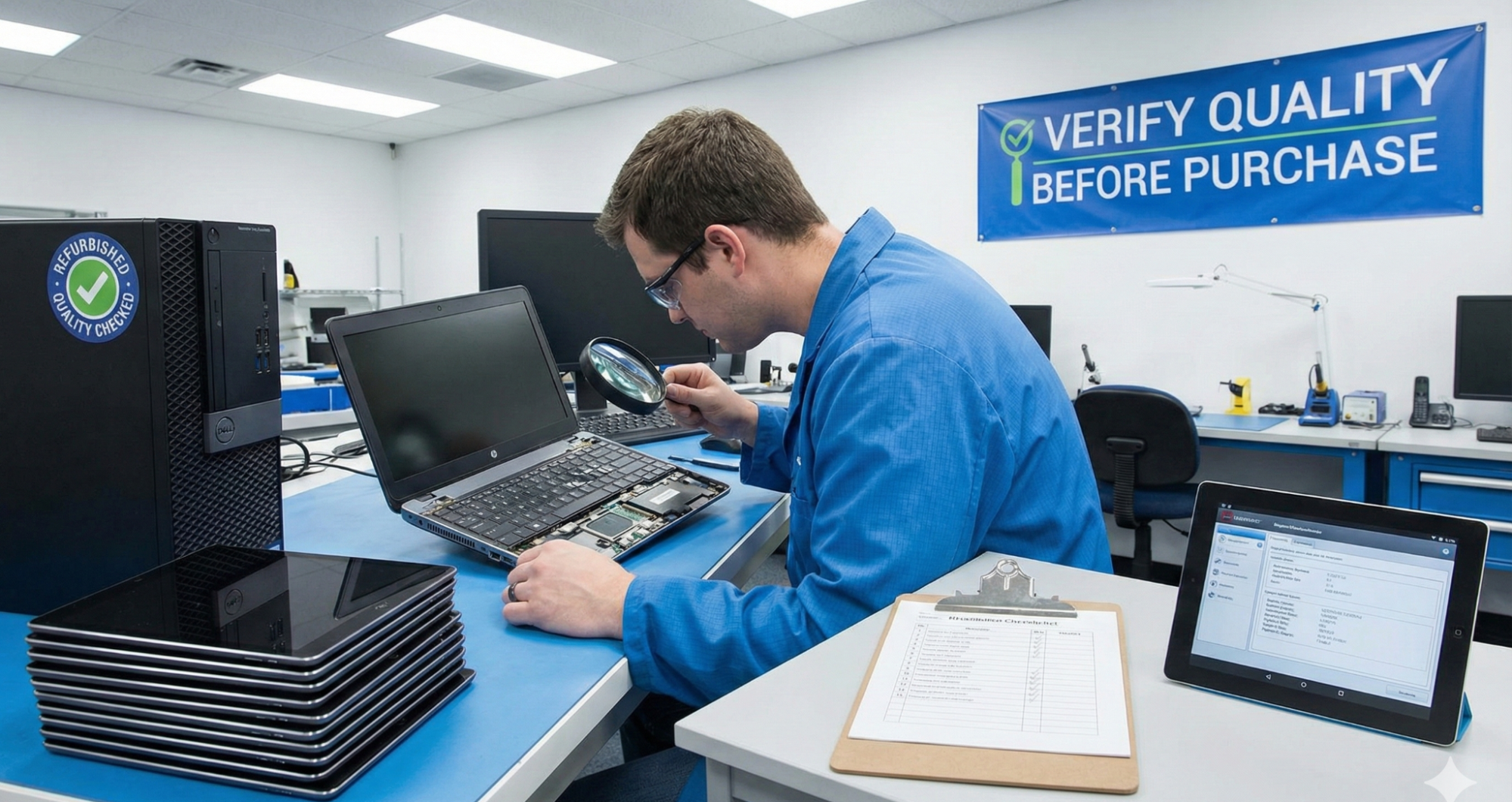

A smart buyer’s approach to refurbished technology involves a comprehensive knowledge of identifying a reliable device before choosing to invest in one. The growing demand for pocket-friendly, eco-friendly tech helps people explore pre-owned options, especially if they offer reliable performance.
The critical assessment of the devices helps safeguard your investment and strengthen overall satisfaction with owning these refurbished items. A complete quality check can help you make better choices, especially when buying refurbished laptops, desktops or other IT equipment.
Quick Verification Framework: The 60-Second Screening Test
Clear Grading Check: Buyers can just check the functional and cosmetic condition of the device by checking out the grading level that is mentioned. A good grading system can help shape the expectations in terms of the device’s longevity and performance.
Seller Transparency Scan: A brief inspection of the product pictures and description shows the integrity of the seller. A clear presentation is an indicator of commitment to avoid hidden risks for refurbished buyers and facilitates safe decision-making.
Warranty Strength Review: A quick glance at the warranty period shows the seller’s confidence in their refurbishment process. The longer support windows will decrease uncertainty and add value to purchases.
Component Accuracy Match: A quick comparison of specifications and visible features will indicate whether the product meets your requirements. Original components serve people who are considering using refurbished laptops for work or study.
Return Policy Safety: A mere glance over the return terms will show the extent of protection you will have once you buy. Flexible policies give the reassurance of any refurbished product.
Verifying The Quality Matrix of Refurbished IT Equipment
A systematic quality matrix makes it easier to assess refurbishment standards. A critical analysis will allow you to see the effect of each factor on reliability before you buy.
Component Authenticity Check
A comprehensive check of the processors, storage modules, memory, and supplementaries confirms that all is in accordance with the advertised specifications. Real hardware directly influences performance, reliability, and system stability, particularly when purchasing a refurbished desktop, whether for personal or business use.
Open reporting of components fosters confidence and ensures you get a system that performs to your expectations, even under normal workload, without failures or unexpected inconsistencies.
Performance Test Validation
A good assessment of the benchmark performance shows that the device can be used with a reasonable amount of confidence. A steady score helps you understand how the system responds to real-time processing requirements. According to data provided by the UK Office for National Statistics (ONS), there is an increase in digital adoption and performance expectations.
The real performance of refurbished systems is evident in clear test results and can be used to estimate overall speed, accuracy, and workload stability.
Physical Condition Review
An in-depth visual inspection and functionality aid in evaluating the frame durability, port performance, hinge resistance, and display clarity. Minor cosmetic degradation does not significantly affect productivity, but structural issues can reduce life expectancy if left unaddressed.
A close examination of keyboard alignment, surface hardness, and port stability helps in making better choices when purchasing refurbished desktops to use daily. Proper inspection is necessary to ensure the device is comfortable enough without compromising its daily operations, even when working remotely.
Thermal Health Analysis
Careful analysis of temperature patterns will provide the system with a safe, prolonged operation. Free airways eliminate the pressure on the inner parts and prevent early deterioration of hardware. The UK National Cyber Security Centre has published data that emphasises the need to ensure healthy system temperatures to enhance the long-term resilience of devices.
Consistent thermal performance ensures consistent performance and reduces the risk of shutdowns, helping you select trustworthy refurbished equipment that operates without overheating under normal working conditions.
Firmware and Software Integrity
A full audit of firmware licenses and operating system authenticity will ensure the device is correctly set up for secure day-to-day use. Authentic licences enable easier upgrades and minimise compatibility problems when performing routine duties. This move is an advantage for anyone comparing refurbished and new laptops, thanks to the legitimate software that helps maintain stability over time.
A well-tested system will guarantee cleaner operation without unpleasant surprises, aid in more reliable functionality, and provide a safer computing experience with trusted update streams.
Essential Questions Every Refurbished Buyer Must Ask
Testing Process Details: An informal inquiry into the diagnostic tests employed in the course of the refurbishment will give you an idea about the degree of technical attention. Powerful testing methods increase confidence in device stability.
Replacement Parts Clarity: A brief investigation into the replaced components will reveal whether the refurbisher used authentic certified parts. Replacing with quality extends life and minimises long-term maintenance costs.
Warranty Coverage Scope: An immediate query on the warranty terms will tell what components are covered. Broad coverage enhances confidence and reduces the risk of future financial loss.
Conclusion
A thoughtful approach to refurbished devices supports better financial decisions and reduces technological waste. Attention to detail builds confidence during the buying process. A conscious review process can make you have a reliable performance without undue compromise. When buyers select quality-motivated sellers and make informed decisions with the help of simple verification systems, a responsible refurbishment market becomes stronger.