
The certificate on the wall is the weakest evidence you have: a recycling certificate can look reassuring. A familiar logo, an environmental accreditation, or a statement about responsible recycling can make a supplier appear qualified before you have asked the harder questions. For a UK commercial solar operator, that is not enough.
Under the UK WEEE framework, photovoltaic panels are electrical and electronic equipment classified as Category 14. The Environment Agency states that all PV panels are reported as household B2C (business-to-consumer) equipment regardless of where they are installed, including commercial premises and large-scale solar farms. That producer-reporting classification should not be confused with the separate process of classifying the actual waste to determine whether it is hazardous and which controls apply.
Once panels become waste, the business producing the waste must classify it before it is collected, disposed of or recovered. That classification includes determining whether the waste is hazardous and identifying the controls that apply to its movement and management.
That means the real test is not whether a recycler can show you a certificate. It is whether the recycler can explain, in detail, what happens to your panels from collection through treatment, reuse or recycling.
What the Rules Put on You, Not on the Recycler
The UK WEEE framework places obligations on producers, compliance schemes, treatment facilities and other parties involved in the handling of WEEE. Those responsibilities do not all fall on the company that owns a commercial solar installation.
For the business holding unwanted panels, the practical issue is making sure the waste is correctly classified before collection, disposal or recovery and transferred to an appropriate operator.
The classification matters because PV panels can contain substances that require controlled treatment. UK guidance for permitted WEEE facilities identifies lead in solder, cadmium telluride and selenium compounds in the semiconductor layer of some non-silicon panels. Treatment facilities have specific requirements for identifying non-silicon panels and removing lead and hazardous semiconductor layers.
The exact regulatory requirements also depend on where the waste is handled. The relevant environmental regulators are the Environment Agency in England, SEPA in Scotland, Natural Resources Wales and the Northern Ireland Environment Agency.
So do not treat a recycler’s statement that “everything is compliant” as the end of the discussion. Ask which permit, approval, waste classification and treatment process applies to your material.
The same principle applies to certification. Standards such as ISO 14001 can demonstrate that a company operates an environmental management system, while specialist WEEE standards can address collection and treatment practices. They are useful evidence, but they do not replace the legal requirements that apply to the waste and the facility.
The Nine-Point Checklist
1. Ask Which Certification Scope Actually Covers PV Modules
Start by asking exactly what certification or standard the recycler holds and what activities that certification covers.
This distinction matters because a company may have an environmental management certification without that certification specifically addressing photovoltaic panels. ISO 14001, for example, concerns environmental management systems. It is not itself a technical certification for PV-panel recycling.
If the recycler uses R2v3 certification, ask whether its scope actually covers the facility and activities handling your panels. R2v3 is a voluntary industry standard rather than a UK legal requirement, and its Appendix G specifically addresses PV modules.
The useful question is therefore:
“Does your certification scope cover the PV modules, facility and processes involved in this job?”
If the answer is vague, keep digging.
2. Get The Downstream Chain Named, Not Summarized
A recycler can tell you that your panels are “processed responsibly” without telling you who actually performs each stage.
Ask for the names of the facilities and downstream companies involved.
Find out where the panels go after collection, where they are tested or dismantled, where materials are recovered, and whether any part of the process is subcontracted or exported.
This is particularly important when the company you contract with does not perform every treatment stage itself. A certification or permit covering one facility does not automatically mean that every downstream company has the same status.
Ask for the actual downstream chain, not a sentence saying that the company works with “approved partners.”
For a commercial project, this information should be part of your procurement record.
3. Find Out Who Is Responsible for the Waste Classification
Do not assume that every solar panel is automatically hazardous waste, but do not assume that every panel is non-hazardous either.
The business producing the waste must classify it before it is collected, disposed of or recovered. This classification determines whether the waste is hazardous or non-hazardous, which waste code applies, and which controls are required for its movement and management.
The assessment may require information about the material, its chemical composition and, where necessary, technical assessment or testing.
Ask the recycler:
- What waste classification are you applying?
- Which waste code are you using?
- What information supports that classification?
- What information does the waste producer need to provide?
- Who is assisting with the assessment?
- What happens if the panel type or chemistry changes?
The recycler can provide technical assistance, but the business producing the waste remains responsible for understanding and correctly classifying the waste before it is collected, disposed of or recovered.
This becomes particularly important when dealing with older or non-silicon modules.
4. Match The Service Model To The Site
A technically qualified recycler can still be a poor operational fit.
Ask how the panels will be removed, packaged, loaded and transported from your site.
PV panels need to be handled and stored in a way that prevents breakage. UK appropriate-measures guidance also recognises that disconnected panels can still generate electricity, creating electrocution and fire risks.
That means the collection plan should cover more than a lorry arriving at the gate.
Ask:
- Who disconnects and prepares the panels?
- Who supplies pallets, stillages or other packaging?
- How are damaged panels handled?
- Who loads the vehicle?
- What type of vehicle is used?
- What happens if panels are broken before collection?
- Who carries responsibility during transport?
If hazardous waste controls apply, the required documentation and transport arrangements will also differ. In England, for example, hazardous waste movements require a consignment note, while non-hazardous commercial waste generally requires a waste transfer note.
5. Test Whether The Volume Claim Is Real
“Commercial volumes” and “nationwide service” are easy claims to make. The useful question is what happens when your project does not fit the provider’s preferred volume, location or panel type.
Ask for the actual acceptance criteria before the contract is signed. Find out whether the recycler has minimum shipment quantities, collection-area restrictions, pallet requirements, transport charges or different terms for smaller commercial loads.
Solar Recycling is a useful example of why this matters. The company markets commercial and utility-scale solar panel recycling and states that its typical minimum is about 100 panels. It also says that pricing depends on factors such as volume, panel condition and transportation distance. Those are the company’s own commercial terms, not a UK-wide requirement.
The same principle applies when comparing UK providers. Get the current minimums, collection requirements and pricing assumptions in writing.
Then compare those requirements with the panels you actually have. A recycler that can process thousands of modules may still be a poor fit if your site has only a few dozen panels, while a provider that accepts smaller loads may charge more for transport or handling.
The goal is to find out whether the quoted service model works for your actual project.
6. Ask What Happens To The Modules That Still Work
Not every panel removed from a commercial installation necessarily needs to go straight into material recovery.
Ask whether the recycler assesses panels for potential reuse before treating them as waste for recycling.
The assessment should be documented. Ask what testing is performed, what condition standards are used, how serial numbers are recorded and how panels identified for reuse are separated from panels that require treatment.
Current UK WEEE guidance says that WEEE being prepared for reuse should be treated under a suitable standard such as BS EN 50614:2020. The guidance also says that facilities should identify and segregate WEEE that could be reused and store it separately before secure transport to an appropriately authorised person for refurbishment or resale.
That does not mean every commercial solar owner or every recycler must hold a separate BS EN 50614 certification. The standard is a reference for the process of preparing WEEE for reuse.
It means you should ask how the provider determines whether equipment is genuinely reusable, what testing is performed and how that decision is documented.
A panel that is still functional may have a different economic and environmental route from one that has reached the end of its useful life.
7. Read The Paperwork Before You Sign, Not After
Do not wait until the panels have left the site to find out what documentation you will receive.
Ask for blank copies or examples of the documents before approving the work.
Depending on the waste status and the arrangement, this may include:
- Waste transfer documentation
- Hazardous waste consignment notes where applicable
- Weights and load records
- Treatment or recycling records
- Reuse or testing records
- Downstream documentation
- Certificates or project completion reports
Do not assume that every commercial solar recycling project automatically generates a statutory “Certificate of Recycling.”
Within the UK WEEE producer compliance system, WEEE evidence notes are issued by approved authorised treatment facilities (AATFs) or approved exporters (AEs) only in specific circumstances. For an AATF to issue evidence, for example, the WEEE must have become waste in the UK, the AATF must be the first AATF to receive it for treatment or repair and refurbishment, and it must have received the WEEE from or on behalf of a producer compliance scheme under the required agreement.
This means a WEEE evidence note is not automatically a statutory document that every commercial customer receives simply because it sends panels to a recycler. Evidence notes are part of the producer compliance system and are issued and accepted through WEEE Online under the applicable conditions.
The important question for a commercial customer is therefore what project-specific documentation the recycler will provide and whether that documentation gives you enough evidence to demonstrate what happened to your panels.
8. Price The Whole Job, Not The Per-Panel Line
A low recycling price per panel does not necessarily mean a low project cost.
Ask for the complete commercial model.
Does the quoted price include collection, transport, loading, packaging, sorting, testing, dismantling, recycling and documentation?
Are there additional charges for damaged panels, unusual panel types, remote sites or small quantities?
Also ask whether reusable equipment can change the economics of the job. Some providers may evaluate functional modules for resale before recycling, while others may quote a straightforward treatment price.
The final comparison should therefore be based on the complete project cost and the service you actually receive, not simply the headline price per panel.
9. Ask Who Audits The Auditor
The final question is about verification.
If a recycler shows you a certificate, find out who issued it, what standard it covers, which facility is certified and when the certification expires.
Then check whether the certification scope matches the service you are buying.
For example, a company may have an environmental management certification but use a different facility for actual WEEE treatment. Likewise, a recycler may use downstream vendors that are subject to separate qualification requirements.
If the provider uses R2v3, ask specifically how PV modules are covered under its scope and how downstream vendors are qualified. R2v3’s PV-specific Appendix G applies to R2 facilities taking control of PV modules, while downstream activities are subject to separate requirements within the R2 system.
The point is not to collect the largest number of certificates. It is to establish that the certification, facility and actual treatment process all match the job you are buying.
How a Commercial Contract Usually Runs
A commercial solar recycling job normally starts with an inventory.
The recycler needs to know how many panels are involved, what types they are, where they are located, and what condition they are in. The collection plan then needs to account for packaging, loading, transport, and any panels that are damaged or unsuitable for normal handling.
Once the panels reach the treatment facility, they may be assessed for reuse or sent through the applicable treatment process.
For permitted WEEE facilities, UK guidance sets specific treatment expectations for photovoltaic panels. Facilities must identify non-silicon panels, remove lead from PV panels and remove hazardous semiconductor layers from non-silicon panels. Where non-silicon panels are shredded, the recycled glass fraction must be sampled and tested at least every six months for cadmium against a 10 mg/kg limit.
The exact paperwork and evidence available to the customer will depend on the contractual arrangement and the regulatory route used.
That is why the contract should describe the service clearly before the panels leave your site.
Which Modules Get Accepted, and Which Cause Trouble
Most commercial recyclers will want basic information about the modules before agreeing to a job.
That may include manufacturer, model, quantity, condition, dimensions and location.
Older modules can require more attention because the materials and construction may differ from newer silicon-based products. Non-silicon panels are particularly important because UK treatment guidance contains specific requirements for identifying and managing hazardous semiconductor layers.
Broken panels can also change the collection and handling requirements.
Ask the recycler whether it accepts:
- Broken or cracked modules
- Delaminated modules
- Water-damaged modules
- Thin-film or other non-silicon panels
- Mixed manufacturers
- Mixed generations of panels
- Panels with missing frames or junction boxes
- Panels that may still be suitable for reuse
Do not assume that “all solar panels accepted” means every condition and technology is handled under exactly the same process.
Three Questions Buyers Ask Most
Is Recycling Commercial Solar Panels Actually Required By Law?
There is no simple rule that says every commercial solar panel owner must send every panel to a recycler.
PV panels fall within the UK WEEE framework and are Category 14 equipment. For producer-reporting purposes, the Environment Agency states that PV panels are reported as household B2C regardless of whether they are installed in private households, commercial premises or large-scale solar farms.
That producer-reporting classification does not determine whether a particular discarded panel is hazardous waste. Once a panel becomes waste, the business producing the waste must classify it before collection, disposal or recovery and determine whether it is hazardous and which controls apply.
The correct disposal or recovery route therefore depends on the circumstances, including whether the equipment has become waste, how it is classified and which regulatory requirements apply to the parties handling it.
For a commercial operator, the safer question is not simply “Do I have to recycle this panel?” It is “What is the legally appropriate route for this panel once it becomes waste?”
How Do I Verify That A Recycler’s Certification Is Genuine?
Start with the issuing organisation and certification scope.
Check the legal entity, facility address, scope of activities, certificate number and validity period. Then confirm that the scope actually covers the facility and activities involved in your solar panel project.
Do not treat a logo on a website as proof that the specific treatment process is certified.
Also separate voluntary industry certifications from statutory permissions. A certification can provide useful assurance, but the recycler may also need the appropriate environmental permit, approval or registration for the activities it performs.
Will A Recycler Take A Job Of Only A Few Dozen Panels?
That depends on the provider.
Some commercial recyclers have minimum volumes or prefer larger projects. Solar Recycling, for example, currently states a typical minimum of about 100 panels for its commercial and utility-scale service. That figure is specific to its own service model and should not be treated as a UK industry minimum.
For a smaller project, ask whether the recycler will accept the load, whether it can be combined with another collection, and what additional transport or handling costs may apply.
A smaller job may still be commercially viable, but the pricing model can be very different from a large solar-farm decommissioning project.
The Real Test
The real test of a commercial solar panel recycling partner is not the certificate on the wall.
It is whether the company can give you a clear answer to every stage of the material’s journey.
You should be able to establish how the panels are classified, who collects them, where they are transported, which facility receives them, whether they are assessed for reuse, how they are treated, who handles downstream processing, and what records you receive at the end.
You should also be able to verify the relevant permits, approvals and certification scopes rather than relying on general statements about compliance.
For UK commercial solar operators, the WEEE framework provides the regulatory context, while the treatment requirements for PV panels make the technical process important as well.
Once those questions have clear answers, the recycler’s certificate becomes what it should have been all along: supporting evidence, rather than the entire basis for trusting the deal.
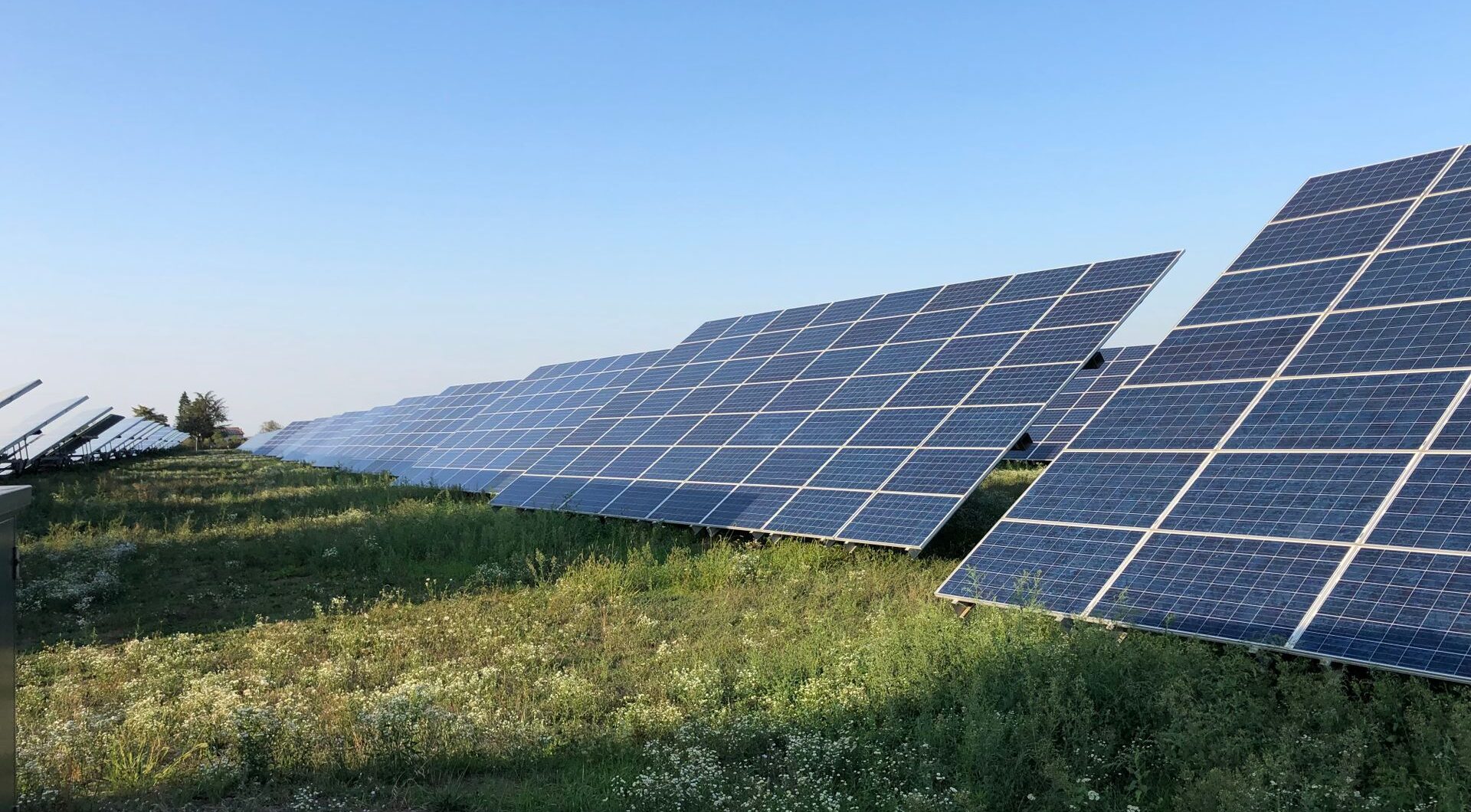
Feature image by Diego Vivanco from Pexels