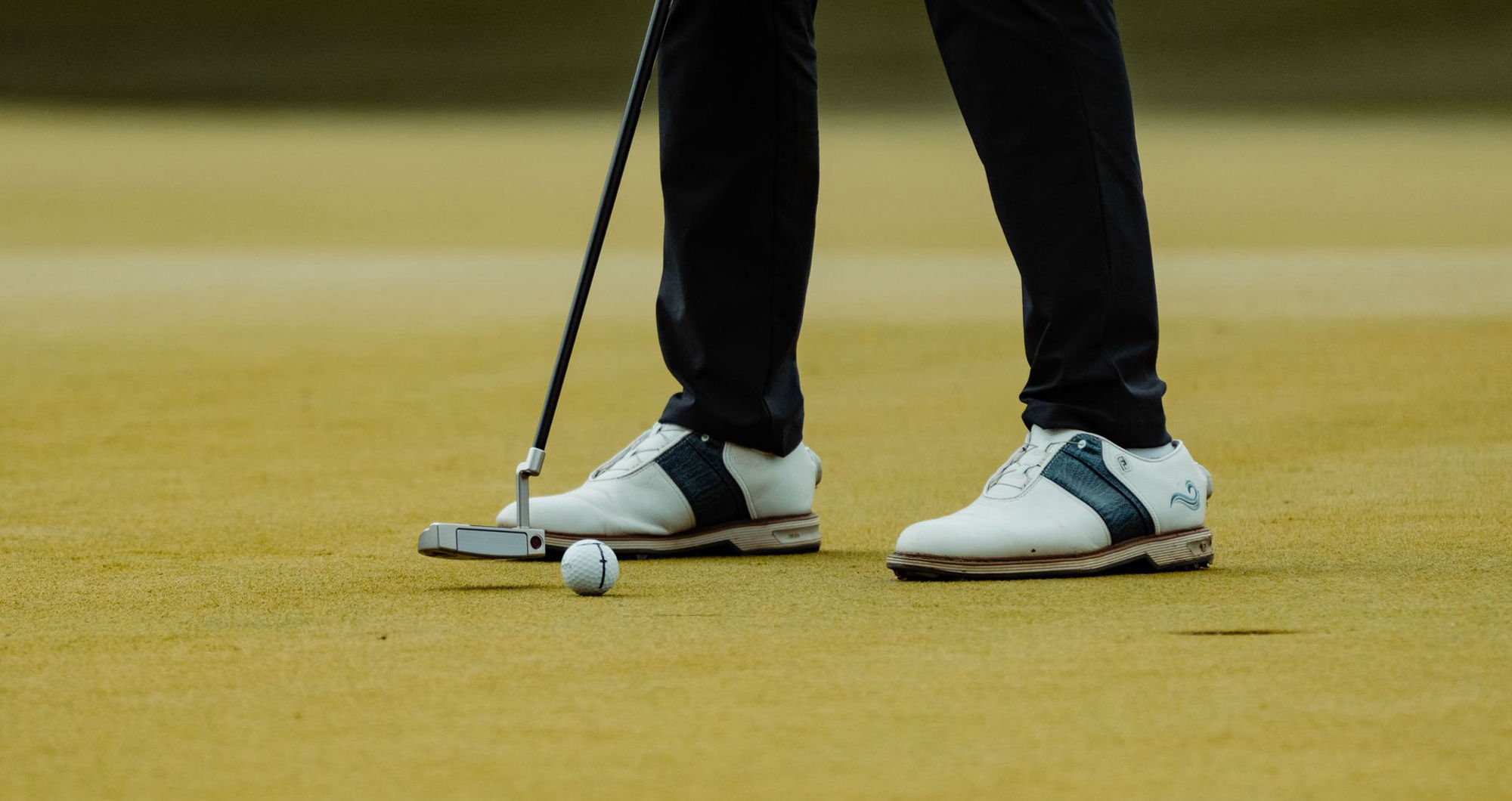

The shoes feel terrific on the first tee. They’re clean, the laces are snug, and the grass is still wet from the morning dew. Nothing to complain about.
By the thirteenth hole, though, your little toe has started rubbing against the upper. There’s a hot spot developing on one heel, and the long walk from the previous green wasn’t particularly pleasant.
You begin wondering whether the shoes were a good purchase after all.
Golfers spend plenty of time considering what they’ll wear for a round, but footwear often gets chosen for appearance, grip, or familiarity with a particular brand. Those things matter. Yet walking a full course asks rather more of a shoe than a few practice swings outside the clubhouse.
The longer you stay on your feet, the more important the small details of fit become.
Walking a Golf Course Is Different From an Ordinary Stroll
Golf doesn’t involve eighteen holes’ worth of continuous walking. There’s plenty of stopping, standing, turning, and occasionally climbing a slope to retrieve a ball that had other plans.
That mixture is part of what makes golf footwear unusual.
On a typical round, you might walk several miles. The actual distance depends on the course layout, the route between holes, and how often you wander away from the fairway.
Someone playing a compact parkland course will have a different experience from a golfer navigating long stretches between greens and tees.
Walking surfaces also change throughout the round. Firm paths give way to grass, bunker edges, damp slopes, and occasionally muddy ground.
A shoe that feels comfortable on the practice mat hasn’t yet proved itself on those surfaces.
Why Golf Shoes Often Feel Tighter on the Back Nine
Feet don’t always occupy exactly the same amount of space throughout the day.
After several hours of walking or standing, a little fluid may collect in the lower legs and feet. Warm weather can make this more noticeable.
The result is familiar to anyone who has finished a round desperate to loosen their laces.
A shoe that fitted neatly around the forefoot at 8 a.m. may be pressing against the little-toe joint by lunchtime.
FootJoy’s fitting guidance specifically recommends trying golf shoes later in the day because foot volume can change after activity.
That doesn’t mean buying footwear that’s loose from the outset.
It means leaving enough room for the toes and forefoot while keeping the heel securely positioned.
A golfer who chooses shoes solely for their snug feel in the shop may discover that the same fit becomes uncomfortable after several miles.
A Secure Heel and a Comfortable Forefoot Aren’t Opposites
There’s a tendency to describe well-fitting golf shoes as tight.
What golfers usually want, however, is security.
Your heel shouldn’t repeatedly rise out of the back during walking. Nor should the midfoot slide around when you rotate through a swing.
But that doesn’t mean your toes should be squeezed together.
Consider someone whose forefoot is noticeably broader than their heel. A standard-width golf shoe might fit securely at the back while pressing against the sides of the toes.
Moving up a full size could ease the pressure, although the heel may then become too loose.
For these golfers, wide-fit golf shoes can be worth trying in their measured length rather than choosing an unnecessarily long pair.
A well-shaped wide shoe can provide additional room through the forefoot without sacrificing the security needed elsewhere.
The important thing is to try the shoes properly. Width labels are useful, but different manufacturers build their footwear around different shapes.
The Flex Point Matters More Than Most Golfers Realise
Take a golf shoe in your hands and bend the front gently.
Notice where it folds.
That position is relevant because the foot naturally bends around the ball during walking. A shoe with its main flex point too far forward may not move comfortably with your foot.
FootJoy identifies the relationship between heel-to-ball length and shoe flex as an important part of fitting.
This explains why simply buying a longer size can cause trouble.
The extra length may create room for a broad forefoot, but it also changes the relationship between the foot’s joints and the shoe’s construction.
During a long round, even a modest mismatch can become annoying.
Check the flex point when trying shoes, especially if you’ve recently moved to a larger size to escape pressure across the toes.
Why Golf Shoe Grip Needs to Suit the Course
The argument between spiked and spikeless golf shoes has been going on for years.
Traditional spiked designs use cleats or similar traction elements to grip the turf. Spikeless shoes generally rely on moulded lugs and patterned rubber outsoles.
There’s no single answer for every course.
A golfer playing through a wet British autumn may encounter slippery slopes, soft fairways, and damp banks around bunkers. Traction becomes particularly important in those conditions.
On dry summer ground, a well-designed spikeless shoe may feel entirely suitable.
The outsole also needs to perform during the swing, when the feet apply force against the ground while the body rotates.
But don’t confuse outsole grip with internal fit.
A shoe can grip wet grass brilliantly while allowing your heel to slide inside it. Equally, a comfortable upper won’t compensate for tread that struggles on the surfaces you regularly encounter.
Both deserve attention before buying.
Cushioning Should Still Feel Good After Several Miles
Step into a pair of heavily cushioned golf shoes and they may feel wonderful immediately.
That first impression doesn’t tell you how they’ll behave over eighteen holes.
Some midsoles compress more easily than others. A very soft design might appeal to one golfer, while another prefers a firmer feel beneath the heel and forefoot.
There’s also the matter of stability.
Golf involves walking across sloping lies and making rotational movements from positions that aren’t always perfectly level.
The shoe should feel reasonably settled beneath your foot rather than excessively unstable.
A golfer with tender heels may appreciate additional cushioning. Someone who dislikes a soft, sinking sensation might prefer a firmer midsole.
Neither preference is automatically wrong.
Try several constructions rather than assuming that the thickest sole offers the best walking experience.
What Toe-Box Shape Has to Do With Walking Comfort
Look at the shape of your bare foot while standing. Then compare it with the front of your golf shoe.
Some people have a fairly narrow forefoot. Others have toes that spread noticeably, particularly around the joints behind the big and little toes.
A tapered toe box may feel restrictive for the second group.
During a swing, pressure shifts across the feet. Between shots, walking repeatedly brings the forefoot into contact with the upper.
If the shoe is already tight around the toe joints, that repeated movement can become uncomfortable.
FootJoy recommends approximately half an inch, or 12.7 millimetres, between the longest toe and the front of the shoe.
There’s another part of the measurement that people forget: width.
A shoe can have plenty of space beyond the toes while still squeezing them together from the sides.
Don’t Forget the Socks You’ll Actually Wear
Trying golf shoes in thin everyday socks isn’t especially useful if you normally play in thicker sports socks.
The extra fabric changes how much space remains inside the shoe.
This becomes more noticeable in colder weather, when some golfers switch to warmer socks.
A snug summer fit may suddenly feel restrictive during winter rounds.
Moisture also affects comfort. Damp socks and repeated movement can increase friction, particularly around the heel.
Choose socks appropriate for the conditions and bring a similar pair when shopping for footwear.
If you use orthotic inserts, take those along too.
A thicker orthotic can raise the foot inside the shoe, leaving less room over the instep. FootJoy’s fitting guidance specifically highlights the importance of checking whether an orthotic works with the shoe’s existing internal volume.
Why Waterproofing Deserves a Closer Look
British golfers know that a dry forecast doesn’t guarantee dry feet.
Early-morning dew can soak the grass, even on an otherwise pleasant day. A stray shot into rough vegetation introduces another opportunity for moisture to reach your socks.
Waterproof golf shoes can be useful when those conditions are common.
But waterproof construction varies.
Some designs use waterproof membranes beneath the outer material. Some brands keep water out with treated leather, sealed seams, or a mix of both. Just watch the wording on the label: “water-resistant” does not promise the same level of protection as “waterproof.” And when the weather is warm, keeping your feet from getting hot and clammy matters too.
If your feet become hot and damp inside the shoes, the experience may be unpleasant despite the rain staying out.
Consider the weather in which you actually play rather than choosing waterproofing purely because it sounds like a premium feature.
How to Test Golf Shoes Before Buying Them
Don’t make the decision while sitting on a shop bench.
Wear both shoes, fasten them as you would for a round, and walk around for a few minutes.
Try turning, stepping sideways, and making a gentle practice swing if there’s room.
Notice whether the heel stays in place and whether the forefoot feels comfortable as your weight shifts.
FootJoy recommends checking the shoe’s flex point and making sure there’s no excessive internal movement during walking.
Pay attention to the eyelets, too. If the upper needs to be pulled excessively tight to hold your foot, or the laces barely bring the sides together, you may need a different fit.
For golfers who repeatedly experience pressure around the forefoot, comparing wide fit golf shoes with standard-width models may reveal a better option without increasing length.
And don’t assume discomfort will disappear after breaking the shoes in. A poorly shaped toe box rarely becomes a perfect match simply through repeated wear.
When Is It Time to Replace Your Golf Shoes?
Some golfers judge their footwear entirely by appearance.
If the leather still looks smart, they assume the shoes have plenty of life left.
But tread can wear down, heel linings can become damaged, and midsoles may lose some of their original cushioning.
Check for uneven outsole wear, recurring heel movement, or areas where the upper has stretched around the toe joints.
Waterproof protection may also deteriorate.
There’s no universal number of rounds after which golf shoes must be replaced. A golfer playing twice weekly in wet conditions will place different demands on footwear from someone who plays occasionally through summer.
If a pair has become uncomfortable despite previously fitting well, inspect the shoes and consider whether your foot shape has changed.
Good Golf Footwear Should Last the Whole Round
The first tee isn’t the best place to judge a golf shoe.
The real test comes after hours of walking, climbing, turning, and standing over shots while the weather and ground conditions change.
A comfortable fit requires more than the right length. The forefoot needs room, the heel should remain secure, and the sole must behave sensibly on the surfaces you’re likely to encounter.
Golf already gives players enough to think about.
You don’t want to reach the final green wondering how quickly you can take your shoes off.
FAQs About Golf Shoes for Walking 18 Holes
Are golf shoes suitable for walking several miles?
They should be, provided they’re designed for your foot shape and the course conditions. Notice whether your heel stays put, whether your toes have enough room, and whether the sole still feels comfortable once you have been walking for a while.
Why do golf shoes hurt after nine holes?
A small pressure point can become increasingly irritating after hours on your feet. Swelling, rubbing, or an unsuitable width may explain why the shoes felt fine earlier.
Should golf shoes fit tightly?
Securely, yes. Tightly around the toes, no. You want the heel held in place without squeezing the forefoot every time you walk or turn.
Are wide golf shoes better for long rounds?
They may be for golfers whose standard-width shoes press against the sides of their feet. Extra width won’t help much if the heel becomes loose, so the whole fit still matters.
Is it better to wear spiked or spikeless shoes when walking?
Think about the ground. Wet slopes may call for more aggressive traction, while many spikeless designs work well on firmer courses. Comfort and outsole quality matter in either case.
How much room should golf shoes have around the toes?
FootJoy suggests roughly half an inch beyond the longest toe. Make sure the toes aren’t being squeezed from the sides as well.
Do feet swell during an eighteen-hole round?
Some golfers notice their shoes becoming tighter after several hours of walking, especially in warm weather. Trying footwear later in the day can help reveal fitting problems.
Can I wear my normal orthotic insoles in golf shoes?
Often, but bring them to the fitting. A thick insert may leave the foot sitting too high, making an otherwise comfortable shoe tight across the instep.
How often should walking golfers replace their shoes?
Look for worn tread, damaged heel linings, reduced comfort, or failing waterproof protection. Frequency of play and ground conditions matter more than an arbitrary replacement date.
Do I need waterproof golf shoes in the UK?
Not necessarily. They are most useful on courses that stay damp or when the weather has a habit of turning halfway through a round.Remember that waterproofing and breathability are separate considerations.
Feature image by Pexels