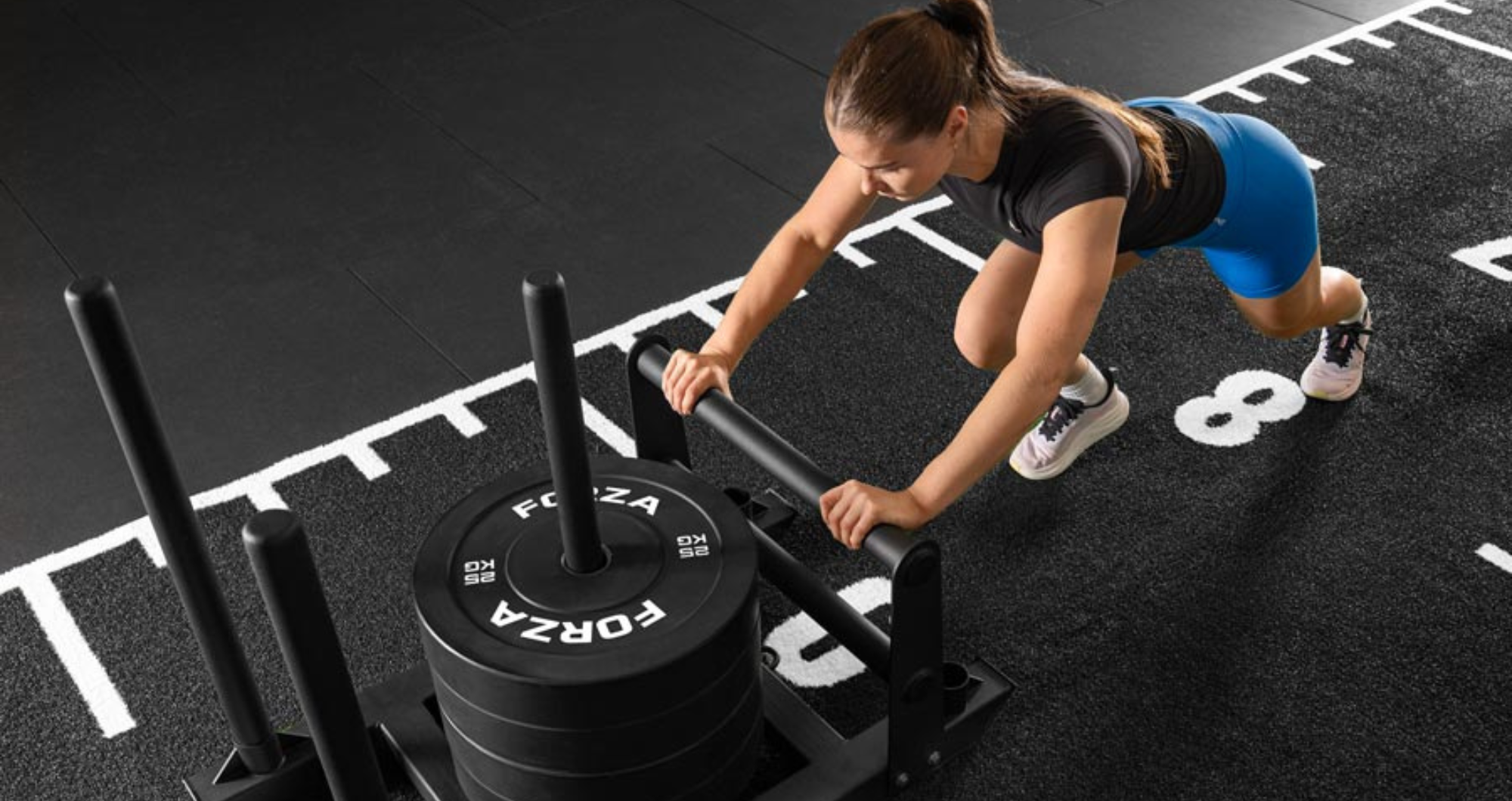

There has been a major shift in gyms around the UK. Typically, most people would do 45 minutes on the treadmill followed by weight training or functional fitness exercises. Now, the pendulum has swung, and instead training has turned into a race where the key is momentum, endurance and strength. The age of purpose driven fitness is here and HYROX is leading the charge.
I’ve seen this shift first hand in my job. Demand for HYROX-specific training equipment has grown so significantly that many brands are now developing their own dedicated HYROX package bundles which include weight sleds, kettlebells, wall ball and power bags, tailored specifically to the loads athletes face on race day. When sports retailers are building entire product lines around a fitness format, it tells you something important about the scale of the movement.
According to industry publication Endurance.biz, HYROX has seen a 5,614% surge in UK participation since its debut at London ExCeL in 2021, while ROXLYFE reported that 24,000 people competed at HYROX London alone in 2023. The December 2025 London ExCeL event expected over 40,000 athletes to compete across four days, with 30,000 spectators anticipated to attend. To put that into perspective, that’s only around 19,000 fewer athletes than the amount that competed in the most recent London Marathon, which has been going since 1981.
What exactly is HYROX
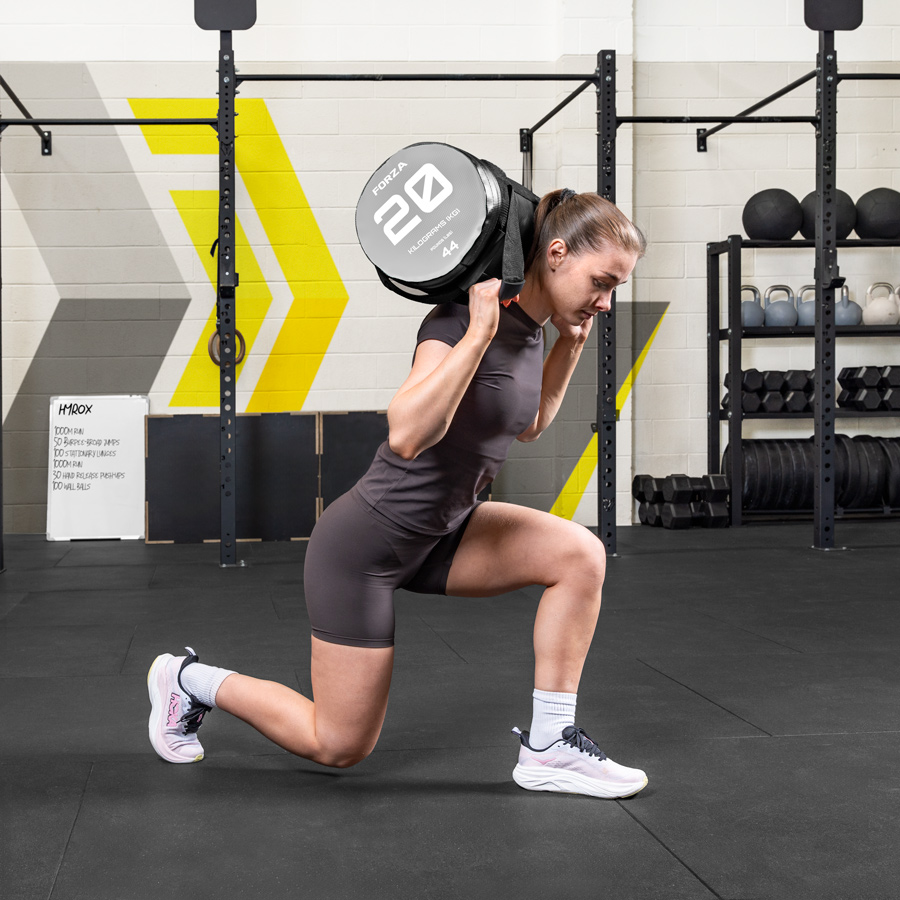
HYROX is still relatively new to many, founded in Germany in 2017 by Christian Toezke and Moritz Fürste, with the very first event taking place in 2018. The concept is relatively simple, it is a combination of races which include eight one kilometre running segments with eight functional fitness workouts, including movements familiar to most gym goers such as sled pushes, rowing, lunges and wall balls, highlighted by Infront Sports. The format is identical at every event worldwide, which means you can compare your time to someone racing in Singapore or New York. No specialist skills are required, it is important to prepare as it is a test of endurance and strength, but for most just having the willingness to push yourself can be enough.
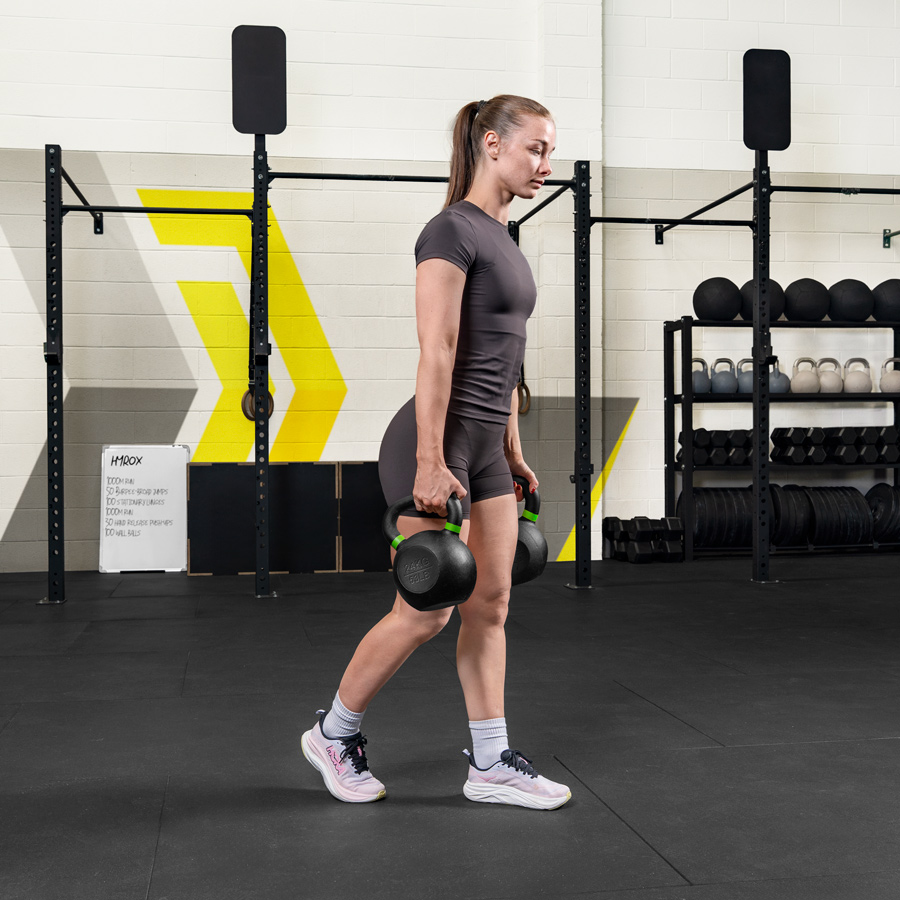
Having developed a HYROX range, I have a good understanding of exactly what athletes need at each station. The equipment requirements are deliberately standardised, so the same weights, the same movements, the same distances everywhere in the world. That consistency isn’t just what makes HYROX fair, it’s what makes it so compelling. You always know exactly what you’re training for.
Why is it growing so fast?
The appeal is no accident, 70% of participants are usually first time HYROX athletes, and the sport has steadily increased its share of female competitors alongside a strong representation of athletes aged 30 and above. Showing that it isn’t just an event for elite athletes, it is built for ordinary people with a goal.
Compare that to CrossFit, which requires more technical skill or traditional marathons which demand months of high volume running. HYROX has none of those limitations, as none of the components are technically demanding, and people with a wide range of abilities can perform the movements to complete the race. The 98% finish rate speaks volumes to how inclusive the format is.
How gyms are adapting
Many gyms up and down the UK have noticed this trend and acted, over 350 gyms across the UK now offer HYROX-certified classes, and the demand for functional training spaces is reshaping how new gyms are designed. The traditional treadmills and cable machines are starting to give way to more open functional floor spaces with assault bikes, sled tracks and rowing machines. The surge in demand we have seen for HYROX equipment from both commercial gyms and home athletes reflects this shift directly. Gyms that haven’t adapted are already feeling the pressure from those that have.
According to IMARC Group and ukactive data, UK gym memberships increased by 6.1% in 2024, reaching 11.5 million members, but the more interesting story is what those members are doing. Functional training, performance-based classes and competition preparation are consistently outperforming traditional cardio equipment in engagement.
Hybrid fitness beyond HYROX
But we can’t just base all of this on one event, as what HYROX represents is a broader culture shift towards hybrid fitness. It is training that combines strength, endurance and functional movement rather than specialising in one. In 2026, the trend has shifted from ‘looking fit’ to longevity and functional health, with people realising that consistency beats intensity.
We’re seeing this shift reflected in buying behaviour too. Customers are increasingly looking for equipment that supports structured, goal-led training rather than one-off fitness purchases. Sleds, wall balls, kettlebells and power bags are no longer niche pieces of kit; they are becoming central to how people train for hybrid fitness.
Is it accessible to beginners?
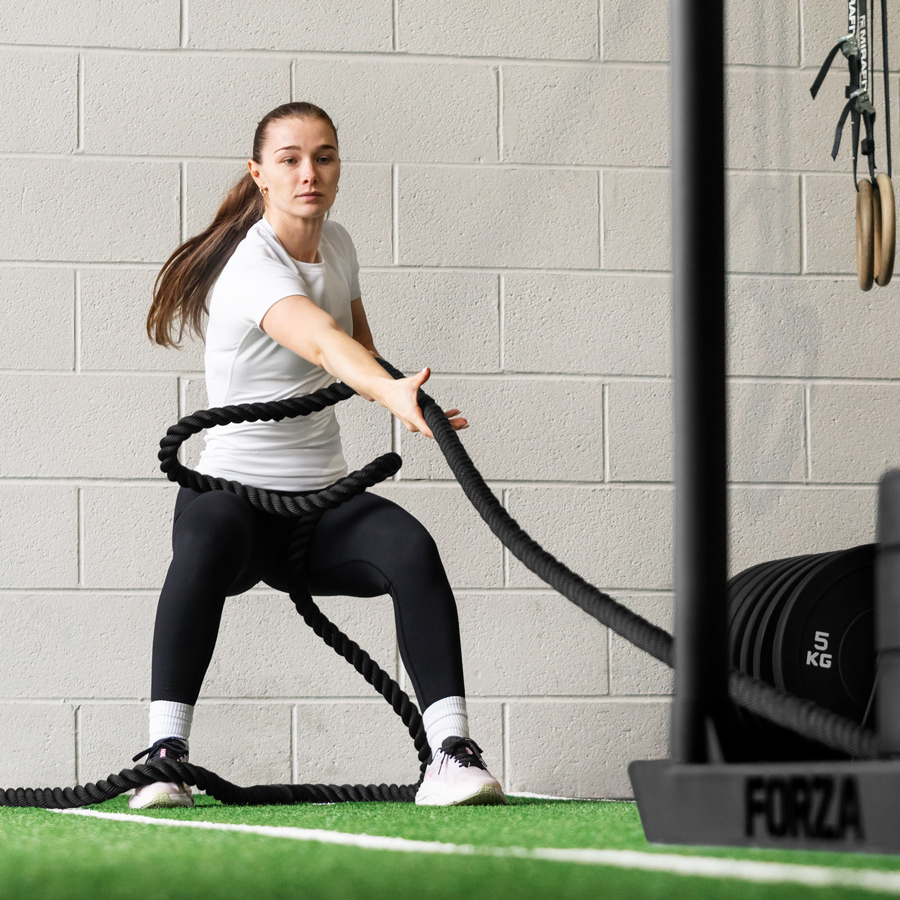
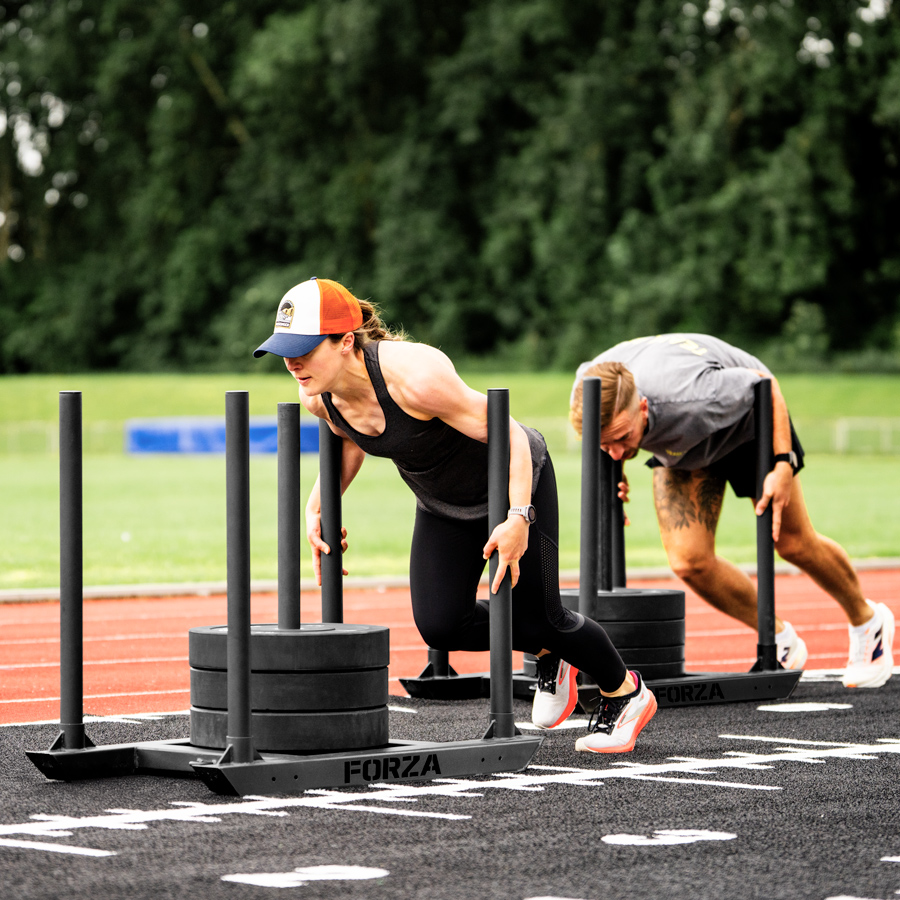
A question I get asked a lot is how accessible is HYROX for beginners? In short, it is very accessible as long as your approach is right. The biggest mistake people tend to make is treating their first HYROX like a race to win rather than a race to finish. You should start by building your cardiovascular fitness alongside some functional movement patterns including rowing, lunges, sled work and wall balls. If you are looking to get your first race booked, then give yourself at least 12 weeks to prepare and train consistently.
Doubles and relay formats also make the event very accessible, racing with a partner or as a team of four changes the dynamic entirely as it is more of a shared experience than a solo grind.
What comes next?
Well, by the end of the 2025-26 season, HYROX is expected to report over 1.3 million participants globally, with events spanning across more than 85 cities, in 30 countries. In the UK, the sport’s trajectory shows no sign of slowing down. If anything, the London week of fitness in March featuring six full days of racing at Olympia signalled just how seriously the UK market is being taken.
About the author
Anwen Davies is a certified personal trainer and gym and fitness product developer at Net World Sports, where she leads the development of the company’s gym range. She also co-founded The Lady Lab coaching programme.