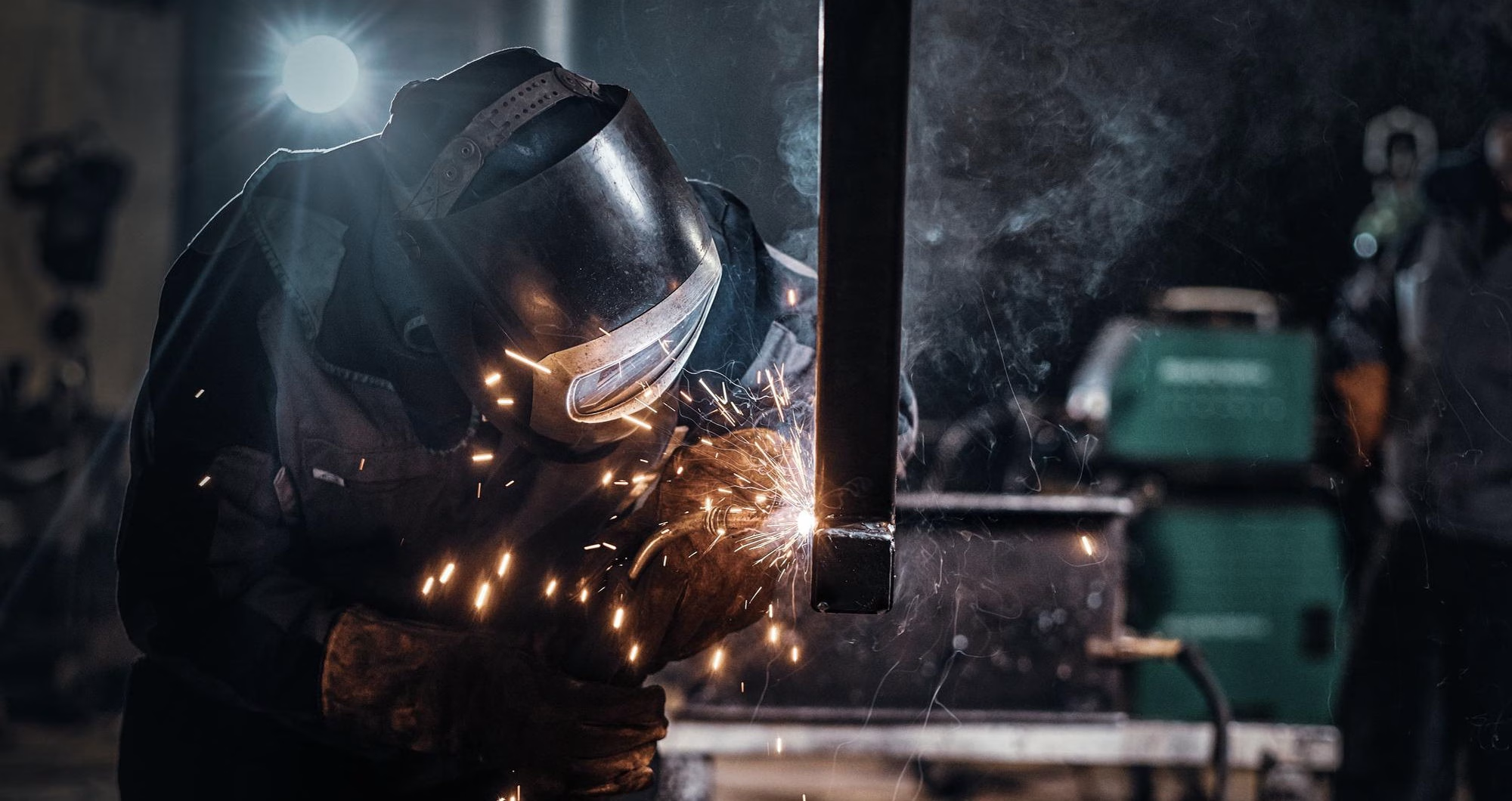

The automotive industry is always changing. New technologies are being introduced to make cars safer, stronger, and more efficient. One important part of this change is heat treatment technology. Heat treatment plays a key role in making car parts stronger and more durable. Recent innovations in this field, including Induction heating technology, are helping automakers produce better quality vehicles while also improving efficiency and reducing costs.
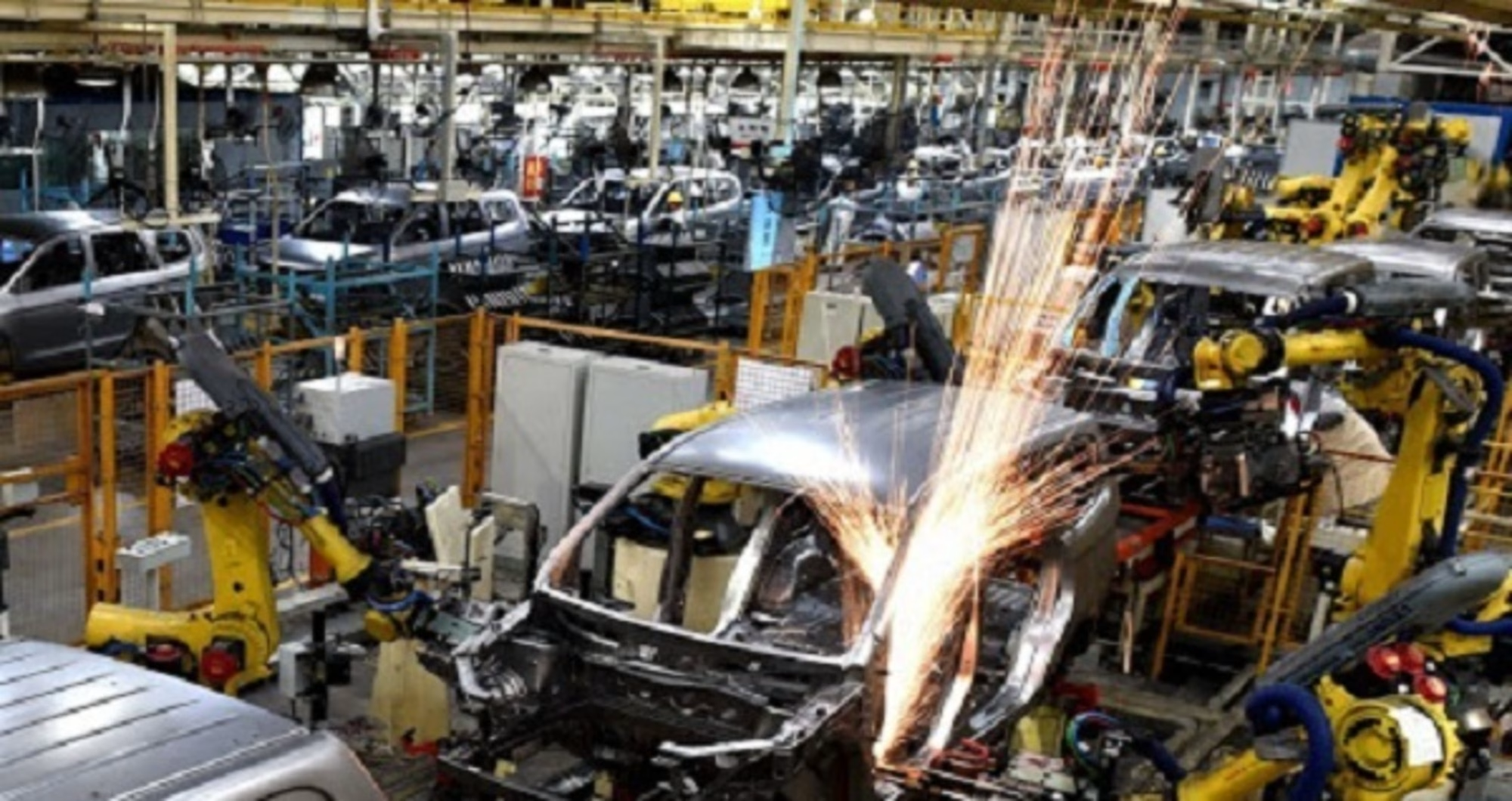
What is heat treatment in the automotive industry?
Heat treatment is a process where metal parts are heated and cooled in a controlled way to change their physical and mechanical properties. This process does not change the shape of the parts but improves how they perform, especially in applications like gear heat treatment, where strength and durability are essential.
In cars, heat treatment is used for many components, including:
- Engine parts
- Transmission gears
- Axles
- Suspension systems
These parts must handle high stress, friction, and heat during everyday driving. Without proper heat treatment, they could wear out quickly or even fail.
New innovations in heat treatment
In recent years, heat treatment technology has advanced a lot. These new methods help manufacturers produce stronger, longer-lasting car parts with better precision and less waste.
1. Precision-controlled atmosphere furnaces
In the past, controlling heat treatment conditions was more difficult. Now, modern atmosphere furnaces use advanced sensors and computer systems to keep temperature and gas levels exactly where they need to be. This precision reduces problems like distortion (bending) and scaling (surface damage), ensuring every part meets strict quality standards.
2. Vacuum heat treatment
Vacuum heat treatment removes air and processes parts in a sealed space. This prevents oxidation and contamination, keeping the surface of parts smooth and clean. This method is very useful for high-performance parts like gears in racing cars or turbocharger components.
3. Induction hardening
Induction hardening uses electromagnetic fields to heat specific areas of a part very quickly. This method is fast, energy-efficient, and only strengthens the areas that need it most. For example, it can harden the surface of a gear without affecting the rest of the material.
4. Low-pressure carburising (LPC)
LPC adds carbon to steel parts at low pressures, giving them deep and even hardening without damaging the surface. When combined with high-pressure gas quenching, this method is especially useful for parts like gears, making them stronger and more resistant to fatigue.
5. AI and data analytics in heat treatment
Artificial Intelligence (AI) and data analytics are now being used to monitor the heat treatment process in real time. These systems can spot small problems before they turn into big issues, predict when equipment might fail, and automatically adjust settings for better results. This leads to fewer defective parts and faster production.
How these innovations improve quality
Stronger and longer-lasting parts
Better heat treatment methods make car parts stronger and more resistant to wear and tear. This means vehicles last longer and require less maintenance, which saves money for drivers.
More consistency and reliability
Automated systems ensure that every part is treated the same way, resulting in consistent quality. This is especially important for large-scale production where thousands of parts must meet the same standards.
Energy savings and sustainability
Modern heat treatment equipment uses less energy and produces fewer emissions. This helps manufacturers reduce costs and meet environmental regulations while still producing high-quality parts.
Supporting new materials
Automakers are now using lightweight materials such as high-strength steels and aluminium to make cars more fuel-efficient. Advanced heat treatment methods allow these materials to be strong enough to meet safety requirements while still keeping vehicles light.
Future of heat treatment in the automotive industry
The future of heat treatment will likely include:
- Even more use of smart technology for precision and monitoring
- Environmentally friendly processes to reduce pollution
- New techniques to treat advanced materials for electric and autonomous vehicles
As cars become more advanced, heat treatment will continue to play a key role in ensuring that parts remain strong, safe, and reliable.
Conclusion
Innovations in heat treatment technology are making a big difference in the automotive industry. They are helping manufacturers create parts that are stronger, more reliable, and more environmentally friendly. From vacuum heat treatment to AI-driven monitoring, these advancements are shaping the future of car manufacturing.
Feature Image from Freepik