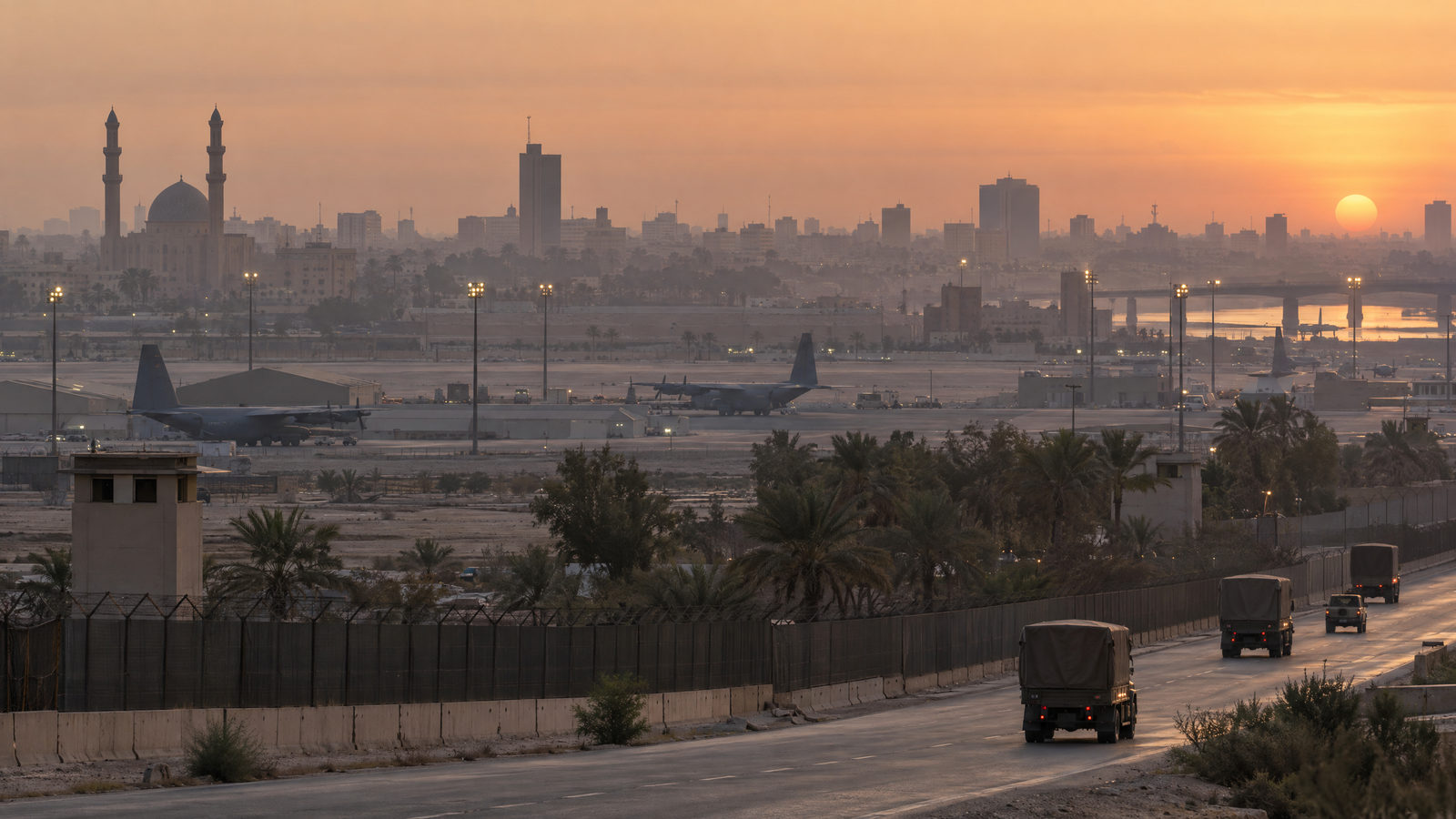

The deadline set for the remaining United States military departure from Iraq arrived on Wednesday alongside two developments that underline how the wider regional conflict is being fought in politics and diplomacy as well as through force. American personnel were due to leave their remaining Iraqi bases under a 2024 agreement with Baghdad. At the same time, Iran’s Islamic Revolutionary Guard Corps released a letter aimed directly at voters in the United States, while Qatar said it was still passing messages between Washington and Tehran.
A deadline, rather than a confirmed final movement
The US-Iraq agreement set 30 September as the date for the end of the remaining American mission in the country. The reporting reviewed for this article described the forces as due to withdraw on Wednesday. It did not include a public, time-specific military statement confirming the exact completion of every final movement. That distinction matters: the arrival of a deadline is established, while the final operational status should not be overstated without an official announcement.
The change nevertheless marks a significant point in the relationship between Baghdad and Washington. US-led forces first toppled Saddam Hussein in 2003. US troops left Iraq in 2011, then returned in 2014 to assist the Iraqi campaign against the Islamic State group. The agreement made in 2024 envisaged the final departure from Iraq on this date, ending the remaining mission there rather than ending all relations between the two countries.
Iranian letter addresses US electorate
The 26-page letter, published on Tuesday by the Revolutionary Guard, called on Americans to use their political power against the current US leadership and to reject US support for Israel and military intervention abroad. It was issued ahead of congressional elections in the United States. The letter is a political appeal by an Iranian military body, not evidence of how American voters will respond.
Iranian authorities have portrayed the planned US departure from Iraq as a success for their regional allies and have said they want American forces to leave the wider Middle East. Those are Iran’s stated positions. They do not settle the separate questions of Iraq’s future security arrangements or the direction of its relationship with Washington after the mission ends.
Qatar says indirect contacts continue
In Doha, a Qatari government spokesperson said the country was continuing efforts to bridge differences between the United States and Iran. He said the preceding days had included meetings and exchanges of messages, with some contacts taking place in New York during the UN General Assembly and others beforehand. The stated aim was to find common ground, but the statement did not announce an agreement.
The mediation remains important because previous rounds of talks and ceasefires have not produced a durable route out of the conflict. Qatar’s spokesperson said any agreement faced obstacles and that the immediate work was to overcome them. He also said the focus included the resumption of freedom of navigation in the Strait of Hormuz and the security concerns of regional states.
Before the war began, the strait carried about a fifth of global oil and liquefied natural gas shipments. Its closure or restricted use has therefore had consequences beyond the states directly involved. Iran has put forward a proposal linking a pause in fighting and the reopening of the route to wider steps; the US president has publicly rejected that proposal, while Iranian officials said no formal rejection had been transmitted through mediators at that point.
The events of the day should not be read as a settlement. The Iraq deadline, the Iranian appeal to US voters and the continuing Qatari contacts are separate but connected parts of an unsettled regional picture. The departure timetable changes the military position in Iraq; it does not by itself resolve the talks, navigation dispute, or broader conflict.