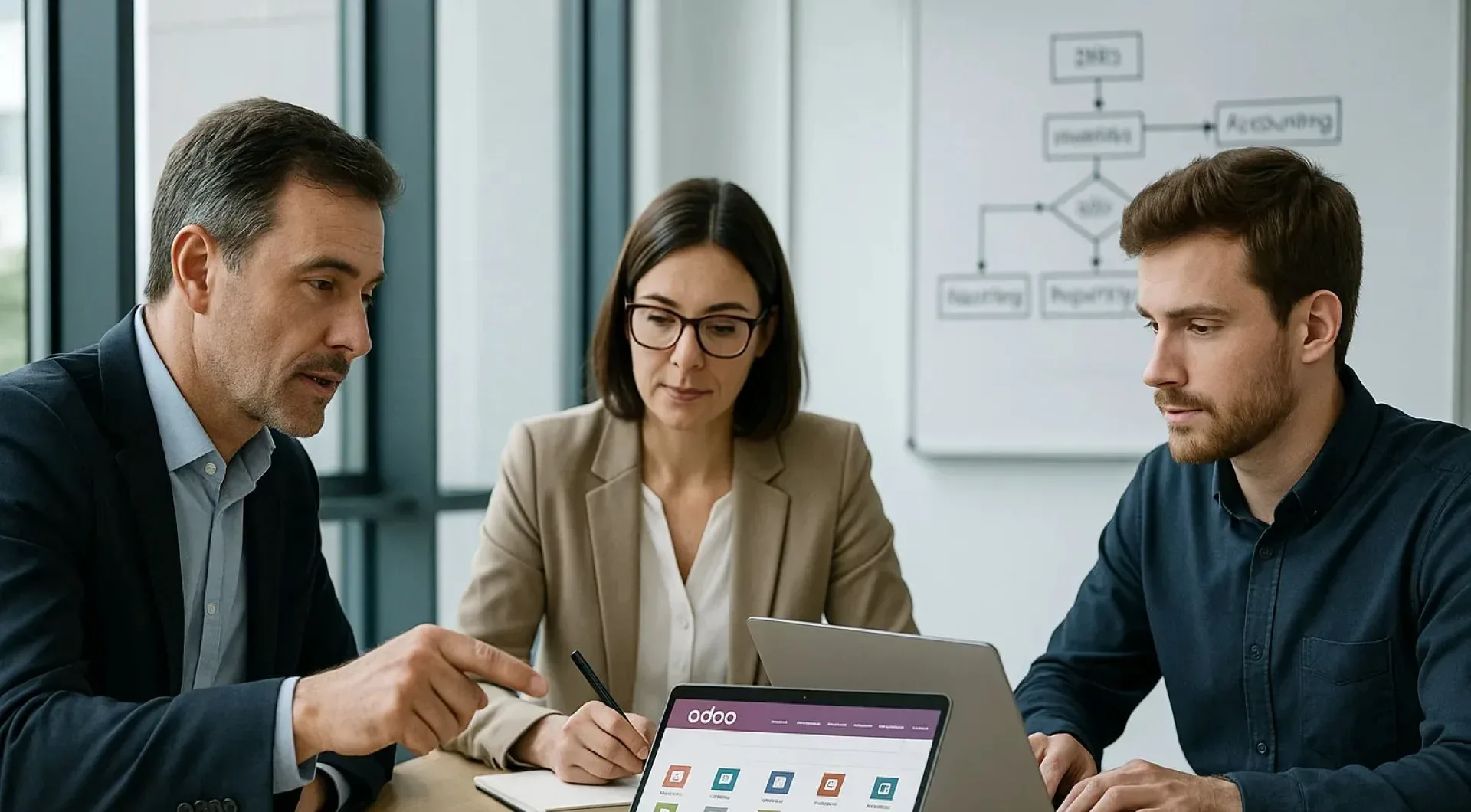

The traditional ERP consulting model is starting to show its age. Once hailed as the backbone of enterprise transformation, many ERP advisory firms now face growing scepticism from businesses frustrated with long timelines, bloated budgets, and misaligned systems. As technology changes faster than legacy processes can keep up, the old approach of separating ERP strategy from technical implementation is no longer sustainable.
Enter the new wave of ERP solutions, and with them, a shift in how consulting is done. Companies are beginning to turn away from high-cost, siloed consulting models and toward integrated advisory-development frameworks, particularly those based on open-source platforms like Odoo. In this new setup, Odoo consulting services and hands-on development expertise work side by side from day one. The result? Faster rollouts, tighter alignment, and better business outcomes.
The Problem with Legacy ERP Consulting
The original intent behind ERP consulting was sound: hire specialists to map out business needs and define system requirements before handing those over to developers. But this handoff model, while structured, often creates gaps. The consultant rarely understands platform constraints, while the developer may not grasp the strategic nuances behind the plan.
This disconnect has led to widespread pain points. Companies report that implementations take months longer than projected, budgets spiral out of control, and the final system doesn’t match what teams need. Worse, employees find themselves stuck with tools that don’t reflect how their departments function.
Over time, this disconnect has eroded trust in the ERP advisory model. And it’s raised a fundamental question: is this two-tiered approach still relevant?
An Agile Alternative for a Fast-Moving World
The modern business environment doesn’t allow for slow ERP rollouts. Companies expect fast, iterative, and cost-controlled transformations that evolve with their workflows, not six-month audits followed by rigid implementation roadmaps. This is where agile ERP strategies have stepped in.
Agile ERP is less about documentation and more about continuous alignment. Business needs are addressed in real time, not after multiple layers of approvals. Requirements are validated through rapid prototyping, with adjustments made as users test real systems. Flexibility, not finality, drives the process forward.
Platforms like Odoo naturally support this approach. Odoo’s modular structure makes it possible to implement systems in stages, reduce dependency on heavy upfront planning, and adjust scope without breaking the entire build. That agility makes it ideal for growing businesses or enterprises undergoing fast changes.
Where Odoo Consulting Services Fit In
The role of Odoo consultants has evolved to reflect this shift. Rather than operating in a purely strategic capacity, today’s Odoo consulting services work much closer to the core development team. These consultants bring technical understanding to business conversations, translating operational goals into actionable system requirements that reflect Odoo’s capabilities and limitations.
At their best, these consultants don’t just document processes, they optimise them. They identify pain points in current workflows, map out which Odoo modules align best, and propose streamlined alternatives. They also factor in key concerns like automation potential, scalability, and integration readiness.
What sets this model apart is the consultant’s hands-on experience with the actual Odoo ecosystem. They understand not only what the business needs, but also how those needs translate into module functionality. This method emphasises practical implementation aligned with Odoo’s core capabilities, rather than relying on high-level advisory models. Further information is available through the official documentation on Odoo consulting services.
Closing the Loop: Development Becomes a Strategic Partner
While the consulting side is becoming more technical, the development side is also shifting gears. In the older model, developers were brought in only after all documentation had been finalised. But in modern Odoo delivery teams, developers are embedded into strategy sessions from the start. Their early involvement ensures feasibility checks happen in real time, not after weeks of planning.
These developers handle more than just setup. They write custom code for features that don’t exist out of the box. They build integrations that connect Odoo to third-party tools. They address complex workflows that require more than a drag-and-drop configuration. Critically, they understand when a proposed solution is over-engineered and offer simpler, cleaner alternatives.
By operating in lockstep with consultants, the development team becomes a co-architect of the ERP solution. The result is faster development, fewer roadblocks, and systems that are more stable at launch. Organisations interested in this integrated approach can explore how a dedicated Odoo development company supports such builds.
A New Technical Blueprint for ERP Advisory
In this new model, implementation follows a clear, collaborative path. The initial phase focuses on understanding core operations, not just at the department level but across teams. Odoo experts run workshops to map out workflows, identify inefficiencies, and define goals.
From there, small prototypes are built not as polished products, but as rough sketches to validate ideas. These are tested, revised, and slowly expanded. Once a design is solidified, development accelerates. Teams work on customisations, API connectors, and automation scripts that align with how users do their jobs.
By the time the system is ready to go live, it’s already been tested by end users in realistic scenarios. Post-launch, the same teams provide support, ensuring issues are resolved quickly and adjustments can be made as the business evolves.
This delivery model isn’t about ticking boxes; it’s about building a system that reflects how the business truly works.
The Results: Faster, Leaner, Smarter ERP Delivery
Early adopters of this model are already seeing the impact. Companies that previously struggled with year-long ERP transitions are completing projects in under six months. Budgets are more predictable because fewer surprises emerge during implementation. Staff are more engaged because they’ve helped shape the system from the start.
In one example, a logistics firm replaced a monolithic legacy platform with a modular Odoo setup. Thanks to early collaboration between consultants and developers, the team automated warehouse tracking, invoicing, and client reporting without building unnecessary features. The final product delivered exactly what teams needed, and nothing more.
These are the kinds of outcomes that challenge the conventional wisdom around ERP consulting. When planning and execution are integrated, results improve, and the business feels the difference.
New Model, New Challenges
Of course, this hybrid model brings its risks. When consultants wear technical hats, there’s a temptation to customise too much, too early. Over-customisation can create maintenance headaches later. There’s also the risk of skipping over critical documentation in the rush to iterate, which can leave future teams guessing about what was built and why.
Then there’s the issue of change management. Even the best-built ERP system can fail if teams aren’t properly onboarded. Successful transitions require training, user engagement, and leadership alignment, none of which can be replaced by good software alone.
These aren’t flaws in the model, but they are realities that must be managed with care. Firms that succeed in this new model understand that ERP is still a complex undertaking. The difference is that now, complexity is addressed through collaboration, not avoided through abstraction.
What the Future Holds for ERP Advisory
We’re approaching the end of ERP as a strictly segmented process. In the coming years, more firms will adopt the integrated model, where business strategy, system architecture, and code all come from the same room. This is especially true for open-source platforms like Odoo, where modularity and flexibility demand closer alignment between people who think and people who build.
Consulting and development won’t just work together, they’ll become inseparable parts of the same service offering. And clients will benefit not just from faster implementations, but from solutions that genuinely match their business.
ERP consulting isn’t broken beyond repair. But to stay relevant, it must be rebuilt on the foundation of technical experience, agile execution, and shared accountability.