
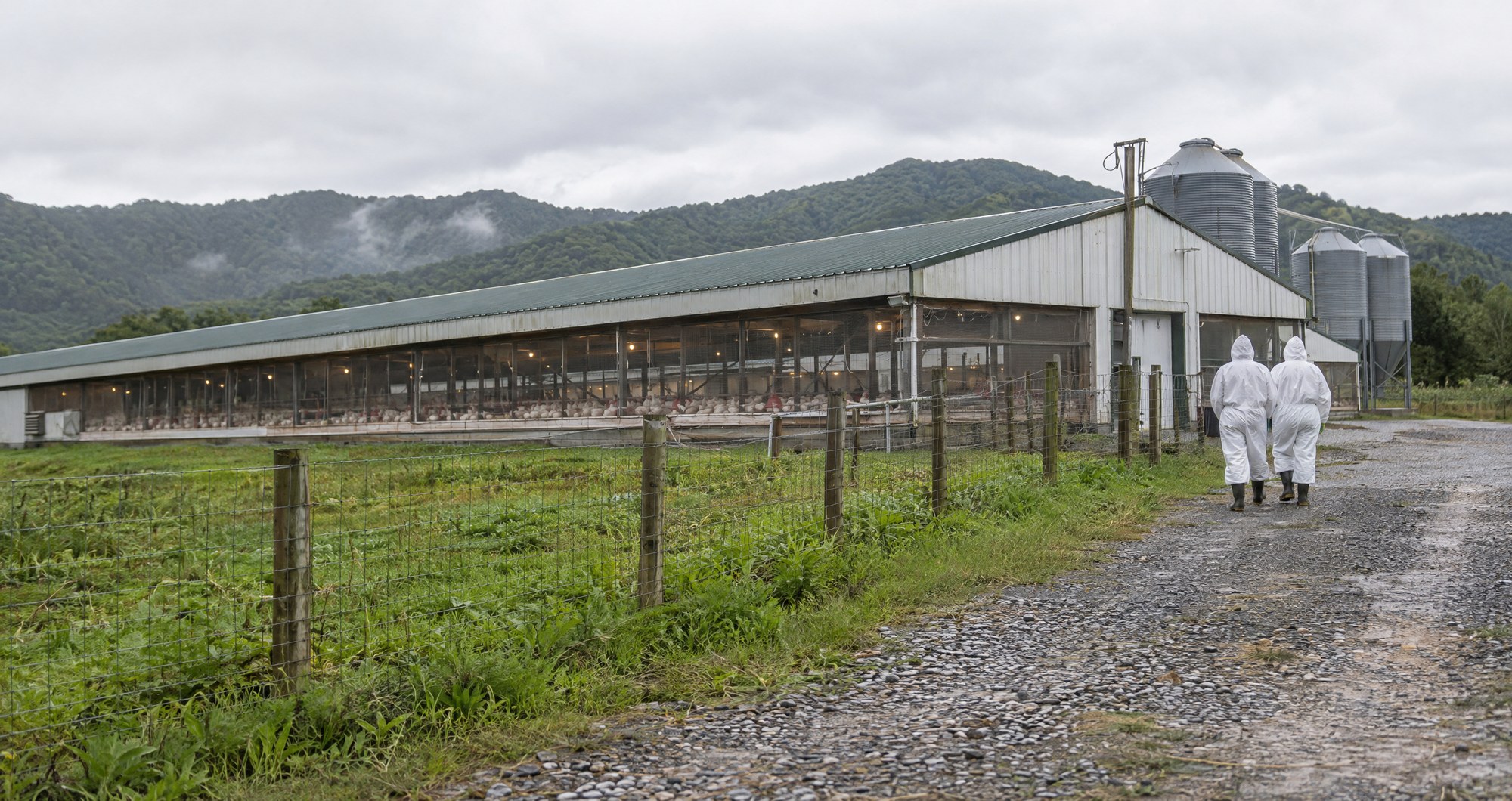

Japan has confirmed its first bird flu outbreak at a poultry farm this season after genetic testing on chickens at an egg-producing farm in Kameoka, Kyoto Prefecture.
Authorities plan to cull approximately 200,000 laying hens at the affected farm. Movement controls also cover seven nearby farms holding about 300,000 chickens. The restrictions on those farms are a precautionary response to the outbreak, not confirmation that their birds are infected.
The agriculture ministry said the case was identified as highly pathogenic avian influenza following a positive genetic test. Under Japan’s animal-disease procedures, the birds were formally designated as suspected affected animals. Local authorities said the virus was of the H5 type.
How the outbreak was detected
The farmer notified the local livestock hygiene centre at 8.50am on Wednesday after finding that deaths had risen in one poultry house. The prefecture recorded 14 chicken deaths there, compared with an average of two a day before that.
Officials inspected the premises at 9.30am. A rapid test returned positive results for all ten birds tested: eight that had died and two others from the same house. Further PCR testing followed, and the national authorities made the disease-control designation at 8.30am on Thursday.
Before the genetic result, the prefecture had told the affected farm to refrain from moving chickens and eggs. It also asked the seven neighbouring farms within 10 kilometres to hold back movements of poultry and eggs while the investigation continued.
Restrictions around the farm
The confirmed response separates the area around the farm into two zones. A movement restriction area extends for three kilometres from the premises. A further area, from three to 10 kilometres away, is subject to restrictions on dispatching poultry and other items out of the zone.
One of the seven nearby farms in Kyoto Prefecture is within the inner area, while six are in the outer area. The controls cover poultry and eggs, among other items. Their purpose is to limit potential spread while officials check for disease in the surrounding area.
The prefecture planned five disinfection points near the zone boundaries and stronger monitoring of wild birds within 10 kilometres of the affected farm, including at ponds visited by waterbirds. The agriculture ministry said farms in the inner restriction area would be checked for signs of an outbreak.
A major containment operation
The prefecture’s provisional schedule provides for several days of culling, followed by cleaning and disinfection of poultry houses. The timetable is a plan rather than a guarantee and can change as work progresses.
Its staffing schedule lists about 4,870 assignments across the response from 11 to 19 November, including work by private contractors. That is a cumulative number of assignments, not a count of different people. Authorities are also arranging the treatment of potentially contaminated material.
The agriculture ministry said an epidemiological investigation team would be dispatched. It also said it would work with Kyoto Prefecture and, if needed, send additional support for disease-control work. The ministry did not give a route of infection in its announcement.
The national first-of-season designation refers specifically to poultry farms. Highly pathogenic avian influenza had already been identified in wild birds elsewhere in Japan this season. Kameoka also had a separate outbreak in December 2025; the enhanced surveillance area for that earlier incident was lifted in January.
Japanese authorities say infected chickens and eggs do not enter the market under the country’s outbreak controls. The agriculture ministry’s assessment is that, under current conditions in Japan, people are not considered likely to contract bird flu by eating chicken or eggs.







