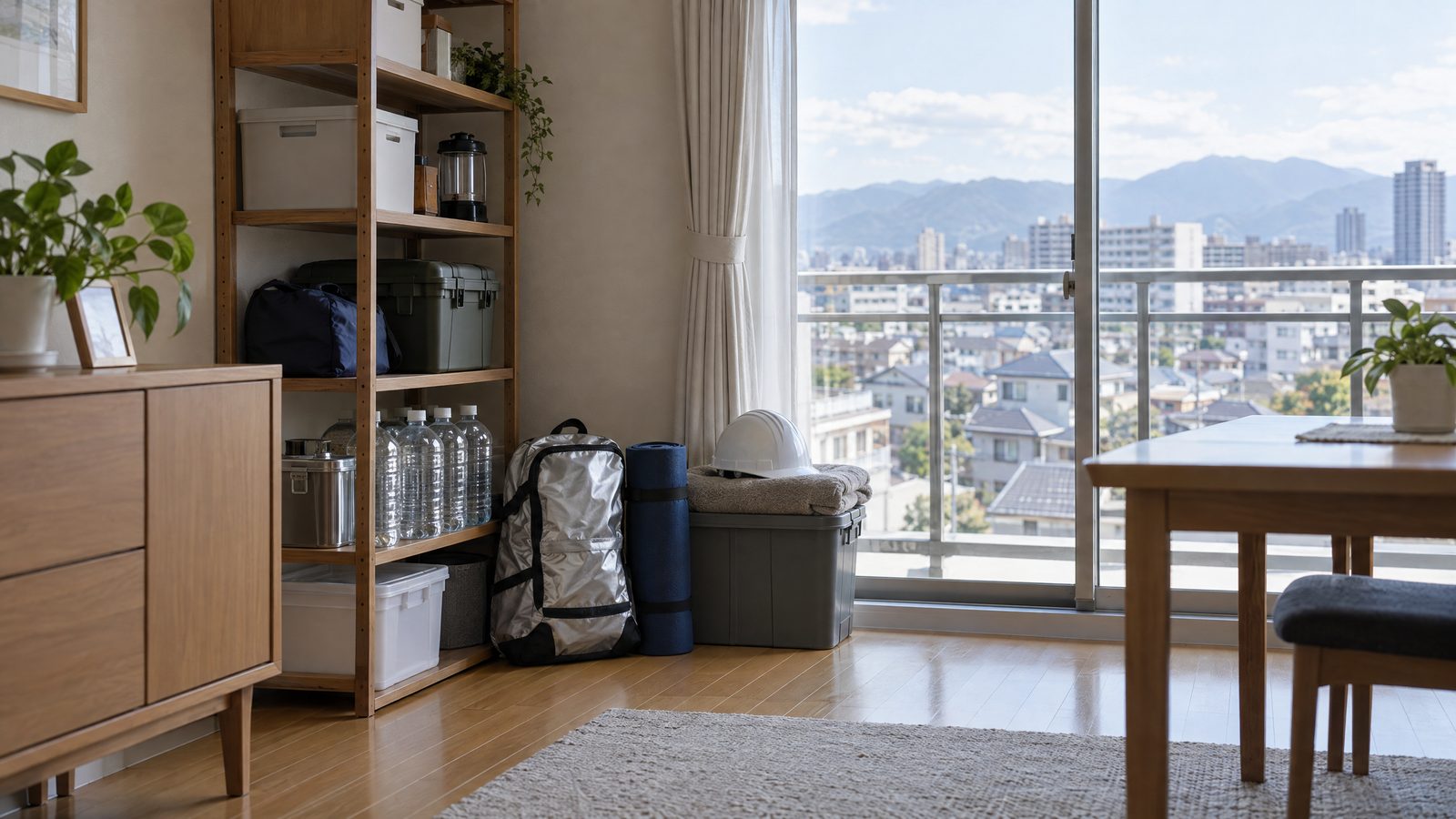

Japan launched a new disaster-management authority on Monday, 2 November 2026, alongside a nationwide preparedness request. Households have been asked to reinforce homes and furniture, keep supplies for at least three days and check hazards and evacuation routes, while public authorities are to review their arrangements.
The request is a preparedness measure, not a warning of an imminent disaster. Its scope extends from practical steps in the home to training, shelter conditions and business-continuity planning. Progress updates on the reviews requested from local authorities and ministries are due by the end of the year.
For households, the supplies guidance sets out two levels of preparation: stocks lasting at least three days, with a week preferable. The distinction matters when reading the request. Three days is the stated minimum, rather than the preferred duration, and the longer period remains a recommendation within the preparedness guidance.
The household request also covers the physical condition of homes and furniture. Residents are asked to reinforce both, alongside keeping supplies. These are separate parts of the same request: attention to supplies does not replace the call to consider homes and furniture, and reinforcement does not replace the supplies guidance.
Checking hazards and evacuation routes forms another part of the household advice. The request asks households to confirm both, rather than focusing only on what they keep at home. It therefore brings together preparation of the home, the availability of supplies and awareness of hazards and routes for evacuation.
The directions for local authorities and ministries are broader organisational reviews. They are asked to examine training and receiving arrangements, as well as the conditions in shelters. The request does not state that those reviews have already been completed, nor does the year-end deadline establish what their findings will be.
Disaster agreements are also included in the review, together with business-continuity planning. These sit alongside the requested checks on training, receiving arrangements and shelter conditions. All are identified as areas for attention; the launch itself should not be read as confirmation that any particular arrangement has been changed or improved.
The two strands of the request have different audiences. Households are being asked to take practical preparedness steps, while local authorities and ministries are being asked to review organisational arrangements. The year-end requirement concerns progress on those reviews, rather than a stated deadline for households to finish reinforcing homes or gathering supplies.
For residents considering the request, its central elements are specific: reinforce homes and furniture, stock supplies, and confirm hazards and evacuation routes. The preferred week of supplies adds to the minimum three-day guidance without changing the other tasks. None of these elements is presented as a notice that a disaster is imminent.
For the organisations addressed, the requested work covers both preparation and arrangements for receiving people and providing shelter. Training, disaster agreements and business-continuity planning remain part of that same review. The next stated procedural point is the submission of progress updates by year-end, not a declared completion of every measure.
The launch thus pairs an institutional change with requests directed at households and public authorities across Japan. Its immediate message is preparedness: practical attention at home and a review of organisational arrangements. The stated timetable requires progress to be set out before the year closes, while leaving the results of those reviews open.