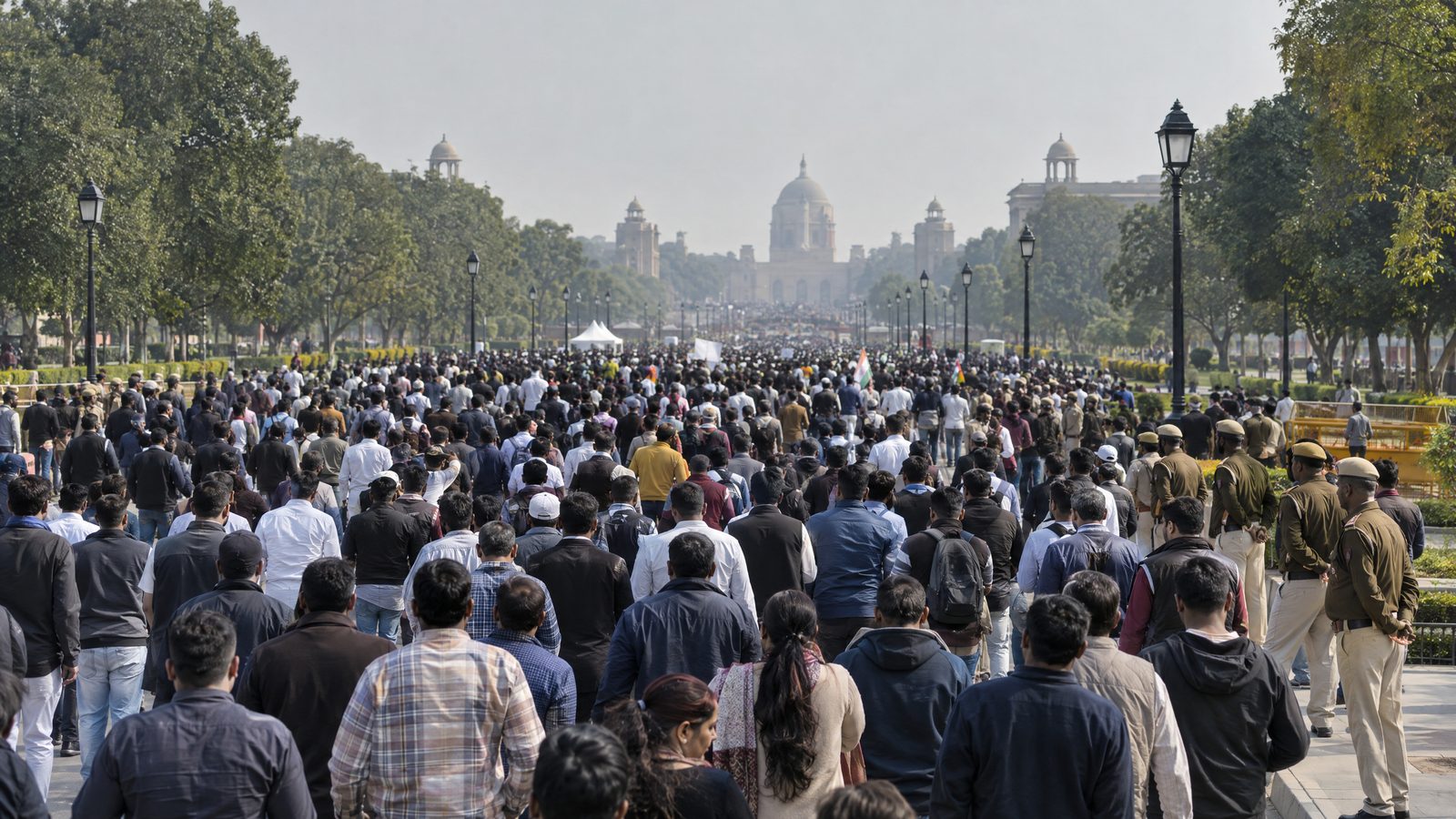

Thousands rallied in New Delhi on 1 November, led by Rahul Gandhi, amid a dispute over a voter-list revision. Opposition parties allege the exercise favours the ruling BJP and disproportionately affects minorities, claims the electoral authority rejects. A substantial police deployment and traffic diversions accompanied the demonstration.
The march and rally brought the disagreement over the revision into a mass political demonstration in the Indian capital. Gandhi led the gathering, while the competing accounts of the exercise remained sharply different: opposition parties alleged partisan advantage, the authority defended its stated purpose, and the BJP disputed the opposition’s characterisation.
At the centre of the opposition’s complaint is the allegation that the revision favours the ruling party. Opposition parties also say minorities are disproportionately affected. These are allegations made by those parties, rather than established findings about the intent or effect of the voter-list exercise.
The electoral authority denies favouring any party. It says the process is intended to remove duplicate or ineligible entries from voter lists. That explanation describes the authority’s stated basis for the revision; it does not amount to acceptance of the opposition’s allegations about partisan benefit or disproportionate effects on minorities.
The authority also says voters whose names have been wrongly deleted can re-enrol. Its position therefore includes both an explanation for removing entries and a route back onto the lists for voters affected by an incorrect deletion. The availability of re-enrolment is the authority’s stated position, not confirmation that every disputed removal has been resolved.
The BJP disputes the opposition’s characterisation of the revision. Its response stands alongside the authority’s denial of favouring any party, although the two positions are distinct: the party rejects the opposition’s account, while the authority describes the process as the removal of duplicate or ineligible entries.
On the streets of New Delhi, the rally took place with a substantial police presence and traffic diversions. Those arrangements accompanied the march and gathering. The demonstration itself was led by Gandhi and drew thousands, making it a discrete public mobilisation around the electoral-administration dispute.
The disagreement concerns how the same revision is being described. Opposition parties present it as favouring the BJP and disproportionately affecting minorities. The authority presents it as a process for excluding duplicate or ineligible entries, denies partisan favouritism and says wrongly deleted voters can return to the lists through re-enrolment.
Those competing positions should not be collapsed into a single conclusion. An allegation that the exercise benefits a party is different from an established electoral effect. Likewise, the authority’s explanation of its purpose is its stated account of the process, rather than a finding resolving the opposition’s complaint.
For the question of voter inclusion, the authority’s statement on re-enrolment is a separate part of its response. It specifically addresses voters wrongly deleted, while its broader explanation concerns duplicate or ineligible entries. The distinction preserves the difference between the stated grounds for revision and the stated option following an incorrect deletion.
The rally put those opposing positions alongside a large street gathering, police deployment and diverted traffic. The central dispute remains one of allegation and denial: opposition parties claim partisan favour and disproportionate effects on minorities; the authority denies favouritism and outlines its process; and the BJP rejects the opposition’s characterisation.