
Lambeth has become the first London borough to make a Butterfly-Friendly pledge, putting the management of parks, streets and other public land at the centre of a longer-term plan for butterflies and moths. The move is a formal commitment, rather than a single new scheme: it joins measures already being used locally with further changes the borough says it still needs to make.
The pledge covers the places residents encounter every day, from parks and housing estates to highways, schools and open spaces. Reducing pesticide use is a stated part of the approach. Lambeth says it has already removed pesticides from its parks and has a Pollinator Action Plan, while the new pledge gives that work a broader framework.
A three-year framework for public spaces
The national programme behind the pledge asks councils to work through five areas over the next three years. They are creating a biodiversity plan, improving and creating habitat for butterflies and moths, making green space accessible to residents, ending the use of pesticides that harm pollinators, and taking light pollution seriously.
That makes the commitment wider than planting a few additional flowers. It links the way a council looks after land with policy, access and the impact of artificial light. The programme says that more than half of the UK’s butterfly species are in long-term decline, framing local decisions about public spaces as part of a broader response to that trend.
For Lambeth, the pledge also provides a way of bringing several strands of work together. Cllr Ciara Alleyne, the borough’s deputy leader and cabinet member for climate emergency and future generations, said the authority was taking practical steps to help butterflies and moths recover. The council has presented the pledge as an opportunity to manage public areas differently, not as a claim that every element of the programme has already been completed.
Meadows, wildflowers and drainage features
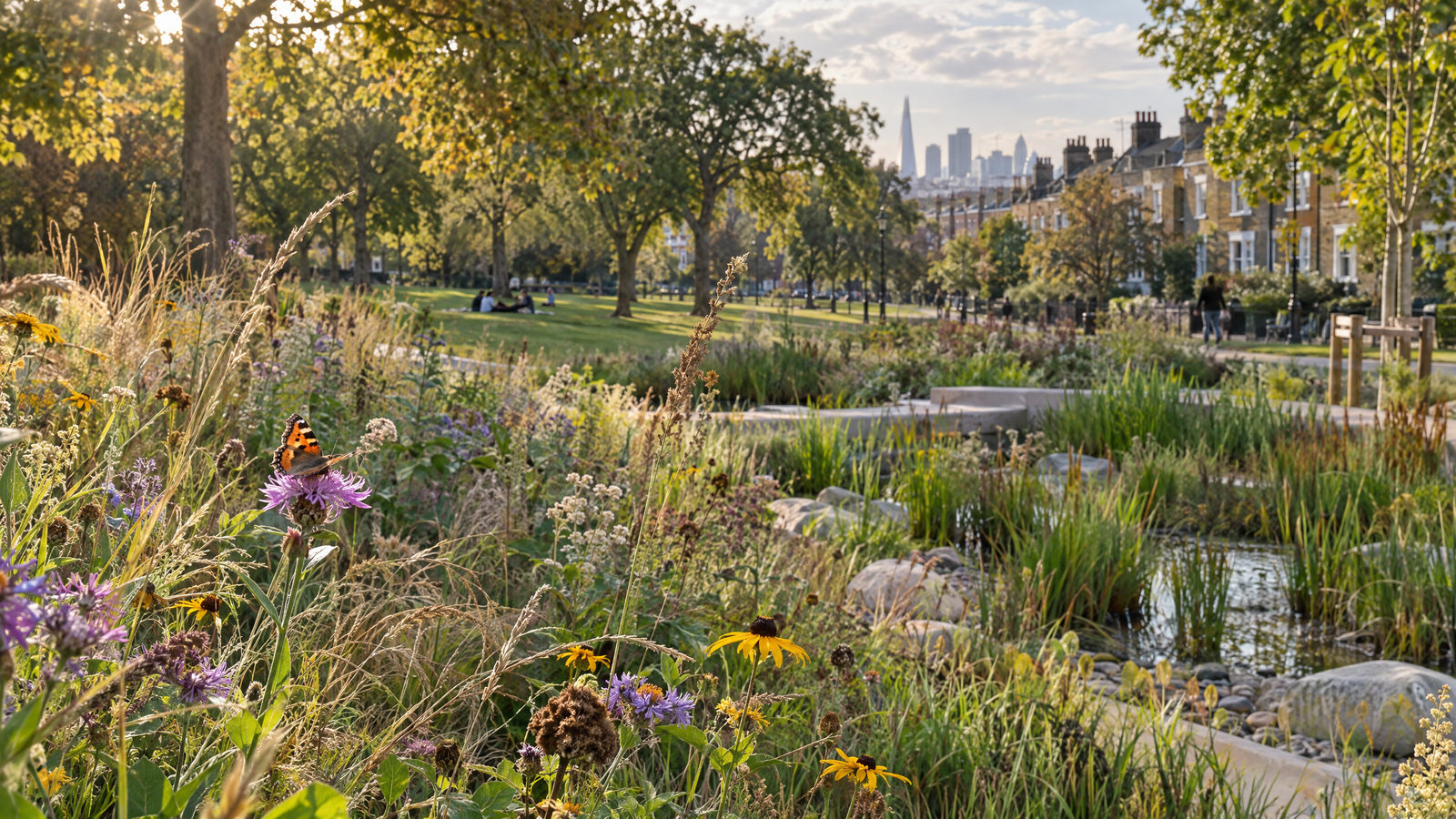
Among the measures already highlighted are larger areas of long-grass meadow. Lambeth says these are being increased on housing estates, along highways, at schools, in parks and in other open spaces. It is also developing wildflower-rich habitat through projects including Lambeth Bee Roads.
The wider work described by the borough includes planting pollinator-friendly trees and creating rain gardens and swales. It also includes support for residents’ wildflower projects in allotments, community gardens and housing estates. These actions sit alongside the council’s stated intention to keep reducing chemical pesticide use where viable alternatives are available.
The distinction between what is already in place and what remains to be done matters. The council says there are still key areas to address. Its announcement does not give a site-by-site timetable or a quantified target for new meadow, rain-garden or wildflower land, so the pledge should be understood as a direction of travel and a set of commitments rather than a completed programme of works.
Why the formal pledge matters
Butterflies and moths need more than one kind of space. The framework’s emphasis on habitat, public access, pesticide use and light pollution reflects that their needs can be affected by routine choices across a borough, including how vegetation is maintained and where green areas are available. In Lambeth’s case, the public-space focus means the commitment reaches beyond a single park or one neighbourhood.
Local gardening and community projects remain part of the picture, but the new development is the borough-wide pledge. It places existing work on pesticide removal, meadow management, wildflower habitat and drainage planting within a three-year conservation framework. The next test will be how the outstanding parts of that framework are translated into policy and day-to-day practice across the public estate.